
Showing posts with label Moses. Show all posts

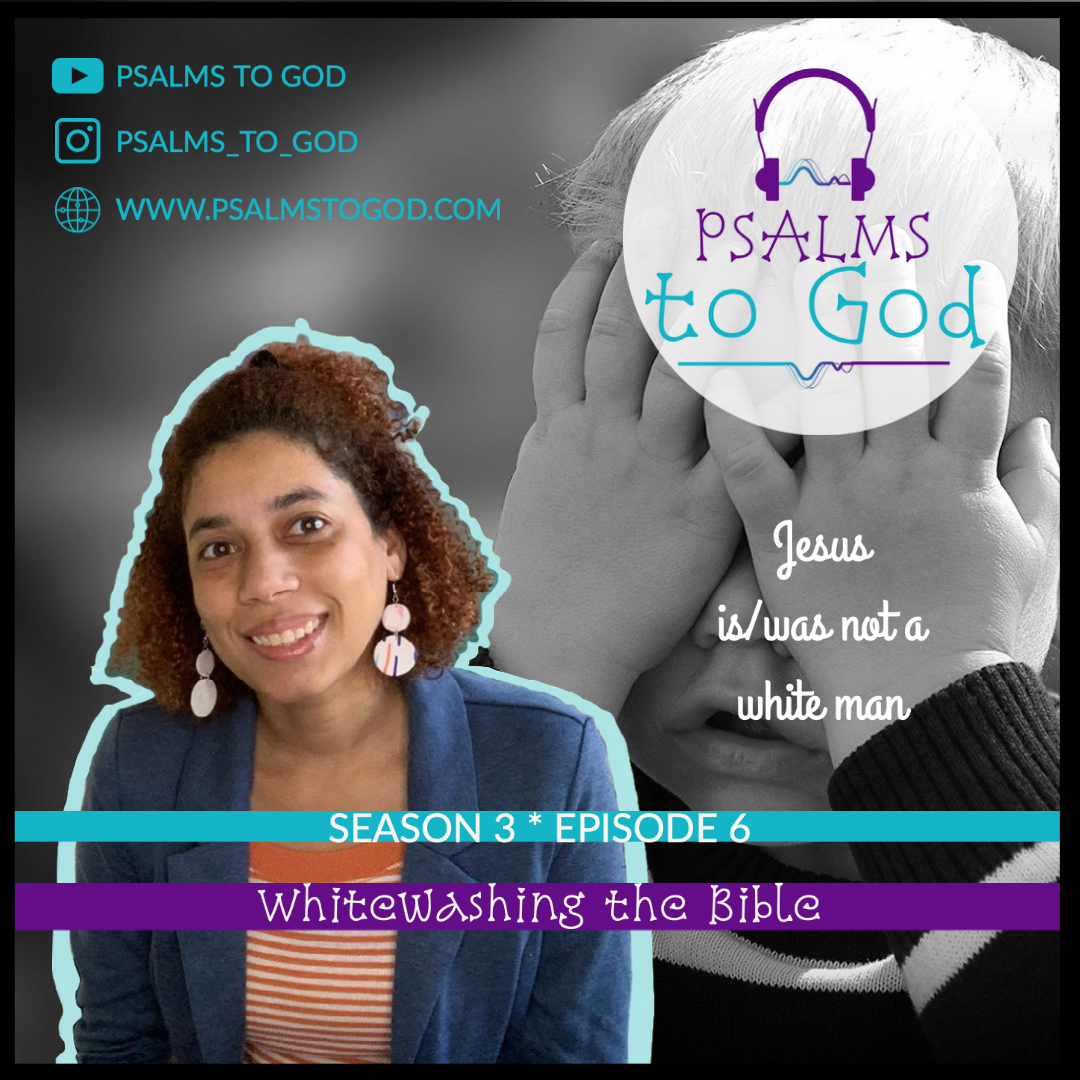
Whitewashing the Bible

Jesus was not and is not a white man--neither were most of the people discussed in the Bible.
5“I am black and beautiful,
You daughters of Jerusalem,
Like the tents of Kedar,
Like the curtains of Solomon.
6 Do not stare at me because I am dark,
For the sun has tanned me. Song of Solomon 1:5-6 NASB

definition
Whitewash [1]
noun
  1. : to alter (something) in a way that favors, features, or caters to white people: such as
    a : to portray (the past) in a way that increases the prominence, relevance, or impact of white people and minimizes or misrepresents that of nonwhite people
    b : to alter (an original story) by casting a white performer in a role based on a nonwhite person or fictional character

Genesis

  • Adam is from the Hebrew word meaning red (Edom is from the same word)[2]
  • Red, like red clay--remember Adam was created from the "dust of the ground" (Genesis 2)
  • Dirt around the world actually matches human skintones (generally) and the dirt that would have been near Eden would have been the kind good for growing plants; this type of soil is dark brown or black
  • If two people possess only recessive traits (e.g., blue eyes), the cannot create a baby with dominant traits (e.g., brown eyes)
  • Two "pure" white people cannot give birth to a black baby
  • Two "pure" black people however can have white babies; there are also black people in Africa with naturally blue eyes and blonde hair

The Non-Existant Curse of Ham

  • To justify the mistreatment of Africans, "Christian" Europeans came up with the non-existant curse of Ham (it is actually Ham's son Canaan that is cursed in Genesis 9)
  • The curse was said to be dark skin
  • Below are some things to consider about this "theory"
    • Canaan actually settles in the Middle East, not sub-saharan Africa
    • The Canaanites intermarry with the Israelites—specifically, the entire line of Judah stems from a Canaanite woman (Genesis 38)—so if the curse is dark skin, the Israelites could not have been white
    • Cush, Mizraim, and Phut who eventually migrate into the main African continent are never cursed

Confusion of Nationality

  • The Israelites and the Egyptians had to look similar because they're always being confused for each other
  • Joseph's brothers don't notice he's Hebrew when they journey to Egypt during the famine. (Genesis 42:23)
  • Pharaoh doesn't say anything about his daughter taking in a Hebrew baby when he's just ordered all of them killed
  • The Midianites confuse Moses for an Egyptian (Exodus 2:19)
  • Paul is confused as an Egyptian (Acts 21:38-39)
  • Mary, Joseph, and baby Jesus flee to Egypt to avoid Herod's decree; in fact the Israelites alway fled to Egypt iin times of trouble. Likely they blended in better, just as I would blend in better in Brazil than in Japan.

The Curse of Whiteness?

  • DISCLAIMER: This is not meant to suggest that white people are white because they are cursed; it is merely to point out the irony of claiming a curse of blackness to inflict harm when the Bible suggests something closer to the opposite
  • In 2 Kings 5 a man named Gehazi, and all his offspring, is cursed with leprosy--the description is that he turned "white as snow" (2 Kings 5:27)
  • The leprosy of the Bible which is not the leprosy of today[3] is acutally associated with whiteness multiple times:
    • Miriam's leprosy is associated with turning white (Numbers 12:10)
    • Moses' white hand is called diseased (Exodus 4:6-7)

References

  1. "Whitewash". Merriam Webster; visited February 2021
  2. "Strong's H119. אָדַם". Blue Letter Bible; visited February 2021
  3. Dr. Alan L. Gillen. "Biblical Leprosy: Shedding Light on the Disease that Shuns". Answers in Genesis. June 10, 2007

Would You Rather?: Famine vs. Plagues

Would you rather is a fun game to play, particularly when getting to know someone. A person is asked to choose betwen two things of equal desiring—making it hard to decide and opening dialouge as to why the person chooses the option they choose. Recently I stumbled accross several versions of "Would You Rather?: Bible Edition" and found the questions quite intriguing. I've decided to answer one every Sabbath. Let me know your answer to today's "Would You Rather?" in the comment section.

Would you rather live through a famine and live through the 10 Plagues of Egypt?

Answer: the 10 Plagues of Egypt

Backstory

Famine

There are several famines mentioned in the Bible. We see them as early as Abraham's lifetime and they continue even until today. Israel experiences a few famines as a nation as well. Two of the worst famines (in my opinion) that occured in Israel's history are the one that lead them to Egypt[1] and the one that occured during the siege on Jerusalem in 70ad. The former lasted for 7 years and was eased by God's revelation through Joseph to the Pharaoh of Egypt. The latter was much shorter but so extreme that people resorted to cannibalism.[3]

The 10 Plagues

When God delivered Israel from Egypt, He did so by striking the land of Egypt with 10 plagues.[2] The plagues were as follows: water to blood, frogs, lice, flies, disease on the livestock, boils, hail, locusts, darkness, death of the first born.

Rationale

I know you're thinking, "why on earth would you pick the plaques!?" Hear me out...

As mentioned earlier, several famines occured during Biblical times. My thought process stems form the famine that brought the Israelites to Egypt in the first place (I feel like it's the one that would come to people's mind first, especially juxtaposed to the plagues of Egypt). It lasted 7 whole years—that is a long time to have a food scarcity. Thanks to God's revelation through Joseph, Egypt was able to stockpile food, but they still had to ration it to make sure it lasted the 7 years. Best case, that's 7 years of dieting; worst case, there's riots and cannibalism...
And there was no bread in all the land; for the famine was very sore, so that the land of Egypt and all the land of Canaan fainted by reason of the famine. Genesis 47:13 KJV

The Bible doesn't tell us how long the plagues took, but the key here is that God's people only suffered the first three plagues (turning the water to blood, frogs, lice). After the first 3 plagues, the Israelites were simply spectators, watching God reveal His glory. There were at least 7 days between the water and the frogs, though it doesn't say when the plague on the water stopped. Between each of the other interactions Pharaoh has with Moses, he requests the plagues to end and Moses does so. With this in mind, each of these would last for a relatively short period of time. The worst of the three mentioned, in my opinion, is the water to blood. It would be like a famine during that time because you couldn't get water to drink, cook with, wash with, etc. The frogs would be more of a nuisance than anything else and hair grease will protect your scalp from the lice.
And I will sever in that day the land of Goshen, in which my people dwell, that no swarms of flies shall be there; to the end thou mayest know that I am the Lord in the midst of the earth. Exodus 8:22 KJV

Most importantly, this show of power was done to remind Israel who their God is and what He can do, whereas famines are usually punishment. To me living through the plagues as a child of God, is akin to living through the great tribulation at the end of days. It's a badge of honor that comes with a great reward: the promised land (or a respected seat in God's kingdom).

Which would you rather do?

References and Footnotes

  1. Genesis 41
  2. Exodus 7-11
  3. Larry Holzwarth. "Episodes of Cannibalism throughout History". History Collection; September 5, 2020
  4. I found many versions of "Whould You Rather?: Scripture Edition"; this question was found in a version made by Megan of Church Leaders

Church is Cancelled

23Let us hold fast the confession of our hope without wavering, for He who promised is faithful. 24And let us consider one another in order to stir up love and good works, 25not forsaking the assembling of ourselves together, as is the manner of some, but exhorting one another, and so much the more as you see the Day approaching. Hebrews 10:23-25 NKJV

We are meant to fellowship with each other
  • Hebrews 10:23-25
  • Matthew 18:20
  • Acts 2:42-47

We are not to be conformed to this world
  • Romans 12:2
  • Deuteronomy 14:2
  • 2 Corinthians 6:17
  • 1 John 4:4-5
  • 1 Peter 2:9

We are protected
  • Revelation 9:4
  • Daniel 3
  • Exodus 7-11
  • Revelation 18:4

God did not give us the spirit of fear
  • Matthew 16:25-26
  • Matthew 10:39
  • Romans 8:15
  • 2 Timothy 1:7
definition
pandemic[1]
noun
  1. : an outbreak of a disease that occurs over a wide geographic area and affects an exceptionally high proportion of the population : a pandemic outbreak of a disease
definition
epidemic[2]
noun
  1. : an outbreak of disease that spreads quickly and affects many individuals at the same time : an outbreak of epidemic disease
  2. : an outbreak or product of sudden rapid spread, growth, or development

References

  1. "Pandemic". Merriam-Webster; March 11, 2020
  2. "Epidemic". Merriam-Webster; March 11, 2020
  3. Tessa Wong. "Shincheonji and coronavirus: The mysterious 'cult' church blamed for S Korea's outbreak". BBC. March 14, 2020
  4. Choe Sang-Hun. He Blames ‘Evil’ for South Korea’s Coronavirus Surge. Officials Blame Him.". NY Times. March 2, 2020
  5. "N.B.A. Suspends Season After Player Tests Positive for Coronavirus". NY Times. March 11, 2020
  6. Steve Almasay. "The NCAA is canceling March Madness". CNN. March 12, 2020
  7. Grace Hauck and Doug Stanglin. "Coronavirus updates: Trump declares national emergency; schools in 12 states shut down; cruise lines halted". USA Today. March 13, 2020

Alone


Season 1 Episode 36


3Then Elijah became afraid and immediately ran for his life. When he came to Beer-sheba that belonged to Judah, he left his servant there, 4but he went on a day’s journey into the wilderness. He sat down under a broom tree and prayed that he might die. He said, “I have had enough! Lord, take my life, for I’m no better than my fathers.” 5Then he lay down and slept under the broom tree.

Suddenly, an angel touched him. The angel told him, “Get up and eat.” 6Then he looked, and there at his head was a loaf of bread baked over hot stones, and a jug of water. So he ate and drank and lay down again. 7Then the angel of the Lord returned for a second time and touched him. He said, “Get up and eat, or the journey will be too much for you.” 8So he got up, ate, and drank. Then on the strength from that food, he walked forty days and forty nights to Horeb, the mountain of God. 9He entered a cave there and spent the night. 1 Kings 19:3-9 CSB

Is it true that you should never be "alone" in your walk as a Christian? Several people have suggested just that, but I think it's a lot more nuanced than that. In fact I think at times you have to stand alone to grow your faith. Let's talk about how alone time builds your relationship with God and the Biblical basis for it.

References and Footnotes

  • Moses at Mt. Sinai - Exodus 19
  • Elijah alone in the wilderness - 1 Kings 19:1-9
  • Messiah alone in the wilderness - Matthew 4
  • The Commandments Before Israel

    What came first the law or Moses' hike up Mount Sinai? Many people would have you believe the law only applies to the Israelites and was first instantiated on Mount Sinai. However, there are examples of the law being enforced well before Moses' and the Israelites embarked on the Exodus. Let's look at some of these examples and discus what it means for us today.

    Introduction

    Photocredit: Unsplash.com/Claire Anderson
    People point to the law of Moses and the 10 Commandments as "Jewish law". When I explain that I keep the Biblical Sabbath, people continue the conversation by referring to it as the "Jewish Sabbath." We'll skip the distinction between Israelites and Jews, in favor of moving on to a more interesting topic: commandments that appear before Moses climbed Mount Sinai.
    Top

    The Proof is in the Pudding

    Before I go into specific examples of specific laws, I want to talk about the obvious. In the beginning the only law given to Adam and Eve was not to eat from the Tree of Knowledge. Once Adam and Eve broke that law, they were expelled from the garden and not only lost access to the Tree of Life, but the Tree of Knowledge too. Since they were barred from entry from the garden, it was impossible for them to eat from the Tree of Knowledge again. Yet, by the time of Noah's generation sin was so rampant, God decided to destroy practically everyone and everything with a flood.

    Romans 3:20 tells us that knowledge of sin comes from the law, while Romans 5:13 tells us that sin can't be imputed (or represented) without the law. Basically we are being told in Romans that sin has existed in the world from the moment Adam and Eve ate from the tree of knowledge, but we only know we have sinned when there is a law to define sin. We see this more explicitly in 1 John 3:4 where sin is defined as transgression of the law.

    That begs the question, how was there sin in Noah's day if there was no law until Moses? We could say that by barring them from entry to the garden specifically to protect the Tree of Life, God was implicitly creating the laws not to enter the garden and not to eat from the Tree of Life. However, we know that these people weren't all sneaking into the Garden of Eden—which was fortified with an Angel carrying a flaming sword—to steal fruit from either trees. God didn't need to create a law about the treasures of the garden because He made it impossible for them to get to it. That would be like our government writing a law that makes it illegal to live on Mars.

    The chain of events tells us God must have given the first people some sort of law to live by. This law may not have ever been written down and was likely just passed down from parent to child through upbringing and verbal affirmation (or condemnation). When examining what was considered wrong and sinful pre-Mosaic law, we can see how God's law has not changed.
    Top

    Sacrifice and Offerings

    3And in process of time it came to pass, that Cain brought of the fruit of the ground an offering unto the Lord. 4And Abel, he also brought of the firstlings of his flock and of the fat thereof. And the Lord had respect unto Abel and to his offering: 5But unto Cain and to his offering he had not respect. And Cain was very wroth, and his countenance fell.Genesis 4:3-5 KJV
    One of the first glimpses we see of life after the garden is the giving of offerings to God. Cain's anger grew as a result of God's favor toward Abel's offering over his on. Abel not only gives God a firstling of his flock, but the fat of the animal as well.

    Doesn't this sound familiar? Leviticus goes into thorough detail about how animals are to be offered to God. In these passages God instructs that the fat is not to be eaten, but given to Him. Now, isn't it telling that Abel was shepherding a flock, sacrificed the offspring of his flock, and reserved the fat for God when he didn't even eat meat? Livestock would have been handy for many of the tasks they had to carry out, so it makes sense that he had a flock. However, why would he think to kill and sacrifice the animal? These sacrifices were a gruesome reminder that it was supposed to be us who died because of sin.

    There were no pagan cultures around to influence Abel and Cain and the devil isn't mentioned in the narrative, which means Cain and Abel were inspired (or told) to bring sacrifices to God. At some point between the creation of Adam and Eve and Genesis 4, God instructed them to bring offerings to Him. This proves that sacrifices were a thing well before Moses began writing the law down.

    Genesis continues to show us examples of the patriarchs building altars and sacrificing to God. Clearly some protocol had been established for this type of behavior well before Moses.
    Examples of Sacrifices in Pre-Mosiac Law
    Bible Verses
    Example
    Genesis 4:3-5 Cain and Abel offerings to God. Cain's was an offering of the field (grain), while Abel's was of the flock (burnt)
    Genesis 8:20 Noah offers burnt offerings for every clean animal to God after the flood.
    Genesis 22:1-18 Abraham almost offers Isaac, but God sends a ram to be offered instead.
    Genesis 35 Jacob builds an altar, then pours a drink offering on the altar.
    Exodus 10:24-25 Moses' argument to the Pharaoh about letting the Israelites go includes the need to give God sacrifices and burnt offerings.
    Exodus 18:12 Moses' father-in-law gives a burnt offering to God in honor of what God has done for Israel. This is just before the Israelites reach mount Sinai.

    Thou Shalt Not Kill

    The first crime to be committed after Adam and Eve are expelled from the garden is murder when Cain kills Abel. God condemns Cain for this action and He is punished. If Cain was unaware that it was wrong to kill Abel, why did he lie about it and why did God punish him? When Cain is angry/jealous of Abel, God warns Cain that "sin lieth at the door" (Genesis 4:7), which is a big clue to what Cain did and did not know. Also, this mirrors Jesus' statement that we are in sin just for being angry at our brother without cause (Matthew 5:22).

    Since God is telling Cain that he is about to sin and Cain clearly hides the fact that he killed Abel as though he knows it is wrong, based on the Bible's definition of sin and our own knowledge of human nature, we must assume Cain knew that it was wrong to kill. Thus there must have been a law of some sort stating the murder was wrong, even in the days when only the original family was on the earth.
    Top

    Noah Knew Clean and Unclean

    People are quick to say clean and unclean, particularly when it comes to animals/diet, was only for the Israelites. Moses defines clean and unclean in Leviticus 11, but Noah knew the difference back in Genesis 7:2. God instructs Noah to bring more of the clean animals than the unclean ones. Once Noah and his family are back on dry land, God tells Noah he may eat meat and Noah makes a sacrifice when the clean animals. When God tells Noah he can eat the flesh of the animals, he doesn't specify clean or unclean, though he does bring up the issue of blood, which is repeated by Moses. Despite God not telling Noah specifically not to eat blood, we have to remember that the act of eating flesh usually followed sacrifice—they ate the meat they burned on the alter (i.e. cooked). Leviticus covers many of the laws about who could eat the sacrifices and when they could be eaten. Noah would have eaten the clean animals he sacrificed. This also explains why more of them were brought on the ark.

    Sodom & Gomorrah

    When we think about sin, it's impossible not to think of Sodom and Gomorrah. These two cities were eradicated, never to be built again, due to the sins being committed within their borders. The destruction of Sodom and Gomorrah is given in Genesis 19. Let's put this in perspective of time. Just before destroying the city, God reveals His plan to Abraham who bargains with God to spare the city. Abraham's son Isaac is the father of Jacob who is the father of the 12 men the Tribes of Israel are named for. Therefore Abraham is the great-grandfather of the progenitors of the nation of Israel. Moses isn't even born until the descendants of those 12 men had been in captivity in Israel for roughly 400 years. Needless to say, the inhabitants of Sodom and Gomorrah were not Israelites and were quite far removed from the law being written down by Moses.

    So what sins were committed in Sodom and Gomorrah? The one that probably comes to mind first is homosexuality; this one is the most obvious in Genesis 19. However, Ezekiel 16:49 provides a more extensive list of sins committed. Ezekiel tells us that Sodom was prideful, idle, ignoring the poor, haughtiness, and committing the abomination. Moses writes several laws about how to treat the poor when he and the Israelites are in the wilderness, but none of these had been written yet. Each of the things God despises in Sodom are the same things Jesus warns us about in the New Testament! We are told not to be proud in James 4:6 and Philippians 2:3 (to name a few). We are told of the dangers of idleness in 1 Timothy 5:12-13. Jesus tells us to be mindful of the poor in Luke 14:12-14; it is them that we should strive to feed! Haughtiness is spoken against throughout the Bible. The abomination is probably sexual immorality. All of these were considered sins before Moses and in the New Testament.

    Levirate Marriage

    The Levirate Marriage is outlined in Deuteronomy 25:5-6. The idea was that if a man died before his wife bore him children, she was to marry his brother, who was to provide an heir to the deceased brother's lineage. We see an example of this with Judah and Tamar. Judah was one of the 12 sons of Jacob; his descendants make up the tribe of Judah and most of the people we call Jews today are descended from him. Judah's eldest son married a woman named Tamar, but died before Tamar conceived. Tamar then married Judah's middle son, who tried to avoid producing an heir and was struck down by God. Judah refused to allow her to marry his youngest son, but in a strange twist of fate, ended up fathering Tamar's twins anyway (Genesis 38). The Israelite nation was only just forming at this time and Tamar was actually a Canaanite. While it's likely that she converted to worshiping the God of Abraham and abiding by His laws, for her to be so persistent that her child's father come from Judah's line implies that this was a common tradition on the region. God is clearly not saying that it's a new thing in Deuteronomy, rather He's confirming it as an actually party of His law.

    Remember!

    When God writes out the 4th commandment, did you ever wonder why He said "remember" before introducing the Sabbath? I've never said "remember" before bringing up something the other person or people didn't already know about. If I'm introducing something I want them to remember, I might say "Don't forget..." but it's not likely that I'm going to say "Remember to go to the grocery store next week". Just think about it; the command to remember something is literally asking you to think about something that has already happened. When did it already happen? During creation. God created the Sabbath from the very beginning. He didn't make that day holy while the Israelites were waiting at the foot of the mountain; it was holy from the first Sabbath ever created. It's never not been holy! In fact, before the Israelites get to Sinai, when God explains the food situation to the Israelites, He reminds them to collect double on the sixth day because none will fall on the Sabbath (Exodus 16:23-30).

    Something to Think About

    There are two reasons I think it's important to think about this. One, to realize that God's law is absolute and just. Two, to have a more solid foundation when the world brings up similarities between the law Moses wrote and "older" laws found in civilization.

    Just Laws

    People use the idea that the law was written for the Jews to justify not giving up habits that are condemned by the law. We see this logic fall apart when we poke harder. No one who argues that that they don't have to keep the Sabbath or that they can eat whatever they choose will agree that they can commit murder. The habit of picking and choosing which laws we choose to abide by severely hampers the message broadcast by the church. There's a lot more to the topic of understanding God's law than simply what is covered here. Obviously some rules did change; we don't sacrifice any more and people can't marry their relatives (Adam and Eve's children all married their sisters/brothers, remember). I discus the law a little more in the post entitled The Law, but eventually I plan do something a little most organized and coherent. Nonetheless, I think this is part of that idea. God didn't just make up laws for one group because He thought it would be fun to watch them struggle to keep them. Those laws are meant to protect the health, spirit, and well-being of His people, and since there is no difference between Jew and Gentile (Galatians 3:28), these laws are for the good of all mankind.

    Stolen Laws?

    Many of my non-believing friends and acquaintances have accused Moses of plagiarism based on the fact that the 10 Commandments are similar to laws that had been in existence long before the Israelites reached Sinai. I don't think it's the least bit odd that other cultures came to the conclusion it was wrong to kill, steal, lie, or cheat on your spouse. Even atheists will agree on that. The Bible talks about deception being the biggest reason for sin, especially in the end times. Even in the beginning, Eve was deceived into eating the fruit. Mankind's instinct identifies obvious evil behavior with no problem. Therefore it isn't shocking to find similarities across these laws.

    What's more, these tribes and nations all funnel back to the same point. The Egyptians, for instance, descended from Mizraim who was the son of Ham. The Israelites from Shem who was Ham's brother. Shem and Ham would have been raised with similar morals and I imagine those morals would have been passed on to their children much like a game of telephone. Each of us is raised to believe certain things and behave a certain way, but we also have the free will to choose other paths. In my childhood church, we were all given the same lessons but life gave us different experiences. We each turned out different. Someone of us believe exactly what that church taught, some believe something a little different, some might not believe at all anymore. Yet we retain a lot of similarities in our behaviors and moral standards, regardless of where we ended up. The same can be said of how laws and beliefs spread after the flood. God's reason for telling Moses to write it down was to preserve the real information since so many versions were popping up around the world. This was God giving His one-on-one interview after the tabloids had leaked faulty information.

    References

    Psalms

    Psalms is a wonderful collection of poetry. Let's look at the history of the book and the impact it has had on us today.

    Introduction

    Psalms is the longest book of the Bible, boasting 150 chapters, and is a collection of songs or poems meant for worship. In English, the word psalm means hymn or song,[1] but the original Hebrew word (tehilim) means praise.[2] This is a more accurate description of the text since some of the psalms are actually prayers.
    Top

    Date and Authorship

    Being a collection of works, Psalms wasn't authored by a single person, and was likely compiled over many years. Some of the songs have titles and designations which reference possible authors. Among those listed as probably authors of several psalms include David, the sons of Korah, Asaph, Solomon, and Moses. It is important to note that while Aspah is designated an author, Aspah was also the name of a group of musicians and may have applied to the group instead of the person.[2]
    There are psalms without titles, as well, which are considered anonymous psalms.
    Psalm 90 is identified as "A Psalm of Moses,"implying Moses was the author. This would place it's date of authorship in the fifteenth century (bc). Other psalms clearly take place after the exile, and therefore must have been written after the sixth century (bc). The final compilation of psalms for the book would have happened after the last psalm was written.

    Grouping the Psalms

    Psalms is divided into 5 books: Book I contains Psalms 1-41, Book II contains Psalms 42-72, Book III contains Psalms 73-89, Book IV contains Psalms 90-106, and Book V contains Psalms 107-150. Why they are divided as such is debated by scholars. Some suggest each book has a theme that links the Psalms. E.W. Grant suggests the following: Book I covers Christ as the source of blessing for Israel; Book II discusses the ruin of Israel and coming redemption; Book III proclaims the holiness of God; Book IV tells us of the failed man to be replaced by Jesus; and Book V is a moral conclusion. Others suggest the themes parallel the Pentateuch (the Books of law). In addition, the psalms can be categorized by five classifications: historical, messianic, prophetic, penitential, or imprecatory.[3]

    Jesus & Psalms

    If you noticed, many of the classifications include references Jesus. You have to admit it would be odd for the longest book in the Bible to never discuss the Messiah. A total of 23 Messianic prophecies can be found across 14 Psalms. I'll cover them as I get to those chapters, but for those who want to skip ahead, the chapters are Psalms 2, 8, 16, 22, 34, 35, 40, 41, 45, 68, 69, 109, 110, and 118.

    Music and Psalms

    When I realized Psalms was the next book I would read, I became curious as to how many of the hymns we sing today are actually from Psalms. I find it interesting that people argue about the "right" type of worship music, when the Bible has a whole book that's basically a hymnal.

    The Psalms Project

    As I was searching for hymns that are based on Psalms, I came across The Psalms Project. The Psalms Project is a band that is working to set all 150 psalms to music. Their plan is to release 15 album with 10 psalms on each album. The third album was released in November of 2016, which covers Psalms 21-30.

    Other Psalms Projects

    When I went to look for the album on iTunes, I was pleasantly surprised to see there are many projects to get Psalms into song! "Sing Psalms" by Psalm Project Africa was released in January 2013. It features 20 Psalms (in seemingly no particular order). While The Psalms Project has an indie feel to it, Psalm Project Africa features African inspiration and a multitude of voices. There is also an album by Hope Creative called "The Psalms Project" (if you're thinking about taking on this task, please be creative and deviate from "The Psalms Project" in your naming). Hope Creative's album is from 2015 and has 10 tracks which cover 13 Psalms.

    Individual Psalms

    Several artists have adapted a single psalm for their album as well. Naturally Psalm 23 is the most popularly set to music. Searching for "Psalm 23" on iTunes brings back 100 hits, "The Lord is My Shepherd" brings back another 100 hits.

    There are quite a few songs inspired by Psalm 119 (the longest chapter in the Bible). Charles Villier Standford wrote "Beati quorum via integra est," which means "blessed are those whose way," in 1905. The song is based on Psalm 119:1.[4] Clara H. Scott's "Open My Eyes, That I May See" was inspired by Psalm 119:18.[5] William Byrd's "Teach Me, O Lord" is based on Psalm 119:33-38.[6] "Thy Word" by Amy Grant is based on Psalm 119:105.[7]Heinrich Schütz completed the whole song in 1671. Frederick Steinruck, Michael Misiaszek, and Michael Owens also created a complete English version of the psalm.[8] The most popular psalms are Psalm 23 and Psalm 119. Psalm 23 is popular in the sense that most people know it by heart, and those who don't know it by heart will recognize it once the hear it. Psalm 119 is popular in the sense that its "that really long psalm." Psalm 119 is 176 verses long; it's the length of some books with in the Bible. Written as an acrostic with 8 verses for each of the 22 letters of Hebrew, it is written very deliberately. This psalm is probably the most studied by scholars.

    References

    1. "Psalm". Merriam-Webster; visited June 2017
    2. Holman Bible Publishers. Holman KJV Study Bible, pg. 909-912. 2014
    3. William MacDonald. Believer's Bible Commentary, pg. 545-548. 1995
    4. "Beati quorum via (Stanford)". Wikipedia; visited June 2017
    5. "Open My Eyes, That I May See ". Timeless Truths; visited June 2017
    6. Teach me, O Lord". Hyperion Records; visited June 2017
    7. "Thy Word by Amy Grant". Songfacts; visited June 2017
    8. "Free Scripture Songs and Sermon MP3s". Pursing Life Ministries; visited June 2017

    Judges 17-18: Micah and the Tribe of Dan

    The final person discussed in Judges is Micah. He created an idol that took the descendants of Dan into idolatry all the way until they went into captivity.

    Introduction

    The final person discussed in Judges is Micah, who lived in mount Ephraim. Note, this is not the same man as the prophet Micah who has a book named after him.[1] The first thing we learn about Micah is that he stole 1100 pieces of silver from his mother. Possibly unaware that her son is the culprit, the woman curses the thief, thus cursing Micah. Micah confesses his sin and returns the money, though it appears to be more out of concern for his mother's curse than his dedication to God. 1100 pieces of silver was a fortune back then, so it is not surprising that Micah's mom was thrilled to receive her savings back. However, it is a bit odd that she never condemns Micah for his actions. Micah's mom praises the Lord and decides to use the money to dedicate it to God; however, she does this by having an image made with only a portion of the money.
    Top

    A Deeper Thought

    Note that the pieces of silver mentioned
    were worth a lot more than our nickels are today
    Photocredit: FreeImages.com/Eric Nelson
    Reading that the woman attempted to dedicate money to God by building an idol sounds absolutely crazy since the 2nd commandment clearly forbids idols. Reading the words written out makes it easy for us to ask why she would think this was ok. However, Israel suffered from the same problem we suffer now: tradition. The average person didn't have a copy of the Pentateuch sitting in their house to be read whenever they wanted. Just like today, the Israelites' primary method of learning was through tradition. Whatever they saw around them is what they thought was correct. So, if they saw the priests and other Israelites doing something that deviated from God's law, it would seem more normal than God's law. Today, we still have pastors who teach things that are not Biblical; we also have pastors who simply leave out parts of the Bible. Another issue is that often God's words are not put into context and they become meaningless to us. An example is the fact that there are churches with pictures of a man they claim to be Jesus hanging on the walls; this is an image. It's no more wrong or crazy that church leaders are willing to pay for and adorn the sanctuary with an image, than it is for the mother in Judges 17 to adorn her house with a image. Just as most people don't object to the picture of this random man, she may not have even recognized her image as an idol.

    We have to define what an idol or "image" is. Obviously worshipping statues or pictures is crossing the line. Exodus 20:4-5 tells us not to bow down or worship such things, but it also says not to create them. The interesting part comes at the word "serve." Generally, we recite this commandment assuming it is talking about worship when the connotation of worship is quite different from serve. To worship is to exalt and revere. To serve says nothing about how we feel about the action. We can serve without desire, quite easily. Serving can be explicit, but it can also be very subtle. For instance, when we acknowledge that image as though it is actually a picture of Jesus, we serve traditions of the world. If we place something before God in our life—be it our spouse, our job, or our wealth—we have created an image to serve. Each time we choose that aspect of our life over God's law, we are serving an image, even if we don't think about it that way.

    We are often removed from what our actions mean spiritually, because we aren't brought up to think this way and we haven't built up our relationship with God. This leads us to sin while thinking we are doing right, which is a dangerous and unfortunate place to be, since then we won't repent.
    Top

    Micah's Priest

    Now that Micah's house was full of false gods, he needed a priest to conduct worship of these false gods (at least in his mind that's what he needed). Micah makes an ephod (without God's permission), which parallels the Israelites making a special ephod for Aaron, to be worn by each high priest. On top of this, he consecrates his son to be a priest. We know only the sons of Aaron could fill the role of high priest of God and wear an ephod. Micah was either consciously rejecting God or terribly confused. Today, we have tons people claiming to be messengers of God that really aren't, and only serve to bring confusion to the world. We have to be cautious of false priests and false gods disguised as the true God.

    Micah's son didn't get to keep the job for long. A Levite from Bethlehem-judah eventually comes to town. Micah offers him 10 shekels of silver a year plus rationing provided the man will be a priest and father to him. Interestingly, when the man stays, it is Micah who becomes like a father. Also, the Bible cautions us not to call any man father (Matthew 23:9). The title of Father is reserved for the Father in heaven, which is probably significant in this passage. There are clear examples in the Bible where a human man is described as a father, so we know that that God wasn't against calling our birth father by the term "father." I'll dive into that topic when I get to Matthew, but for now, I'll say that I think God, basically, didn't want people to give humans the same authority as our everlasting Father has. Despite not being a son of Aaron, Micah ordains this man as a priest, and believes this will bring him favor. Again, this proves that he has some twisted logic. This reminds me of Jesus telling us not everyone who says "Lord, Lord!" will be heard. Micah was doing his own thing and it was totally against God's commandments.
    Top

    The Tribe of Dan

    Meanwhile, the tribe of Dan still hadn't secured their inheritance. Hoping to finally inherit land, they send 5 men of valor to spy for them. When the men reach mount Ephraim, they lodge with Micah. The men of Dan, though not particularly seeking out God for their own problems, are shocked and confused to see a Levite in a house loaded with idolatry— or so it seems.

    They question him about what he is doing there, and when the man says he is a priest, the men of Dan ask him to seek out God to determine if they will be successful. They trusted the man at his word that he really was a messenger of God. Today, people will often listen to anyone who claims to be a messenger of God which is exactly what Jesus warned us about. This isn't a new problem. Just because someone says they are a pastor, preacher, or priest, doesn't mean they are actually a messenger of God. The New Testament tells us we can identify them by the fruits of their labor (Matthew 7:15-20). The fact that this priest was amongst idols should have told the men of Dan that he wasn't following God.

    The Levite tells them to be at peace and that God goes before them, which is exactly what the men of Dan want to hear. Unfortunately there was never any appeal to God, so it wasn't necessarily true. Some preachers today are also guilty of telling us what we want to hear without consulting God. It is much better to hear the truth of God and correct ourselves to be inline with Him, than to continue to believe our wrongdoing is ok.

    Satisfied, just as we are often satisfied by such answers, the 5 men go on their way until they come to Laish. The people there were careless and under the protection of the Zidonians. However, the Zidonians were far away from the land, leaving the people of Laish vulnerable. The men of Dan decide this is the perfect land to take. This proves that they, too, were not following God closely. God delighted in giving the Israelites victories that no one would have seen coming. Raising the underdog to victory proved that He was in power. No one wants to hear about someone being kicked while they're down, or being decimated by an army that out numbered them. We would be quick to call this unfair. Yet, the men of Dan decided this was the best way to gain their inheritance for some reason.

    Regardless, the Danites are actually quick to take action. 600 men form the army and begin the journey to Laish. During the journey, they come again to Micah's home. Despite an explicit commandment against theft and another commandment against idolatry, the men steal Micah's idols, ephod, and teraphim. When they are caught by the Levite, they steal him too! They entice him to join them by suggesting that it is more prestigious to be the priest of a nation (the Tribe of Dan), than for just one man (Micah).

    The neighboring men overtook the men once they have made it some distance from Micah's house—talk about a neighborhood watch! When Micah finds out, he asks what he has left now that they've stolen his false gods and priest. This tells you how confused Micah truly was. He confined God to an object God didn't approve of and a priest God didn't appoint! We do the same thing today with church services and pagan holiday traditions.

    What's more, the Danites were quite bold. They didn't recant or repent when confronted about their actions. In fact they threatened Micah. Apparently they were following the adage "you snooze you lose," but that's not what God said at all. Looking in from the outside, it seems obvious that these men had no desire to serve the real God of Israel. However, from experience, it's hard to say that these men realized the absurdity of their own actions. History has seen people commit heinous crimes in the name of God and truly believe they are in the right despite the Word of God speaking to the contrary. We have to spend time with God daily to see the truth.

    After this ordeal, the Danites sweep through Laish and conquer the city with fire. When they take possession of the city, they rename it Dan. Here, they set up the false idols and create there own lineage of priests through the Levite they rounded up from Micah. We finally learn that this Levite is named Jonathan. This system of false worship, led by Jonathan, becomes a rival to the real worship done at Shiloh.

    From the beginning, the major misstep for God's people was a false religion. This makes sense because as long as you follow God you will repent and work toward a sinless life, but once you begin following a false god, you will sin without remorse, maybe even without knowledge.
    Top

    Moses' Grandson?

    And the children of Dan set up the graven image: and Jonathan, the son of Gershom, the son of Manasseh, he and his sons were priests to the tribe of Dan until the day of the captivity of the land.Judges 18:30 KJV
    One of the controversial parts of Judges 18 stems from the origins of Jonathan. Judges 18:30 tells us that he is the son of Gershom, who is the son of Manasseh. No son named Gerhsom is attributed to Manasseh, son of Joseph, but one is attributed to Moses. In additon, there is odd rendering the word Manasseh in this particular verse found in the original copies. The original has the "n" that gives us the word Manasseh suspended above the text so that the word may actually be read Moses.[2] Authors of the NIV gave in to this theory and render the text "Moses" while the KJV reads "Manasseh." The question is, which is correct?

    As discussed by Hebeart,[3] there are plenty of dually named characters in the Bible. In fact there is already clear evidence of another Manasseh in 2 Chronicles 33. Perhaps this man isn't related to Joseph's son Manasseh or Moses.

    Also, since Jonathan is a Levite, the likelihood of him being the son of Manasseh the son of Joseph is slim; this would make him from the tribe of Manasseh not the tribe of Levi. However, there could have been a Levite named Manasseh. Further with all of the name changes in the Bible (Abram/Abraham, Jacob/Israel, Saul/Paul), perhaps this his father's name was both Manasseh and Moses. Furthermore, "son of Manasseh" could simply identify the tribe.

    Another possibility is that one of the women from the tribe of Manasseh married a Levite and birthed Jonathan. This would make him a Levite, but he would still be a descendant of Manasseh and could be called the son of Manasseh.
    Top

    References

    1. "Micah". Bible Hub. 2016
    2. Gills, John. "Commentary on Judges 18:30". Bible Study Tools. 2016
    3. Hubeart, T.L. "Judges 18:30: "Manasseh" or "Moses"?". Pennuto. 1996

    Joshua 12&13: Conquered Lands

    Joshua 12 lists the conquests of Moses and Joshua, while the beginning of Joshua 13 details the promised lands that still awaited them.

    Introduction

    Chapter 12 outlines first the conquests and territories won by Moses, followed by the conquests and territories won by Joshua. This may not seem to be of great importance to us today, but there is a lot to be gleaned from it. For one, it explains a lot of the turmoil surrounding modern Israel. It also shows us the exact borders promised to Israel (which is much greater than that of modern Israel). Another interesting point is that many of the cities listed can easily be identified on a modern map!
    Top

    Land Conquered by Moses

    The Wadi Mujib
    Photocredit: Flickr.com/Raed Shomali
    Moses conquers land East of the Jordan river. This land is given to the Israelites, despite not being part of the promise, after the kings of the land attack Israel. Israel was ordered not to attack the people of these lands, however the people of the land chose to attack Israel, which left them no choice but to fight back. The territories won by Moses are now part of southeastern Syria and northeastern Jordan.

    At the time, the land was inhabited by the Amorites, led by king Sihon and Og king of Bashan, and the Ammonites. Moses defeats both kings swiftly and the land is given to the tribes of Gad, Reuben, and 1/2 of Manasseh. Landmarks given to identify this land include the Arnon River, the Jabbok River, Gilead, and the Dead Sea (called the Salt Sea Biblically). The Arnon River is known as the Wadi Mujib today and located in Jordan just south of Dhiban.[1][2]
    Top

    Land Conquered by Joshua

    Joshua conquers a great deal of Canaan west of the Jordan River. Remember how God promised that He would deliver the kings of Canaan into Israel's hand? Well, Joshua defeats and kills 31 kings from the land of Canaan; they are listed in Joshua 12:9-24. The listing structure used in these verses has been likened to Egyptian reports of that era by some scholars.[3] The similarity could be explained as a continuation of Egypt's defeat at the hands of Israel. The Israelites were taking Egypt's place as the dominant nation in the land—where people would have murmured about the greatness of Egypt before, Israel was on the forefront of their minds, now. Perhaps, this is why the author of Joshua chose to list their victories in such a manner; it is also possible that this was just a holdover of Egyptian culture that followed them to Israel.
    Top

    Not Yet Conquered

    At this point in history, Joshua 13:1 tells us that Joshua had become too old to continue in battle. As such, God lists the land that should be conquered by Israel in the future, after someone else is leading the people. The lands listed by God are all on the outskirts of Israel and include the hotly debated territories of today: Philistine (Palestine) and Gaza. In this list of land to be conquered later, God also lists Lebanon. Note that in Joshua 1:3-5, He gives the Euphrates River as the northern (well north-eastern) border of Israel. For Israel to extend to the Euphrates River, it would have to include Lebanon and parts of Syria. To this day, Israel has not yet had possession of this land.[5] Some claim that this territory included all of Syria and Jordan along with parts of Iraq and Saudi Arabia.[6] This is because they use the Euphrates River as the complete eastern border. However, God explicitly says that the land of Moab, Edom, and Ammon were not to be taken for Israel (Deuteronomy 2). The only reason the Israelites had any land east of the Jordan was because the kings of those lands attacked Israel. Therefore the notion that the entire Euphrates delineates an eastern border is incorrect. This large chunk of the Middle East is called "Greater Israel" by some and is the reason many Arab nations fear Israel.[7]

    Many forget that while the land was given to Israel, God foretells that they will be ejected from the land if they do not obey His commandments. As long as the Israelites strayed from God, they could not possess the full potential of the land, as evidenced in their defeat at Ai. The Israelites had difficulty keeping the law pretty much for the entirety of their existence which is likely why the land has never been claimed by them. Without recognizing Jesus (or rebuilding the Temple), it's impossible to carry out the law, and thus impossible for the Jews of today to claim that much of the land. Some think that during Jesus' 1000-year reign the land will be claimed.[5] Jesus made it clear that He did not rule an Earthly kingdom (John 18:36), so perhaps it was simply a gift the Israelites rejected.
    Top

    References

    1. "Wadi Mujib Map". Google Maps. 2016
    2. Jastrow, M. Jr., McCurdy, J.F., Jastrow, M., Ginzberg, L. "Arnon". Jewish Encyclopedia. 1906
    3. "Arnon". Bible History. 2016
    4. Holman Bible Publishers. Holman KJV Study Bible. pg. 386-387. 2014
    5. "Has Israel’s territory ever encompassed the promise in Joshua 1:4?". GotQuestions.org. 2016
    6. Sizer, Stephen. "The Promised Land - From the Nile to the Euphrates? ". Christian Zionism. 2016
    7. Pipes, Daniel. "Imperial Israel: The Nile-to-Euphrates Calumny". Middle East Quarterly. March 1994

    Deuteronomy 31-34: The Final Address

    The final days of Moses and the transition of leadership from Moses to Joshua is covered

    Introduction

    The chapters in Deuteronomy aren't necessarily an address to the people so much as an address to us. From replacing Moses with Joshua to Moses' actual death, these chapters are the culmination of Moses' journey. At this point, Moses is 120 years old, with no ailments. Moses suggests that he is too old to continue, but even at 120 years old, we are told that he had no ailments and the only reason he can't continue is simply because God commanded him not to.

    Moses' message to the Israelites is to be strong and have courage, to never be afraid. He assures them that God will continue to be with them as Joshua leads. Moses is formally handing over his role as leader, but he is also reminding the Israelites that it was never about him and it will never be about the leader; it's always about God. Moses gives Joshua the same pep talk. He reminds Joshua that God will not forsake him.

    The Levites already have the ark of the covenant and the law, so all that was left was for the Israelites to follow the law. Every 7 years, during the Feast of Tabernacles, they were to read the law before everyone at the temple. This was to be a reminder for those who already knew and an introduction for children who had not yet learned. This meant that by age 7, all Israelites should have heard the law.
    Top

    Prediction

    God instructs both Moses and Joshua to come before him at the tabernacle of the congregation. They are greeted by God, who appears as a pillar of cloud. There, God tells Moses he must die soon—proving that Moses had fore knowledge of his death to record it in Deuteronomy. God also tells the two men that Israel will not keep the covenant, but instead go after false gods. God already knew His people will fail, His anger would be kindled, and suffering would befall the Israelites. He knew that they wouldn't be able to keep the law, yet He chose them and gave them the option anyway. This was all preparation for Jesus and fulfillment of the gift He had promised Abraham.
    Top

    A Song For Israel

    God instructs Moses to write a song that was to be the witness of the covenant. When they failed and evil befell them, they were to have this song which would remind them of the covenant and the God they were to serve. God already knew about the imagination of the people; they had shown it even before crossing the Jordan. This song was a gift meant to help them back to Him when they strayed. The words to the song are recorded in Deuteronomy 32.
    Top

    Just & Right

    The first part of the song is a reminder of their origin, of God's leadership of and promises to the forefathers. It likens God to an eagle protecting her young—a message that they were the chosen people. Also included is the reminder of God giving them their inheritance. A series of verses cover the goods God has blessed them with, as well. These verses focus on how righteous God is, everything He does is perfect and just.
    He is the Rock, his work is perfect: for all his ways are judgment: a God of truth and without iniquity, just and right is he.Deuteronomy 32:4 KJV
    Top

    God is a Jealous God

    Throughout the Bible, God is described as a jealous God. This is confirmed by His insistence that the Israelites don't worship other gods. God says anyone or anything that they sacrifice to other than Him is a devil. God is described as the Rock of Salvation. When Israel began to fall into idolatry, God would hide His face from them and exact judgment. The fire in "the lowest hell" of Deuteronomy 32:22 refers to the grave (Sheol); this verse suggests His wrath will even spread to the realm of the dead.[1]
    Top

    The Pride of Israel's Captors

    God knew that if He completely demolished Israel and wiped them from the memory of the world, it damage His reputation with the other nations. This is the reason He doesn't carry out such a drastic punishment, but opts to scatter them instead. God choses not to fight for them once they reject the covenant. They would lose wars even if the numbers were in their favor. Everything from the other nations was less than that of what God had given Israel, but Israel would lose their treasures when they turned away from God.
    Top

    Vengeance

    Vengeance belongs to God because God is the only one who can execute just revenge. He is the only person who has all the facts in every situation. When the time came for judgment, He would remember the covenant and rescue the Israelites. God also promises to inquire of their false gods who could not provide for the Israelites (as a means of rubbing in their ignorance for following false gods). Vengeance upon those who hate God is as sure as His immortality. God states that when He judges, His sword will devour flesh and be covered in the blood of His enemies, but this is just the beginning.
    Top

    God of Mercy

    The song ends with the promise of God's mercy. He would avenge those who served Him. In the end, He would be merciful to His people and their land.
    Top

    Moses Speaks

    Moses gives this song to the people with Joshua. This was the culmination of his speech to the people. He ended his addresses with the advice of setting our hearts toward God and His law. Moses says this is not vain because it is life.
    Top

    Levites & The Book of Law

    Deuteronomy tells us that Moses writes the law in a book; this reference is most likely Deuteronomy, but possibly all 5 books of law. This book was to be placed in the care and keeping of the Levites and kept in the side of the ark of the covenant. It served as a witness against them.
    Top

    Gathering

    Moses calls together the elders of the Israelites, along with officers to hear the message. He wants to make sure the elders get all of God's message so when they are suffering for their rebellion, they can find their way back. Moses also mentions the latter days, which makes me wonder how much God told him about the end of the world (if anything other than that it would come).
    Top

    Moses on Mount Nebo

    Moses is given the opportunity to view the promised land from on top of Mt. Nebo before he dies. God reminds Moses that his death is near and he can't enter the promised land due to his sin at Meribah-Kadesh (Moses disobeyed God and took credit for the act).
    Top

    Blessings From Moses

    Before his death, Moses blesses Israel followed by blessings for each tribe. Moses uses the name Jeshurun to refer to Israel; it is a poetic nickname.[1] The information in these verses (Deuteronomy 33) is often used to determine the symbols of each tribe (as discussed in my post on The First Census of Numbers).

    Moses' blessing to Reuben offsets Jacob's curse. For the Levites he comments on their ability to remain impartial, as wll as, their importance to issuing the law and judgments. Benjamin is to be a protector; the people are able to rest there in peace. Moses places an agricultural blessing upon Joseph (the tribes of Manasseh and Ephraim). They are to be well with all that is precious to the Lord. Zebulun and Issachar are given blessings together. In all they did and in their homes, they were to be blessed. They were also to give sacrifices at a mountain and reap the benefits of the seas. Gad is likened to a lion and a law giver executing justice. Dan is also likened to a lion, to be aggressive and reigning over land near the defeated Bashon. Naphtali was blessed to receive divine favor from God—likely referencing the fertile region this tribe acquired as an inheritance. Asher was blessed with material wealth. Lastly, Judah was to have strong hands sufficient for the tribe and to protect from enemies.
    Top

    Moses' Final Moments

    Photocredit: FreeImages.com/oli mohd
    When Moses climbs Mount Nebo, God is Moses a visual tour of the land they will inherit. Although he never gets to set foot in the land, but he does get the peace of mind to view the land from afar. Moses dies on top of the mountain and God buries him in an unknown location (likely to avoid people seeking out his tomb or creating any form of worship of the dead). After his death, the people mourn for 30 days.

    It is suggested that someone like Joshua added this type of information to the end of the book after Moses' death.
    Top

    Joshua, the New Leader

    Joshua takes over as leader. He is counseled by the Lord just as Moses was before him. The people now look to Joshua the way they looked to Moses.
    Top

    References

    1. Holman Bible Publishers. Holman KJV Study Bible. pg. 352-353. 2014

    Numbers 20: Moses Sins

    This chapter presents another episode of disbelief that plagues the Israelites, however this time, Moses and Aaron also succumb to this doubt.

    Introduction

    This chapter presents another episode of disbelief that plagues the Israelites, however this time, Moses and Aaron also succumb to this doubt.
    Top

    Summary of the Event

    Photocredit: FreeImages.com/Lars Brinkman
    After Miriam's death, the Israelites experience another shortage of water. In response, and per their history, the Israelites gripe and complain that they were better off in Egypt. God tells Moses and Aaron to speak to a rock, similar to the situation in Exodus 17, which will cause the rock to provide water. Instead of following God's instructions and instead of giving God the glory, Moses takes credit for the miracle and strikes the rock twice despite God instructing Moses only to speak to the rock. Aaron goes along with Moses' action, causing both brothers to irk God. Because of their disbelief, God tells Moses and Aaron that they will not lead the Israelites into the promised land. Like the original generation of Israelites led from Egypt, Moses and Aaron will die without entering the land.
    Top

    What's the Big Deal?

    Moses has been God's faithful servant and then suddenly after striking a rock instead of speaking to it, he loses his right to the promised land. Many people find this problematic and don't understand what the big deal was with the rock. In all my readings, I never questioned why Moses wasn't allowed in the promised land; I always thought Numbers 20:12 summed it up pretty well.
    And the Lord spake unto Moses and Aaron, Because ye believed me not, to sanctify me in the eyes of the children of Israel, therefore ye shall not bring this congregation into the land which I have given them.Numbers 20:12 KJV
    I also, didn't necessarily interpret that to be the point that Moses lost his entry to the promised land. In Numbers 14, God says no one but Caleb and Joshua from that generation would enter the promised land. God made no exceptions for Aaron, Moses, or Miriam. Perhaps their indiscretions that are described after the fact were foreseen by God, but it is also possible that these faults were shown to us merely to prove that they were just like the other Israelites. After all, during the decision not to enter Canaan, we don't see Moses or Aaron jump on Caleb and Joshua's side to declare that God would not lead them to a dead end.

    Regardless, I have found an explanation of the episode in Numbers 20 that makes the fallacy of Moses' actions immensely more clear. The beauty of the Bible is that in many of God's literal events, we find symbolism of future events. In the New Testament, we learn the Jesus is our rock; we are even given confirmation that the rocks in Exodus 17 and Numbers 20 are in fact linked to Christ.
    1Moreover, brethren, I would not that ye should be ignorant, how that all our fathers were under the cloud, and all passed through the sea; 2And were all baptized unto Moses in the cloud and in the sea; 3And did all eat the same spiritual meat; 4And did all drink the same spiritual drink: for they drank of that spiritual Rock that followed them: and that Rock was Christ.1 Corinthians 10:1-4 KJV
    From this, one source explains that Moses is not merely striking a rock, he is striking Jesus.[1] When you take this into consideration, the first occurrence, in Exodus 17, represents Jesus' sacrifice; the strikes being symbolic of His first coming and suffering for us. The second time they run out of water, Jesus has already been sacrificed (or hit) for their water privileges. Like us today, all they needed to do was believe and ask. In stead Moses strikes the rock twice! This is a haughty display of disbelief. It would be akin to someone today sacrificing their cow for forgiveness. As God explains in Numbers 20:12 (quoted above), Moses and Aaron lost their faith in the moment; they didn't believe that by merely talking to the rock, God would bring forth water.
    Top

    Parallels of Today

    We didn't talk about this much in church. I don't remember Bible study focusing in on the details of the Exodus. In fact, I don't remember talking about the Exodus after my preschool-elementary Bible class. However, I think this passaged is chalked full of important lessons for believers today. As I mentioned above, this passage is about faith in God's Word. From a human perspective, sometimes God's Word seems like the impossible. It's easy to fall in the trap of questioning God. Moses did just that when God sent him to Egypt to deliver the Israelites. Similarly today, when God tells us to take action, we are quick to say "but how Lord?" when we should just start moving in the direction He commands.

    Doubt is the most dangerous ground we can stand upon. Sure there are many sins and infractions we can commit, but doubt is the root of many of these holes we dig ourselves in. We take matters in to our own hands instead of following God's lead because we doubt His presence or His abilities. We take a chance on sin, because just like Adam and Eve, we doubt that God actually meant "ye will surely die." Our goal should be to emulate Joshua and Caleb, who were ready to go into battle against giants simply because God told them He would march with them. Top

    References

    1. Shields, Thomas. "Why was God so upset with Moses for striking the rock the second time in the desert?". StackExchange: Christianity. April 2012

    DON'T MISS

    Book Review,Food,Testimony
    © 2022 all rights reserved
    made with by templateszoo