
Showing posts with label Shem. Show all posts

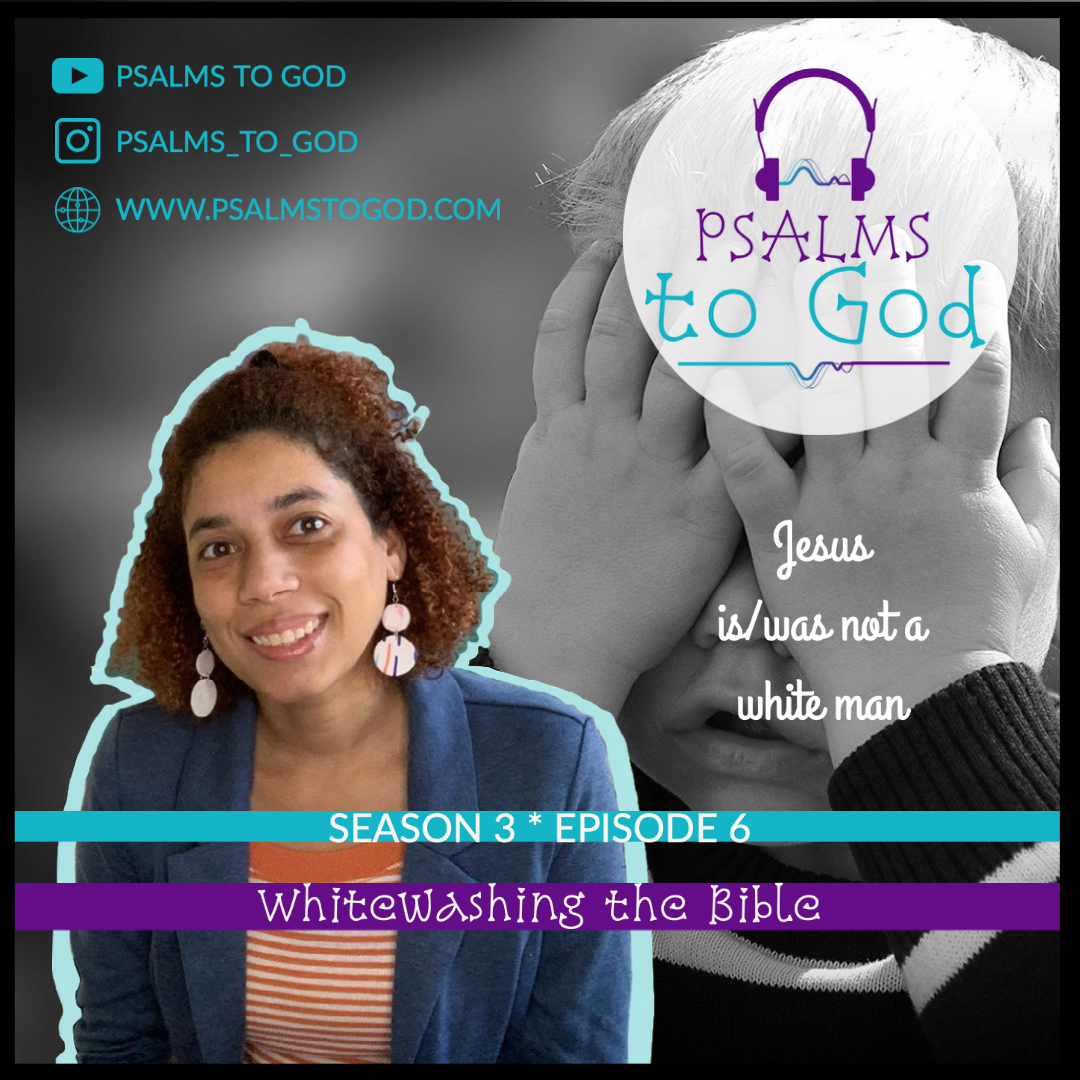
Whitewashing the Bible

Jesus was not and is not a white man--neither were most of the people discussed in the Bible.
5“I am black and beautiful,
You daughters of Jerusalem,
Like the tents of Kedar,
Like the curtains of Solomon.
6 Do not stare at me because I am dark,
For the sun has tanned me. Song of Solomon 1:5-6 NASB

definition
Whitewash [1]
noun
  1. : to alter (something) in a way that favors, features, or caters to white people: such as
    a : to portray (the past) in a way that increases the prominence, relevance, or impact of white people and minimizes or misrepresents that of nonwhite people
    b : to alter (an original story) by casting a white performer in a role based on a nonwhite person or fictional character

Genesis

  • Adam is from the Hebrew word meaning red (Edom is from the same word)[2]
  • Red, like red clay--remember Adam was created from the "dust of the ground" (Genesis 2)
  • Dirt around the world actually matches human skintones (generally) and the dirt that would have been near Eden would have been the kind good for growing plants; this type of soil is dark brown or black
  • If two people possess only recessive traits (e.g., blue eyes), the cannot create a baby with dominant traits (e.g., brown eyes)
  • Two "pure" white people cannot give birth to a black baby
  • Two "pure" black people however can have white babies; there are also black people in Africa with naturally blue eyes and blonde hair

The Non-Existant Curse of Ham

  • To justify the mistreatment of Africans, "Christian" Europeans came up with the non-existant curse of Ham (it is actually Ham's son Canaan that is cursed in Genesis 9)
  • The curse was said to be dark skin
  • Below are some things to consider about this "theory"
    • Canaan actually settles in the Middle East, not sub-saharan Africa
    • The Canaanites intermarry with the Israelites—specifically, the entire line of Judah stems from a Canaanite woman (Genesis 38)—so if the curse is dark skin, the Israelites could not have been white
    • Cush, Mizraim, and Phut who eventually migrate into the main African continent are never cursed

Confusion of Nationality

  • The Israelites and the Egyptians had to look similar because they're always being confused for each other
  • Joseph's brothers don't notice he's Hebrew when they journey to Egypt during the famine. (Genesis 42:23)
  • Pharaoh doesn't say anything about his daughter taking in a Hebrew baby when he's just ordered all of them killed
  • The Midianites confuse Moses for an Egyptian (Exodus 2:19)
  • Paul is confused as an Egyptian (Acts 21:38-39)
  • Mary, Joseph, and baby Jesus flee to Egypt to avoid Herod's decree; in fact the Israelites alway fled to Egypt iin times of trouble. Likely they blended in better, just as I would blend in better in Brazil than in Japan.

The Curse of Whiteness?

  • DISCLAIMER: This is not meant to suggest that white people are white because they are cursed; it is merely to point out the irony of claiming a curse of blackness to inflict harm when the Bible suggests something closer to the opposite
  • In 2 Kings 5 a man named Gehazi, and all his offspring, is cursed with leprosy--the description is that he turned "white as snow" (2 Kings 5:27)
  • The leprosy of the Bible which is not the leprosy of today[3] is acutally associated with whiteness multiple times:
    • Miriam's leprosy is associated with turning white (Numbers 12:10)
    • Moses' white hand is called diseased (Exodus 4:6-7)

References

  1. "Whitewash". Merriam Webster; visited February 2021
  2. "Strong's H119. אָדַם". Blue Letter Bible; visited February 2021
  3. Dr. Alan L. Gillen. "Biblical Leprosy: Shedding Light on the Disease that Shuns". Answers in Genesis. June 10, 2007

Acts 6-8 & 10-11: The Transition

A major transition happened in the course of Christianity after the stoning of Stephen--the Word began to be preached to the Gentiles! In this episode we cover: Acts 6-7: The Stoning of Stephen Acts 8: Philip Preaches to the Samaritans & an Ethiopian Acts 10-11: Preaching to the Gentiles We'll get back to the conversion of Paul in Acts 9 next week! Also, what exactly does it mean to be a Gentile?
Howbeit the most High dwelleth not in temples made with hands...Acts 7:48 KJV

The Stoning of Stephen

When they heard these things, they were cut to the heart, and they gnashed on him with their teeth.Acts 7:54 KJV
Stephen was one of the deacons chosen to assist the widows. He is devout man who performs many miracles within the community which enrages the Jews who don't follow Christ. Because of this, they accuse him of blasphemy—which was a very serious crime in Israelite society. When Stephen addresses the issue, he doesn't defend himself. Instead he gives a history of the Israelite nation, pointing out the similarities of his contemporaries to the forefathers who struggled with idolatry. This enrages them even more, so they kill him. Among the Jewish leaders who take part in this is Saul (later known as Paul)! Like Christ, Stephen's last words are a plea of forgiveness for those killing him.

Turning Point

This marks a major turning point in the history of Christianity. Before Stephen's murder, the gospel was only preached to the Jews. After his death, we see focus shift to spreading the gospel beyond the Israelites. This is important to remember as it often comes up in discussion about prophecy!

The Star of David?

42Then God turned, and gave them up to worship the host of heaven; as it is written in the book of the prophets, O ye house of Israel, have ye offered to me slain beasts and sacrifices by the space of forty years in the wilderness? 43Yea, ye took up the tabernacle of Moloch, and the star of your god Remphan, figures which ye made to worship them: and I will carry you away beyond Babylon.Acts 7:42-43 KJV
During Stephen's speech to the Jewish leaders, he quotes Amos 5:26, which mentions the star of a foreign god that Israel has made "their star." The star in reference is the star known today as the Star of David—the hexagram. This star actually represents idolatry.[6][7][8] It is interesting that Amos condemned them for it in the Old Testament, Stephen condemns them again in the New Testament, and today that star is on the flag of Israel...

Preaching to the Gentiles

What Does Gentile Actually Mean?

The dictionary definition of Gentile is non-Jew, and this is how most Christians define it. However, if you pay close attention to the Bible, this definition seems amiss. Throughout the text we see Biblical authors refer to Hamites (descendants of Ham) and Semites (descendants of Shem) by their tribe names—Ethiopian, Egyptian, Canaanite, Philistine, etc. We never see the Israelites refer to these people as Gentiles and in Genesis 10:5, we see the "isle of the Gentiles" reference a place where Japheth's descendants reside. Furthermore, the Jews have a particular dislike for the Gentiles that is unlike their "separate-ness" from others. The Israelites frequently intermarry with the tribes from Ham and non-Israelite Semites, and we see in Acts 8 that Philip has no problem speaking to the Ethiopian or the Samaritans. Yet Peter has to get a divine message from God to feel comfortable meeting with the Roman Cornelius, and it is only after Peter shares the gospel with these Gentiles (Romans) that the disciples get together to demand answers.

The Samaritans

Acts 8:1-24 covers Philip preaching to the Samaritans. There were already believers in Samaria, many who had already been Baptized—remember when Jesus spoke to the Samaritan woman at the well? However, the Samaritans had not received the Holy Spirit, so Peter and John were sent to show miracles and bring the Holy Spirit to them. We are told multitudes were saved there.

Among those multitudes was a sorcerer named Simon who converts. Despite believing, Simon still doesn't fully understand. He desires the abilities Peter and John have (giving the Holy Spirit). He proposes paying for the abilities and is promptly rebuked. Simon's desire to skip the work and jump straight to the power is more common than we think. While many of us would not suggest we "pay" for God's gifts, many do have a desire to skip the process of working and expect all the benefits of a full relationship with Christ. Christ Himself said some things can only be done with prayer and fasting, which means we have to grow in our relationship with Him to be able to perform certain miracles (Matthew 17:19-21).

The Ethiopian

Philip also preaches to a man from "Ethiopia." I put Ethiopia in quotation marks because it is important to remember that here Ethiopia does not reference the country we think of today but rather a broad region in Africa including Cush, Ethiopia, and Nubia. This man is already a believer in the God of Abraham, but he is unsure of how Christ fits into the picture. After asking Philip, he receives the gospel and requests Baptism.

Candace

Many think "candace" is a proper name in Acts 8:27, however it is actually a title similar to pharaoh.[2][3]

Eunuch

There's a bit of a debate over whether the term eunuch is always literal in the Bible. [5] At the very least it refers to a man who is celibate, though if taken literally, it also means he is celibate because he is disfigured. It was common during the ancient days for those who guarded queens (and concubines) to be emasculated so the king wouldn't have to worry about these guards sleeping with the women [*resists urge to go off on a rant about the sexism involved here*].[4]

Cornelius

Cornelius is a Roman soldier who is a man of God seeking truth. God visits him and sends him to Simon Peter. This is the interaction that requires a vision from God to both men (Cornelius and Simon Peter). When Peter visits Cornelius (and his household), the Holy Spirit falls on everyone in there, including the Gentiles. It is this event that prompts the disciples to convene and discuss whether the Gentiles are to be included in the gospel, ultimately understanding that God has included them in salvation.

Baptism

Baptism is featured heavily in in these chapters. There are a few things I noticed in these chapters that I wanted to point out. One of the issues I had trying to get baptized in our time is that people don't want to baptize you into the Body of Christ, but into their denomination. When I brought this up to the pastor who eventually baptized me, he made a point about that fact that just as God meant for babies to be born into a family, so He meant for babes in the faith to be born into a family. On the surface this sounds great, but if you read Acts 8, it's apparent that after baptizing the Ethiopian, Philip leaves. Similarly, it does not suggest that anyone stays permanently in Samaria after baptizing the Samaritans.

Another issue I take with the way some congregations/denominations handle baptism is the requirement of baptismal classes. Philip shares the gospel with the Ethiopian, who is baptized on the spot because he truly believes. While we aren't told how much time elapsed during the journey, it doesn't seem to be more than a few days at most and could very well have been a few hours for all we know!

References

  1. "Gentile". Merriam Webster; visited May 19, 2020
  2. Joshua J. Mark. "The Candaces of Meroe". Ancient History Encyclopedia. March 19, 2018
  3. Brent MacDonald. "the Bible and the Kingdom of Cush - so called "Ethiopia"". Not Just Another Book. 2014
  4. "Eunuch". Bible Study Tools; visited May 19, 2020
  5. Megan Sauter"Eunuchs in the Bible". Bible Archeology. January 21, 2020
  6. "Remphan". Bible Study Tools; visited May 19, 2020
  7. George Lujack. "Star of David or Star of Remphan?". Scripture Truth Ministries. March 21, 2018
  8. "In Acts 7:43, what are “the tabernacle of Moloch” and “the star of Remphan”?". Hermeneutics - Stack Exchange; visited May 19, 2020

Speak Life feat. Sam

This episode is about the importance of how we talk about people (and ourselves. When I was in graduate school, I was appalled to see caregivers constantly tell small children how "bad" they were—especially when the kids were not doing anything outside of normal child behavior. In the Bible, patriarchs of families took the time to speak prophecies of greatness (or disaster) over their children and each of these prophecies came true. These parents understood the power of the tongue and wielded it to lift up the children they saw potential in and tear down those they saw on a path of destruction. I see a lot of the latter in our society today, but not as much as the first. Sam and I discussed the general apathy people have for what they're saying and have come to the conclusion that we should be much more precise in how we speak about others.

No foul language should come from your mouth, but only what is good for building up someone in need, so that it gives grace to those who hear. Ephesians 4:29 CSB

Examples of Patriarchs speaking blessings and curses over their children:
  • Noah curses Canaan, blesses Shem (Genesis 9:24-27)
  • Isaac blesses Jacob, lowkey curses Esau (Genesis 27)
  • Jacob blesses/curses his sons (Genesis 49)
People often express their disdain for a person's decisions by condemning the child and set low expectations/standards from the onset due to their experience with the parent.
20From the fruit of a person’s mouth his stomach is satisfied;
he is filled with the product of his lips.

21Death and life are in the power of the tongue,
and those who love it will eat its fruit.
Proverbs 18:20-21 CSB

Have you ever seen parents speak blessings on their children the way the patriarchs did?
Let no corrupt word proceed out of your mouth, but what is good for necessary edification, that it may impart grace to the hearers. Ephesians 4:29 NKJV

The Power of the Tongue
  • Ephesians 4:29
  • James 1:19-26-8
  • James 3:5-12
  • Matthew 12:24
  • Matthew 15:11
  • 1 Peter 3:10
  • Proverbs 10:19
  • Proverbs 15:4
  • Proverbs 15:8
  • Proverbs 17:9
  • Proverbs 17:27-28
  • Proverbs 12:6-7
  • Proverbs 12:13-14
  • Proverbs 12:18-19
  • Proverbs 15:1-2
  • Proverbs 18:6
  • Proverbs 18:20-21
  • Proverbs 21:23
  • Psalm 34:13
  • Psalm 52:2-9
  • Titus 3:1-2
I used to say I felt bad and then I actually felt bad. There is actually evidence that you can make yourself sick that![1]

The verses Sam mentions about "speaking life" and "dry bones" are in Ezekiel 37

Nehemiah & Clearing Debt
In the episode we veered off topic a bit to talk about unity and the tendency for opposition to come from the inside. I mentioned the podcast I did on Nehemiah and how he dealt with a situation where the rich Israelites were taking advantage of and abusing the poor Israelites. That episode is linked below;[3] the verse I mentioned in reference to debt being cleared after 7 years is found in Deuteronomy 15:1.

The Law of Attraction is Not Christian
It's really hard to wrap our around this concept with veering to "the Law of Attraction" and saying things like "speak it into existence" and "name it and claim it." The danger of most New Age teachings is that they get somethings, maybe even most things right—but a little leaven leavens the whole lump (Galatians 5:9)! The missing piece is God. There is power in The Word, not my word. I can only speak something into existence if I have surrendered my voice to God and it is actually the Holy Spirit speaking. We must keep this in perspective.[2]
13By rebellious speech an evil person is trapped,
but a righteous person escapes from trouble.

14A person will be satisfied with good
by the fruit of his mouth,
and the work of a person’s hands will reward him.
Proverbs 12:13-14 CSB

Pineapple Fried Rice -- Not Burned!
Update on the Rice Situation
I started cooking rice right before I started recording the podcast with Sam and totally forgot! For those who are curious, once I went back and cooked rice while I wasn't distracted, this is how it turned out.

References

  1. Melissa Malamut. "Can You Think Yourself Sick?". Boston Magazine. April 4, 2013
  2. Philia Ministries -T he King is Coming. Christians & The Law of Attraction Deception". YouTube. February 20, 2017
  3. Ree Hughes. Most Likely To Be a Revolutionary". PSALMS to God. February 18, 2019
  4. Malala. Malala Fund; visited March 3, 2020

1 Chronicles 1-9: Genealogies

Insights from the genealogies are pointed out.

Introduction

The first 9 chapters of 1 Chronicles gives us the lineage of the Israelites. It starts by walking us through from Adam to Noah to Abraham, then traces the lineage of Ishmael and Isaac, before zeroing in on the 12 tribes of Israel. It is a bit hard to follow the names due to multiple wives and chronology bouncing between brothers. Below are a few things that stood out to me.
Top

Ephrath, Caleb's Wife

Caleb, one of the only two spies to trust God to lead the Israelites to victory, married a woman named Ephrath. I find this interesting because throughout the Old Testament we hear about the Ephrathites. When I first read the word "Ephrathites" I thought it was a misspelling of Ephraimites, but I noticed that the people referred to as Ephrathites all grew up the region known as Judah, specifically around Bethlehem. Once I realized this, I assumed they were dubbed the "Ephrathites" because the descended from a man named Ephrath. However, 1 Chronicles 2 makes me wonder if they inherited this name from a woman? Resources state that the name is given after the old name for Bethlehem, Ephratah.[1] Of course, that only makes me wonder how Bethlehem received that name in the first place...
Top

Canaanite Women

Whites in the South spent a lot of time trying to craft their version of Christianity to paint Black people as inferior and deserving of slavery. People even twisted the Curse of Canaan to extend to Ham in attempt to justify the treatment of slaves. Interestingly when we look at the lineage of Judah laid out in 1 Chronicles 2, we can see that the line of Judah sprang from a Canaanite woman. This means David, Solomon, and Jesus all have ties back to Canaan and to Ham.
Top

Simeon

The end of 1 Chronicles 4 covers information on Simeon's descendants who essentially merged into Judah. However, a remnant of Simeonites survived through the reign of Hezekiah and killed the Amalekites living in the land to establish their own place.
Top

References

  1. "Ehrathite". BibleStudyTools.com; visited February 2017

Shem

Shem is one of Noah's sons and one of the eight people to survive the flood. His descendants settled in the Middle East and Asia. It is through him that the nation of Israel is born. His name gives us the words "Semite" and "Semitic." Scholars debate on whether he is the eldest or middle child.

Introduction

Disclaimer: Liberty taken with the depiction of Shem.
Please remember the Bible does not
specify a description for most individuals.
Shem is the middle son of Noah; he turns 100 two years after the flood. Shem is an ancestor of Abraham, and thus the Israelites are descended from Shem. Shem dies at the age of 600 years old according to Genesis 11:10-11. Shem's descendants are known as Shemites or Semites, the word Semitic derives from Shemite[1].
Top

Eldest or Middle Child?

Some deny Japheth's position as eldest due to Genesis 10:21, however a careful inspect will show that Japheth is in fact the eldest of the three sons. Those insisting that Japheth is not the eldest are confused as to whether "the elder" refers to Shem or Japheth (the confusion stems from different translations, it seems fairly apparent in the King James Version that Japheth is the elder of the two). It is easily gleaned that Japheth's brother, Ham, is the youngest based on Genesis 9:24. To determine that Japheth is the oldest we need two verses: Genesis 7:6 and Genesis 11:10 From Genesis 7:6 we know that either at age 500 Noah began having sons, or he had already had all three son by the time he was 500. the flood occurred 100 years later, when Noah was 600. If Noah began having children at 500, his oldest child would be 100 at the onset of the flood. If Noah finished having children at 500, his youngest son (Ham) would be 100 at the onset of the flood. However, Genesis 11:10 tells us that when Shem is 100 years, it is 2 years after the flood. This means that Noah was 502 when Shem was born and Shem cannot be the oldest. Since, Ham is the youngest and Shem is not the oldest, Japheth must be the oldest.
Top

Bible Verses

In the selfsame day entered Noah, and Shem, and Ham, and Japheth, the sons of Noah, and Noah's wife, and the three wives of his sons with them, into the ark;Genesis 7:13
These are the generations of Shem: Shem was an hundred years old, and begat Arphaxad two years after the flood:Genesis 11:10 KJV

Other Verses on Abraham

  • Genesis 5:32; 6:10; 9:18,23,26-27; 10:1,21-22,31; 11:11
Top

Character

Not much is said about Shem in terms of his character. When Ham tells Shem and Japheth of their father's drunkenness and nakedness, Shem goes with Japheth (backward so as not to look upon Noah's nakedness) to cover him. From this we can conclude Shem was at the least respectful to his father.
Top

Descendants

Shem has Elam, Asshur, Apraxad, Lud, and Aram. Through Shem's son Apraxad, we have the lineage of both Abraham and Lot. One of Shem's descendants, Eber, is thought to be the namesake of the word Hebrew[2].
Top

Nations

Shem's son Elam creates the nations of the Elamites and Persians. Asshur was the progentiator of the Assyrians and Northern Iraqis. Aphraxad's descendants created the Chaldeans, Hebrews, Arabians, and Moabites/Palestinians. Lud's descendants created the Ludim, Lubim, Ludu, Lydians, and other groups in Asia Minor/North Africa. Shem's final son Aram is the progenator of the Syrians and Lebanese[3]. Shem's descendants populated the Middle East. Any of the tribes originally speaking Semitic—Semitic stems from the word Shemite—languages are descendants of Shem. Countries with populations speaking semetic languages currently in the world are Algeria, Bahrain, Chad, Djibouti, Egypt, Iraq, Jordan, Kuwait, Lebanon, Libya, Mauritania, Morocco, Oman, Palestine, Qatar, Saudi Arabia, Somalia, Suda, Syria, Tunisia, the United Arab Emirates, and Yemen (Arabic), Malta (Maltese), Israel (Arabic and Hebrew), Ethiopia (Amharic, Tigré, and Tigrinya), Ma'lūlā, Syria (Western Aramaic), Eastern Aramaic/Turoyo (Turkey)[4].
Top Top

References

  1. "Semite". Dictionary.com. 2015
  2. Holman Publishers. Holman KJV Study Bible. pg 27. 2014
  3. "The Table of Nations". bibliotecapleyades.net. 2015
  4. "Semitic Languages". Encyclopædia Britannica. 2015
Top

Genesis 6-10: Noah & the Flood

An examination of Noah, his family, and the flood mentioned from Genesis 6-9.

Introduction

Genesis 6 through Genesis 9 details the events of the global flood including the cause, the preservation of life, and the aftermath. These chapters identify the first covenant between God and man and further illustrate the concept that the price of sin is death.
Top

Evil of Man Before the Flood

The Sons of God and Daughters of Men

In Genesis 6, we are told that just before the flood the "sons of God" married "daughters of men" and became very evil. There is much discussion as to what is meant by the sons of God versus the daughters of men. There are people believe sons of God refer to angels even though out of the 10 times this phrase appears in the Bible only once does it refer to angels[9]. In Matthew 22:29-30, however, Jesus tells us that angels don't marry, making it highly unlikely that in this case this is a reference to angels. The only plausible chance would be if these were fallen angels, which doesn't make sense; why would Moses still refer to them as sons of God? The phrase sons of God is reserved for those who are righteous and follow God. If sons of God refers to fallen angels, is this something that is still occurring even today? Many believe the sons of God refers to the chosen line Seth and the daughters of men refers to the corrupt line of Cain[7][8]. Regardless, we are told that the children of these matches were corrupt men with great power.
That the sons of God saw the daughters of men that they were fair; and they took them wives of all which they chose. Genesis 6:2 KJV
Top

God Repents of Creating Man

It saddened God that man was so intent on committing acts of evil. Some have argued the fact that God repents or is sorry for creating man (Genesis 6:7) "proves" God does not know the future. However, a more logical explanation is that God knowledge that man would fall to this depth did not stop it from hurting Him when He saw how they behaved. A modern example would be when people go shopping on black Friday: they know it will be hectic yet they still go looking for deals—during the chaos it is likely that they regret coming, even though they knew beforehand that it would be that way, and when they return home with their majorly discounted merchandise they are happy again that they decided to go.
And God saw that the wickedness of man was great in the earth, and that every imagination of the thoughts of his heart was only evil continually. Genesis 6:5 KJV
It was the evil in the hearts of man that caused God to destroy them with the flood.
Top

120 Years

In Genesis 6:3 KJV tells us that God put a limit or expiration date on mankind. The question is if this time (120 years) referred to a cap in how long man would be allowed to live (you'll notice that after the flood people live shorter lives) or if it referred to how long it would be before He destroyed the world with the flood. After the flood there are still people who live to 120 years, though if you assume God is restricting how long man can live in this passage, He does not say when He will limit the age of man. It makes sense that if He were restricting age, it would be a gradual process, as the surviving humans would need the extra time to repopulate the Earth. Supporters of this theory also argue that it is possible that the shortening of life was a trait given to Noah and his sons at the moment God spoke, which was passed down genetically (which would also take time)[1]. Currently there is a woman claiming to be 127 years old, however, she does not have proof[5]. The Guinness Book of World Records cited the oldest human to ever live to have been 122 years old[6]. While this is far from the 969 years of Methuselah, it is still greater than 120 years. Yet there are still counters to explain the possibility of someone living beyond 120 years. In this passage God is speaking of His disdain for man's wickedness an inclination to follow the flesh as opposed to God. In some versions of Exodus 20:12 KJV, God says that your days can be prolonged by honoring your mother and father (other translations use "long" instead of "prolonged"). Thus, it is possible that those making it above 120 years were granted a prolonged life for their conduct. It is my opinion, however, that God was speaking of how long it would be until He brought about the flood—this theory has no contradictions. Plus, in Psalm 90:10 KJV, we are told the average lifespan of mankind is 70-80 years. Not only is this consistent with what we see, there is no contradiction as we are being given an estimate or an average. In Genesis 6:3, the 120 years appears absolute. It is hard to say for certain which is the correct interpretation.
Top

Giants/Nephilim

There were giants in the earth in those days; and also after that, when the sons of God came in unto the daughters of men, and they bare children to them, the same became mighty men which were of old, men of renown. Genesis 6:4 KJV
Many legends, myths, and stories have been created for the mysterious Nephilim of Genesis 6:4 (the Nephilim also appear in Numbers 13:33). So who are they? Are they the unholy offspring of angels and mankind, like some suggest? A portion of the population that grew into giants? Neanderthals!? There are three main suggestions for who the Nephilim are: half-human/half-angel offspring of "sons of God" and "daughters of men", royalty/nobility, or heroes. We know that they existed both before and after the flood, so if they were giants in the literal sense the gene to produce giant offspring must have been within Noah and his sons as well since they return after the flood. If indeed fallen angel went against their angelic nature to produce children, this would have had to occur after the flood as well (which is theoretically possible). Royalty and heroes were bound to reappear after the flood, so that is possible as well.There are arguments for an against each theory (some of the arguments for and against Nephilim being half angel, half man are discussed in the section entitled The Sons of God and Daughters of Men). An in depth argument that the Nephilim were the product of fallen angels can be found here, and brief analysis on many of the theories can be found here.

The main problem I have with the argument for Nephilim being the offspring of man and angel is the timing. In the link above the author suggests that the devil was attempting to "poison" the seed of Eve (remember Genesis 3:15) so that the Messiah could not come to defeat him. The problem with this theory is that if the devil actually believed this was possible, why wouldn't the angels have continued this behavior until the Messiah was born? Why would they only infiltrate one family (Anak)? This is a bit of a plot hole in this theory to me... Of course the devil doesn't have the power to know the future so its possible that he began this course and then changed his mind. Later in the Old Testament we will meet Goliath who is a literal giant (in 1 Samuel 17 he is said to be over 6 cubits tall which is more than 9 feet!), so it seems unlikely that the term "giants" was being used figuratively. It is possible that it was a trait that managed to only be viable in a subset of the population. The tallest man on record was 8ft 11in[10] (exactly one inch shy of Goliath...), so it is possible that this gene still exists, but was simply more prevalent back then. It is hard to say for certain, though I lean towards the latter in my personal opinion.
Top

God Chooses Noah

Even in all the chaos and evil of mankind, God is able to find one person whom He still considers righteous: Noah. Genesis 6:9 tells us that Noah was just and "perfect in his generations." Perfect in his generations means that compared to those of his era or generation (already referred to as wicked men by God), Noah was very righteous[3]. For this reason Noah is blessed by God and his family is spared from the flood. In Genesis 6:8 the word grace—like the grace we received upon Jesus' sacrifice—is used to describe Noah's blessing. Note also that there is a word play in the original Hebrew words for Noah and grace; both words are made of the same two consonants in reverse order[3].
But Noah found grace in the eyes of the Lord. Genesis 6:8 KJV
Top

The Ark

Noah is instructed to build an ark and in Genesis 6:14-16 we are given the specifications of the ark. It was made of "gopher" wood which is thought to mean either pine or cypress[3][2]. God tells Noah that the ark should be 300 cubits long, 50 cubits wide, and 30 cubits tall. A cubit is approximately 18 inches, which means the equivalent contemporary measurements would be 450ft (137.16m) long, 75ft (22.86m) wide, and 45ft (13.72m) tall. That's roughly 33,750ft2 of space on each of the three floors Noah is instructed to build in the ark. This would be a massive ship.
Top

Parallels with Adam

There are many parallels between God's instructions for Noah when he exits the ark and God's instructions for Adam.
Adam Noah
Dietary Instruction Genesis 1:29-30 - Can eat herbs and plants Genesis 9:4 - Can eat both animals as well as plants
Exceptions to Dietary Instruction Genesis 2:17 - Can't eat from the Tree of Knowledge Genesis 9:3 - Can't eat blood
Fill the Earth Genesis 1:28 - Be fruitful and multiply Genesis 9:1,7 - Be fruitful and multiply
Punishment to the Earth Genesis 2:17 - Cursed is the ground, it brings forth thorns and thistles Genesis 9:2 - Animals now have fear
Man is Special Genesis 1:26 - Man made in God's image. Genesis 9:6 - Murders of men must receive death because man was made in God's image
Price of Sin is Death Genesis 2:17 - God says "You will surely die" of eating the forbidden fruit Genesis 9:5 - Sacrifice required
Top

The Covenant

Before Noah even begins building the ark, he is told by God that if he follows God's instructions God will make a covenant with him. After the flood, in Genesis 9, God makes the first covenant to man with Noah. In this covenant He promises not bring another flood to the Earth as well as promises not to punish the Earth for man's mistakes. God then sets a rainbow in the sky as a sign of this promise. Nay-sayers may suggest this is an elaborate explanation of the rainbow which always occurs after the rain, but an obvious question is: if it was made up, how did they know it wouldn't flood again and that world would never be destroyed by water? All scientific versions of the end of the world also end in fire.
Top

The Flood

Animals

Genesis 6:19 is the origins of the two by two idea; here Noah is instructed to bring two of every animal to the ark, one male and one female. Later in Genesis 7, Noah is told to bring clean beasts by sevens and unclean animals by twos. In Genesis 6, God was defining a pair for Noah: one male one female. God was explaining to Noah that in order to keep the species alive a pair of each species was needed. In Genesis 7 God is telling Noah an exact number to bring. In essence He said told Noah it requires 2 to say the species survived the flood but He wants more than two aboard the ship. It is unclear if sevens refers to seven pairs or groups of seven. Some believe it to be seven pairs, others think three pairs with one left over for the sacrifice Noah gives God directly after the flood. Note that by referencing clean and unclean animals, we are also being told that either Noah already understood the distinction of clean and unclean animals or that this is the moment the distinction was made to God's people. Thus the notion of clean and unclean predates Judaism.
Top

The Timeline

Once Noah finishes the Ark, God tells Noah the flood will begin in 7 days. We are told that the flood began on the 17th day of the second month during Noah's 600th year on the Earth. In the Jewish Calendar, Iyar is the second month which aligns with our April or May (naturally, remember, April showers bring May flowers)[4]. However, they could mean the second month after Noah's birthday, it is not clear. When the flood started, water came from both "the fountains of the deep" and from the sky. This means it not only rained but water came from out of the ground as well. This continued for 40 days and 40 nights (this could possibly mean simply 40 days as in Genesis 1 we are told night + day passed and it was the first day). The water reached a height of 15 cubits (22.5ft) which overtook the Earth for 150 days. It took another 150 days for the water to recede from the Earth. The Earth was dry on the on 27th day of Noah's 601th year (a little more that 1 year later). An in depth overview of the timeline is shown in the article Biblical Overview of the Flood.

In History

It is common knowledge that the story flood persists throughout many cultures in the ancient world. In a future post, we'll look a some of them and discuss the significance of the global flood.

References

  1. Cramer, Guy. God's Limit on Man's Years. Trinity Consulting. 1998
  2. "Gopher Wood". Jewish Encyclopedia. 1906
  3. Holman Publishers. Holman KJV Study Bible. pg 19. 2014
  4. "The Jewish Month". Chadbad.org. 2008
  5. Li, David K. "127 Year Old Said to be the Oldest Person to Ever Live". New York Post. August 31, 2014
  6. Oldest Person Ever. Guinness World Records. 2015
  7. "The Sons of God". The Bible Study Site. 2015
  8. "Who Are the Sons of God?". Associates for Scriptural Knowledge. 2014
  9. "Who were the sons of God in Genesis 6?". GotQuestions.org. 2015
  10. "Tallest Man in History". Guinness World Records. 2015

DON'T MISS

Book Review,Food,Testimony
© 2022 all rights reserved
made with by templateszoo