


Showing posts with label Natural Hair. Show all posts
Showing posts with label Natural Hair. Show all posts
Natural Hair
Testimony
 I thought I was going natural for cosmetic reasons, but really, God wanted me to stop putting harmful chemicals in my hair because I was developing fibroids!
Going Natural for All the Wrong Reasons
Bible Study
Chapter Study
Isaiah
Natural Hair
Pride
Prophecy
 Isaiah 3 gives us a preview of Israel without some of the most productive members of society and suffering with vanity. The punishment for Israel's behavior is discussed and includes terrifying consequences such as children ruling over them.
Isaiah 3: Judgment of Israel
 Isaiah 3 gives us a preview of Israel without some of the most productive members of society and suffering with vanity. The punishment for Israel's behavior is discussed and includes terrifying consequences such as children ruling over them.
About Me
Anger
Black History
Circus of Words
Culture
Education
Natural Hair
Perseverance
Pride
Why it Matters: A Discourse on Why We Won't "Shut Up" About Being Black in America
I was having a normal conversation about how working for pennies inspired me to do better in school, and in this I was offering the proof of the pudding in the story of how I tried to flunk myself out of honors my freshman year of high school, but was often the highest scorer on assignments all the years after my job experience. That's how it started. In explaining why I wanted out of honors, I said I hated my high school. So, the person asked for clarification, and I gave it. Some of why I hated my high school was resentment—I wanted to go to the high school everyone else in my family went to—but alot of it was the racial tension and the feeling of being isolated. Which brought about the question "why do you feel isolated from white people?"
Regardless, having a surface conversation with people is not the same as being friends with people or making a connection. Yes, I can have polite conversation with people all day (and I mean that literally, I'm a talker!), but that doesn't mean I feel connected to the people I'm talking to. The conversation John and I had is a prime example of it. While my classmates were hooked on Friends and Seinfeld, I was watching Living Single and Girlfriends. What makes these seemingly minuscule differences isolating is that the mentality of many people is their ideas are what's normal and everyone else is abnormal. The fact that I enjoyed different things was "odd" simply because I didn't like what they liked. Because they had never heard of the shows I watched or the music I listened to, and I didn't like the shows they watched or the music they listened to, there had to be something wrong with me. Which brings us back to the "white is normal" mentality.
Instead, I offered the example of Jan Matzeliger, who created a machine to speed up the making of shoes.[1] Of course as a lover of shoes, this would be the first person who came to mind. John responded that this wasn't remarkable, that people like Thomas Edison invented the light bulb. Well, you walk around in shoes everyday, don't you? I assure you I spend more time using my shoes than light bulbs (especially if its sunny out!). Further more, you're comparing a man who was denied nothing, inventing something versus a man who lived in a era when it was illegal for blacks to learn how to read! Even under oppression black people were succeeding in the occupations typically ascribed to whites of that era (inventors, writers, senators, etc.). Not the first black man to be a U.S. senator (Hiram Revels), but the second black man to become a U.S. senator, Blanche K. Bruce, was born a slave. What's more, they both became senators in Mississippi, i.e. the deep South.[2][3][4] You have Garrett Morgan, who invented the gas mask and the traffic light—with only a 6th grade education; Benjamin Banneker, a self-taught mathematician and astronomer; Thomas Jennings, who holds a patent for a dry cleaning process; Dr. Daniel Hale Williams, who received an M.D. in 1883 (only 20 years after the abolishment of slavery), founded a hospital, and performed the first open heart surgery in 1893.[5][6][7][8] Black people have always contributed to a society that sees them as worthless. By suggesting that these inventions are somehow not worthy of mentioning in a classroom and continually arguing that we didn't do anything "remarkable" before the 60's only follows that same trend.
John countered my dismay at the lack of black literature in school with shock, because he spent a whole semester doing a play about one book by a black person. Wow, one whole book. From elementary to middle to high through college, you can only mention one book you've read by a black person and you can't even tell me the name of the book or who wrote it? #AllLivesMatter, though, right? I can't even count the number of books I was required to read that were written by and about whites, but I can name at least 10 without straining myself. As if boasting that one book did black literature justice wasn't evident of the disconnect John had, he confirmed it by proudly remembering that the main character's catchphrase was "yes'em." *side-eye* As in, the black way of saying yes ma'am or yes sir? As in, what black people had to say to whites in the south to avoid being lynched... I don't know what he read, but I'm convinced he didn't read legitimate black literature, which is probably why he thinks black people were sitting idly, wallowing in their oppression all that time before the civil rights movement. I need him to at least get on the level of The Bluest Eye by Toni Morrison (or anything by Morrison, really) or Invisible Man by Ellison. I mean, really, there are countless influential black authors...
And the discussion on black literature didn't stop there... When discussing instances where students deliberately read the n-word from a book when then teacher had gone through lengths to blot out the word, John said blotting out the n-word in a book "ruined" it. Did he stop to wonder how many books he read that demeaned white people? Without even thinking I can name at least 4 books we had to read in school that referred to blacks as n*****s (and not just on one page), but even as I think, I can't recall a single book that uses pejorative language to describe whites (and we'll leave the fact that everyone else is just absent all together for another conversation). It's easy to be ok with something when it's not you that's being shamed. It's even easier to be ok with it, when you've never had the whole class turn to stare and view your shame because you were the only person in the room that this shame applied to.
I didn't know I was black until a white person told me. Why do you think a four year old white person child came up to me on the playground and said "you're black and I'm white," as opposed to me walking up to her saying "you're white and I'm black?" You can argue that it's natural for children to be curious about differences, but the fact is no one in my family thought "white" skin vs. "black" skin was something worth noting. None of us ever came home and asked our parents why the white kids at school were white. If this child was simply curious about differences, it was because in her world, "white" was normal and my blackness was abnormal—again with the idea that white is the norm. What's left to wonder, however, is what her parents taught her that she felt it necessary to point it out to me as though it meant something... If this were the only experience I'd ever had related to my "blackness," I would gladly sweep it under the rug as an anomaly, but this experience is what every day life has been as black person. After all, it was only shortly after that that I learned the n-word at a traffic light when the old man in the car next to ours pointed at us and told his grad-daughter (also about 4 or 5 years old), "those are n*****s." It is in rare spaces that I am able to forget that I am what society calls "black."
Out of this experience, all John wanted to know was what's so bad about people thinking I listen to rap. It's not about rap. Truthfully, I don't really listen to, but there's nothing inherently wrong with rap. It's about not being allowed to have an identity outside of my blackness. It's about the fact that even when you interact with people frequently, even after two years of hanging out with these people, they still associate "black" stereotypes to me. None of these people bothered to crack their image of what a black person is supposed to be like to realize that I don't know the lyrics to most of the rap songs by the rappers they named, because my iTunes is mostly 90's R&B, Gospel, Jazz, and Classical. The issue isn't what type of music I do or don't listen to, it's about the fact that people don't bother to get to know you for you. This is a primary factor in feeling alienated as a black person in a room full of white people. Yes, I can talk to people and have conversations, but many times those people aren't actually listening to my side of the conversation. They aren't friends, they're acquaintances who pretend to be friends.
What your preference is about makeup or how I dress is irrelevant; what you tell me about your preference in black hair is historical. The reason black people started to straighten their hair is not because we just thought it looked nice. Our natural hair was seen as unkempt, unprofessional, and later a sign of a revolutionary or black panther (power to Angel Davis #blackfistsalute). There are still occupations that require you to straighten your hair.[23] On top of bowing to conformity (assimilating as he slipped and said early in the conversation), when the Africans were brought from Africa to the U.S., they were stripped of their cultural heritage. They weren't allowed to speak their native tongues, they weren't allowed to practice their cultural habits/customs/etc. One of the things lost was how to care for our hair. Many of us straighten our hair because we don't know how to deal with curly hair. Even for whites with curly hair, this is not something taught in cosmetology classes.[24][25] For some blacks this maybe as simple as passing a flat iron over their hair, but for most of us this means chemically altering our hair. It has been suggested that Black women have a higher instances of fibroids due to the chemical relaxers we put in our hair.[26] At 27, I was told I have 2 fibroids. I haven't relaxed my hair since I was 22, just 5 years prior to this diagnosis. When I did get relaxers, I got the "Just for Me" kiddie version only 3 times a year. Most people relax their hair every 6-8 weeks; that's about twice as often as I did. Relaxers are known, without a doubt, to cause chemical burns and damage the hair.[27]
The indoctrination that we should alter our natural hair is such that I didn't know I had curly hair until I was in my senior year of high school. I had never seen my hair in its natural state before, and even then it really wasn't my natural state because it was relaxed. I went to several different stylists trying to copy the curly look sported by Jennifer Freeman. Not one of them ever thought to tell me to go natural; every single one of them relaxed my hair then tried to curl it with a curling iron.
I was in graduate school before I realized that I was burning the curls out of my hair. When I stopped, I didn't know if I was going to have the curls I was aiming for (I don't) or if I was going to have a "nappy" fro, but I was resolved to love either. I ended up somewhere in between. My black sisters who've undergone this process (and it's not an easy process, but that's a whole 'nother post) and come out with type 4 hair have often been met with the rudest comments about having "slave" hair or that "natural isn't for everyone," when their hair is just as beautiful as anyone else's. Black hair has never been appreciated or welcome, because black people have never been appreciated or welcome; we've always been considered inferior, this is just a manifestation of that sentiment. On the spectrum of curly hair, the closer you are to a "typical" afro texture, the less acceptance you will find.
When I debuted my unrelaxed hair at home, people thought I'd lost my mind. It's not just white people who've been brainwashed to think we're inferior, we've been brainwashed to believe it! My little cousins wanted to know when I would revert back to my "real" hair, because like me at 7 years old, they had never seen their natural hair. They thought straight hair was normal; again, white equals normal, black equals abnormal. Little black girls (and boys) around the Americas are raised to think their hair isn't good enough because society promotes European standards of beauty. That's not ok, and when you say to me "you look better with straight hair", all you're doing is promoting and reinforcing white supremacy.
As I explained this, the point still didn't click for John; instead he changed his example to being a short man. Short men are not being seen as threatening and thugs causing people to overreact and shoot them. Just this week an autistic black teenager who was participating in a cross country meet—I repeat he was running in a cross country race, therefore, he had on a cross country uniform—was attacked by a random man who "thought he was going to mug him." This man got out of his car—I don't know about you, but if I think I'm about to be mugged and I'm in my car, my reaction is to lock the door and/or drive off—and pushed the teen to the ground. On top of that, no charges are being brought against the man who admits he pushed the teen to the ground.[16] Just today, a black church in Greenville, Mississippi was not only vandalized with the words "Vote Trump," it was set on fire.[17] Are people out burning down the homes and worship places of short men? White supremacists have been burning black churches, cities, and businesses since the end of slavery; and if you didn't have a building for them to burn, they were satisfied to simply burn you. Two of the most prominent black owned and operated cities of the United States—Rosewood, FL and Greenwood, OK (otherwise known as Black Wallstreet)—were ransacked and destroyed while the inhabitants were massacred by white supremacists.[18][19][20] Do people follow short men around shopping malls assuming they're going to steal? As a short man, when you are out searching for an apartment or in a store do people remark that the area or object you're seeking to purchase is out of your price range without knowing anything about you? The only complaint John cited about the plight of short men was that they are less likely to get matched on online dating websites; guess what, so are black women and men.[21][22] He asserted that he gets talked down to because he's short; guess what, so do I (for being black, female, and looking 17). But, on top of being undesirable and spoken down to, I am subjected to countless consequences that affect my day to day life, simply because I'm Black. I get a whole new, made up identity that casts me as a single mother on welfare listening to rap not knowing who my baby's father is and eating fried chicken, meanwhile there's a group of people, some of whom actually hold positions of power (re: Donald Trump might actually become president), that hates me and/or thinks I'm from an inferior species...
Instead of understanding the why's of the issue, he conflated fact and opinion. He tried to suggest, going back to his short man issue, that "facts" were that being tall is more attractive. No, popular opinion holds that being tall is more attractive. That doesn't make it true, and that doesn't make it right. He was all about "just dealing with it" but that's exactly how things stay stagnant. White people have been telling blacks to "just deal with it" since they drug us over here. Blacks are slaves that's just how it is, deal with it. Blacks get lynched, just stay in your place and deal with it. Blacks get a subpar education, just deal with it. Blacks are lazy, just deal with it (Donald Trump is reported to have said this dozy).[28] Blacks are criminals, that's why police shoot you, just deal with it.
The ultimate definition of oppression and white supremacy is you telling me to bury my feelings because it makes you uncomfortable. You don't want me to talk about the issues that affect blacks because you don't want to trade in a normalcy that promotes white supremacy. You want me to be quiet, because you don't like hearing that you've lived your whole life unaware. You want me to "just deal with it," because you don't want to admit that America is over it's head in racial problems, that the America you've been taught is so great and so awesome has only taken a tiny step from where it was in the 60's. You don't want to hear that simply refraining from calling me a n***** is not enough. Well, you picked the wrong one.
I will speak out, I will shout, I will argue, I will protest, and I will fight. I'm not going to simply disappear. I am not the slave that simply got up and did her chores hoping not to get whipped; I am the slave that had an "R" seared into my flesh because I wouldn't stop running.[29] I am not the black woman who sucked it up after a long day of work and stood up so that whites could have a seat on the bus; I am Rosa Parks getting arrested because I refused to stand. I am not bowing to conformity to be acceptable for a television audience; I am Angela Davis wearing my not-quite-afro wild and free, I am Viola Davis taking my wig off on prime time TV. I am not the person who gives a talk and glosses over the most influential moments of my life to appease the white audience, I am Nicki Giovanni getting on stage expressing the truth of the experience, I am Michelle Obama telling you I live in a house slaves built. I am Beyoncé singing about afros and negro noses at the Super Bowl. I am Katherine Johnson, a human computer capable of sending people to the moon. I am Ruby Bridges, by myself in a sea of white faces. You can love it or hate it, listen or ignore, but the time has come for you to just deal with it.
Down the Rabbit Hole
As I pointed out to the speaker, that's a broad generalization. I can name several instances where I felt more comfortable and more "at home" with a white person than a black person. The conversation about my high school was talking about a specific group of white people. Further, it wasn't just a racial divide, but an economic divide, as well. So, the person—let's call him John Doe—corrects himself to say that I seem "normal" and he can't see why I would have a problem fitting in with the people in my class. Mind you, he started to use the word assimilate and caught himself, but that didn't stop that ideology from trickling into his philosophy. John might not have said assimilate, but it was obvious he meant assimilate...Regardless, having a surface conversation with people is not the same as being friends with people or making a connection. Yes, I can have polite conversation with people all day (and I mean that literally, I'm a talker!), but that doesn't mean I feel connected to the people I'm talking to. The conversation John and I had is a prime example of it. While my classmates were hooked on Friends and Seinfeld, I was watching Living Single and Girlfriends. What makes these seemingly minuscule differences isolating is that the mentality of many people is their ideas are what's normal and everyone else is abnormal. The fact that I enjoyed different things was "odd" simply because I didn't like what they liked. Because they had never heard of the shows I watched or the music I listened to, and I didn't like the shows they watched or the music they listened to, there had to be something wrong with me. Which brings us back to the "white is normal" mentality.
"Black People Basically Didn't Exist Before the 1960's"
As I continued to explain the bombardment of white-only history, John repeatedly stated that before the 60's black people were oppressed, so there wasn't anything to teach. Little did he know that he proved my point exactly; we've been brainwashed to think the all black people did before the civil rights movement is be slaves. Yet, Blacks in the North were free; they might not have been treated well but they were free. Compound that with the fact that they don't teach any history about after the 60's, and you have a whole nation of people who think blacks have never done anything. We even think we never did anything! I'll save the ramifications of this kind of teaching for my book...Instead, I offered the example of Jan Matzeliger, who created a machine to speed up the making of shoes.[1] Of course as a lover of shoes, this would be the first person who came to mind. John responded that this wasn't remarkable, that people like Thomas Edison invented the light bulb. Well, you walk around in shoes everyday, don't you? I assure you I spend more time using my shoes than light bulbs (especially if its sunny out!). Further more, you're comparing a man who was denied nothing, inventing something versus a man who lived in a era when it was illegal for blacks to learn how to read! Even under oppression black people were succeeding in the occupations typically ascribed to whites of that era (inventors, writers, senators, etc.). Not the first black man to be a U.S. senator (Hiram Revels), but the second black man to become a U.S. senator, Blanche K. Bruce, was born a slave. What's more, they both became senators in Mississippi, i.e. the deep South.[2][3][4] You have Garrett Morgan, who invented the gas mask and the traffic light—with only a 6th grade education; Benjamin Banneker, a self-taught mathematician and astronomer; Thomas Jennings, who holds a patent for a dry cleaning process; Dr. Daniel Hale Williams, who received an M.D. in 1883 (only 20 years after the abolishment of slavery), founded a hospital, and performed the first open heart surgery in 1893.[5][6][7][8] Black people have always contributed to a society that sees them as worthless. By suggesting that these inventions are somehow not worthy of mentioning in a classroom and continually arguing that we didn't do anything "remarkable" before the 60's only follows that same trend.
Black Literature
As we continued the discussion, the talk shifted to written work. During this part of the conversation, John admitted he didn't know who James Baldwin was. I knew he didn't know who Baldwin was, because "before the 60's blacks were oppressed and didn't do anything," despite the fact that Baldwin's Go Tell It On the Mountain was published to critical acclaim in 1953.[9] While we read Poe, Hawthorne, Thoreau, Whitman, Fitzgerald, and Hemingway, black classics were completely ignored. What about Baldwin, Frederick Douglass, W.E.B. Du Bois, Ralph Ellison, Frances Harper?[10][11][12][13] Phillis Wheatley was the first published black female poet, and her works were published in 1773.[14] 1773, folks! That's almost 100 years before the Emancipation Proclamation. Jupiter Hammon, a slave born in 1711 is known to have published something in Connecticut in 1760![15] To let John and my English teachers tell it, we weren't doing anything before 1960, though. |
And the discussion on black literature didn't stop there... When discussing instances where students deliberately read the n-word from a book when then teacher had gone through lengths to blot out the word, John said blotting out the n-word in a book "ruined" it. Did he stop to wonder how many books he read that demeaned white people? Without even thinking I can name at least 4 books we had to read in school that referred to blacks as n*****s (and not just on one page), but even as I think, I can't recall a single book that uses pejorative language to describe whites (and we'll leave the fact that everyone else is just absent all together for another conversation). It's easy to be ok with something when it's not you that's being shamed. It's even easier to be ok with it, when you've never had the whole class turn to stare and view your shame because you were the only person in the room that this shame applied to.
The Concept of Being Black
As the conversation continued down this horrible and deep rabbit hole, so many random topics of discussion came up, among them was the concept of being black. To someone who has no idea what it's like to be a minority, maybe it does seem like we wake up thinking about our "blackness," but that's simply not the case. I didn't define myself as a black person, the white people around me did.I didn't know I was black until a white person told me. Why do you think a four year old white person child came up to me on the playground and said "you're black and I'm white," as opposed to me walking up to her saying "you're white and I'm black?" You can argue that it's natural for children to be curious about differences, but the fact is no one in my family thought "white" skin vs. "black" skin was something worth noting. None of us ever came home and asked our parents why the white kids at school were white. If this child was simply curious about differences, it was because in her world, "white" was normal and my blackness was abnormal—again with the idea that white is the norm. What's left to wonder, however, is what her parents taught her that she felt it necessary to point it out to me as though it meant something... If this were the only experience I'd ever had related to my "blackness," I would gladly sweep it under the rug as an anomaly, but this experience is what every day life has been as black person. After all, it was only shortly after that that I learned the n-word at a traffic light when the old man in the car next to ours pointed at us and told his grad-daughter (also about 4 or 5 years old), "those are n*****s." It is in rare spaces that I am able to forget that I am what society calls "black."
Loss of Individuality
I shared the follow story with John. With a group of "friends," I played a spinoff game of charades where the object was to guess famous people (real or fictional). Each person put in maybe 6 people, and we took turns drawing a name from a hat (or a bowl, whatever). I put in superheroes like batman, spiderman, and magneto. Someone else decided to put in every rapper they could think of. After the third or fourth rapper came out of the hat, someone said to me "C'mon, you know we don't know these people why'd you put all of these rappers in?" Now you can argue that the inclusion of rappers was new to the game and since it was the first time I played with them, the logical conclusion was that I placed the names in. What you can't excuse is that someone took that opportunity to place those names in the hat. Why didn't the person put those names in before? Furthermore, when I said I didn't put them in, that person never said "hey, I put them in there." Years later, the people in the group remember it as the time I bombarded them with rap artists despite the fact that I told them I didn't do it.Out of this experience, all John wanted to know was what's so bad about people thinking I listen to rap. It's not about rap. Truthfully, I don't really listen to, but there's nothing inherently wrong with rap. It's about not being allowed to have an identity outside of my blackness. It's about the fact that even when you interact with people frequently, even after two years of hanging out with these people, they still associate "black" stereotypes to me. None of these people bothered to crack their image of what a black person is supposed to be like to realize that I don't know the lyrics to most of the rap songs by the rappers they named, because my iTunes is mostly 90's R&B, Gospel, Jazz, and Classical. The issue isn't what type of music I do or don't listen to, it's about the fact that people don't bother to get to know you for you. This is a primary factor in feeling alienated as a black person in a room full of white people. Yes, I can talk to people and have conversations, but many times those people aren't actually listening to my side of the conversation. They aren't friends, they're acquaintances who pretend to be friends.
Black Hair
As I tried to explain this point further, I mentioned the time someone told me I looked better with straight hair. I didn't bother to mention the time I was walking in the mall and someone told me I was "too pretty to be black" or the infamous line dark skinned girls get: "you're pretty for a dark skinned girl." He wanted to turn it into everything other than what it was. He asked if I would get mad if someone told me I looked nice today, suggesting that implies I didn't look nice the day before. When I pointed out that saying you look nice today is not the same as you look better today, he claimed I was playing with words. Imagine you meet someone for the first time. Perhaps you think they're attractive. Depending on the situation and your personality, you're not necessarily going to walk up and say "hey, you're gorgeous." If you become friends with the person, you're going to see them all the time, their attractiveness will become normal to you, and by the time you're comfortable around them you'll probably forget to mention it or you've subtly hinted at it to the point you don't need to mention it. If something changes, say their hair, their clothes, etc., it's a sudden difference that you are complimenting. It doesn't mean that you prefer that difference to what you previously saw. I have plenty of shirts in my closet that are the same except for the color; I couldn't figure out which one I liked better so I bought both. It's the same concept; I like both, I don't have a preference. When you explicitly say "better" you are stating a preference. He kept trying to come up with other examples, but I shared this example for a reason.What your preference is about makeup or how I dress is irrelevant; what you tell me about your preference in black hair is historical. The reason black people started to straighten their hair is not because we just thought it looked nice. Our natural hair was seen as unkempt, unprofessional, and later a sign of a revolutionary or black panther (power to Angel Davis #blackfistsalute). There are still occupations that require you to straighten your hair.[23] On top of bowing to conformity (assimilating as he slipped and said early in the conversation), when the Africans were brought from Africa to the U.S., they were stripped of their cultural heritage. They weren't allowed to speak their native tongues, they weren't allowed to practice their cultural habits/customs/etc. One of the things lost was how to care for our hair. Many of us straighten our hair because we don't know how to deal with curly hair. Even for whites with curly hair, this is not something taught in cosmetology classes.[24][25] For some blacks this maybe as simple as passing a flat iron over their hair, but for most of us this means chemically altering our hair. It has been suggested that Black women have a higher instances of fibroids due to the chemical relaxers we put in our hair.[26] At 27, I was told I have 2 fibroids. I haven't relaxed my hair since I was 22, just 5 years prior to this diagnosis. When I did get relaxers, I got the "Just for Me" kiddie version only 3 times a year. Most people relax their hair every 6-8 weeks; that's about twice as often as I did. Relaxers are known, without a doubt, to cause chemical burns and damage the hair.[27]
 |
| Jennifer Freeman as Claire Kyle on "My Wife and Kids |
I was in graduate school before I realized that I was burning the curls out of my hair. When I stopped, I didn't know if I was going to have the curls I was aiming for (I don't) or if I was going to have a "nappy" fro, but I was resolved to love either. I ended up somewhere in between. My black sisters who've undergone this process (and it's not an easy process, but that's a whole 'nother post) and come out with type 4 hair have often been met with the rudest comments about having "slave" hair or that "natural isn't for everyone," when their hair is just as beautiful as anyone else's. Black hair has never been appreciated or welcome, because black people have never been appreciated or welcome; we've always been considered inferior, this is just a manifestation of that sentiment. On the spectrum of curly hair, the closer you are to a "typical" afro texture, the less acceptance you will find.
When I debuted my unrelaxed hair at home, people thought I'd lost my mind. It's not just white people who've been brainwashed to think we're inferior, we've been brainwashed to believe it! My little cousins wanted to know when I would revert back to my "real" hair, because like me at 7 years old, they had never seen their natural hair. They thought straight hair was normal; again, white equals normal, black equals abnormal. Little black girls (and boys) around the Americas are raised to think their hair isn't good enough because society promotes European standards of beauty. That's not ok, and when you say to me "you look better with straight hair", all you're doing is promoting and reinforcing white supremacy.
The History of Being Black
The root of almost every issue lies in history; it lies in the subconscious programming we receive daily and then exude as though it's "normal" and "ok." John's first reaction was not to acknowledge that at this point in time we should not be experiencing racial discrimination and injustice, but to compare racial discrimination to discrimination of men with long hair. In his attempt to belittle the experience of racial injustice, he didn't even think through the issue enough to realize that people are in complete control of the length of their hair. I'm not saying that it's right to assume a man with long hair is this way or that way, but he knows the stereotypes associated with whatever hairstyle he chooses and he is free to choose to present himself to the world with or without long hair. If at any point he decides that is not the image he wants people to have of him, he can change. I cannot change the color of my skin, nor should I have to. That would be the very definition of white supremacy.As I explained this, the point still didn't click for John; instead he changed his example to being a short man. Short men are not being seen as threatening and thugs causing people to overreact and shoot them. Just this week an autistic black teenager who was participating in a cross country meet—I repeat he was running in a cross country race, therefore, he had on a cross country uniform—was attacked by a random man who "thought he was going to mug him." This man got out of his car—I don't know about you, but if I think I'm about to be mugged and I'm in my car, my reaction is to lock the door and/or drive off—and pushed the teen to the ground. On top of that, no charges are being brought against the man who admits he pushed the teen to the ground.[16] Just today, a black church in Greenville, Mississippi was not only vandalized with the words "Vote Trump," it was set on fire.[17] Are people out burning down the homes and worship places of short men? White supremacists have been burning black churches, cities, and businesses since the end of slavery; and if you didn't have a building for them to burn, they were satisfied to simply burn you. Two of the most prominent black owned and operated cities of the United States—Rosewood, FL and Greenwood, OK (otherwise known as Black Wallstreet)—were ransacked and destroyed while the inhabitants were massacred by white supremacists.[18][19][20] Do people follow short men around shopping malls assuming they're going to steal? As a short man, when you are out searching for an apartment or in a store do people remark that the area or object you're seeking to purchase is out of your price range without knowing anything about you? The only complaint John cited about the plight of short men was that they are less likely to get matched on online dating websites; guess what, so are black women and men.[21][22] He asserted that he gets talked down to because he's short; guess what, so do I (for being black, female, and looking 17). But, on top of being undesirable and spoken down to, I am subjected to countless consequences that affect my day to day life, simply because I'm Black. I get a whole new, made up identity that casts me as a single mother on welfare listening to rap not knowing who my baby's father is and eating fried chicken, meanwhile there's a group of people, some of whom actually hold positions of power (re: Donald Trump might actually become president), that hates me and/or thinks I'm from an inferior species...
Bucking the Status Quo
John was so content with the status quo, he couldn't grasp the fact that it's not about being PC, it's not about being offended, it's not about changing someone's preference about what type of hair they like. It's about educating people that white does not equal normal. It's about educating people about the history of why we have these preferences. He admitted himself that he had no idea about the history of black hair (yeah, because the education system only teaches you the white side of history). I bet he doesn't know who Madame CJ Walker is either; she was the first black woman in the U.S. to become a millionaire—self-made and before the 1920's.Instead of understanding the why's of the issue, he conflated fact and opinion. He tried to suggest, going back to his short man issue, that "facts" were that being tall is more attractive. No, popular opinion holds that being tall is more attractive. That doesn't make it true, and that doesn't make it right. He was all about "just dealing with it" but that's exactly how things stay stagnant. White people have been telling blacks to "just deal with it" since they drug us over here. Blacks are slaves that's just how it is, deal with it. Blacks get lynched, just stay in your place and deal with it. Blacks get a subpar education, just deal with it. Blacks are lazy, just deal with it (Donald Trump is reported to have said this dozy).[28] Blacks are criminals, that's why police shoot you, just deal with it.
The ultimate definition of oppression and white supremacy is you telling me to bury my feelings because it makes you uncomfortable. You don't want me to talk about the issues that affect blacks because you don't want to trade in a normalcy that promotes white supremacy. You want me to be quiet, because you don't like hearing that you've lived your whole life unaware. You want me to "just deal with it," because you don't want to admit that America is over it's head in racial problems, that the America you've been taught is so great and so awesome has only taken a tiny step from where it was in the 60's. You don't want to hear that simply refraining from calling me a n***** is not enough. Well, you picked the wrong one.
 | |
| Photocredit: Bettmann/CORBIS |
"Injustice anywhere is a threat to justice everywhere.MLK Jr.
References
- The Editors of Encyclopædia Britannica. "Jan Ernst Matzeliger: Dutch Inventor. Encyclopædia Britannica. 2016
- The Editors of Encyclopædia Britannica. "Hiram R. Revels: American Politician and Educator. Encyclopædia Britannica. 2016
- The Editors of Encyclopædia Britannica. "Blanch K. Bruce: United States Senator. Encyclopædia Britannica. 2016
- "Breaking New Ground -- African American Senators. United States Senate. 2016
- "Garrett Augustus Morgan". PBS. 2016
- The Editors of Encyclopædia Britannica. "Benjamin Banneker: American Scientist". Encyclopædia Britannica. 2016
- Bellis, Mary. "Thomas Jennings, the First African-American Patent Holder". About.com. 2016
- "African American Medical Pioneers: Daniel Hale Williams (1856-1931)". PBS. 2003
- The Editors of Encyclopædia Britannica. "James Baldwin: American Author". Encyclopædia Britannica. 2016
- The Editors of Encyclopædia Britannica. "Frederick Douglass: United States Official and Diplomat". Encyclopædia Britannica. 2016
- Rudwick, Elliott. "W. E. B. Du Bois: American Sociologist and Social Reformer". Encyclopædia Britannica. 2016
- The Editors of Encyclopædia Britannica. "Ralph Ellison: American Author and Educator". Encyclopædia Britannica. 2016
- The Editors of Encyclopædia Britannica. "Frances E.W. Harper: American Author and Social Reformer". Encyclopædia Britannica. 2016
- The Editors of Encyclopædia Britannica. "Phillis Wheatley: American Poet". Encyclopædia Britannica. 2016
- Wallace, George. "Jupiter Hammon, the Father of African-American Poetry". About.com. June 25, 2015
- Schladebeck, Jessica."Syracuse teen with autism assaulted during cross country meet — ‘You can’t tell me that it wasn’t because my son was black’. NY Daily News. October 31, 2016
- Woodston, Cleve R., Jr. "‘Vote Trump’ painted on wall of burned-out black church in Mississippi". The Washington Post. November 2, 2016
- Glenza, Jessica. "Rosewood massacre a harrowing tale of racism and the road toward reparations". The Guardian. January 3, 2016
- Pickens, Josie. "The Destruction of Black Wall Street". Ebony. May 31, 2013
- Wormser, Richard. "The Rise and Fall of Jim Crow: Tulsa Riot (1921)". PBS. 2002
- Rudder, Christian. "Race and Attraction, 2009 – 2014". OK Cupid. September 15, 2014
- Gaynor, Garren Keith. "Study: Black Women are the Least Desired Dating Block [Video]. Centric. April 10, 2014
- Callahan, Yesha. "NC News Anchor Questions Natural Hair in the Workplace and Advises Intern to Straighten Her Hair. The Root. September 17, 2015
- Noelliste, Leila. "Why Are Beauty Schools Ignoring Natural Hair?. Clutch Magazine. 2016
- Tyra. "What Cosmetology School Did NOT Teach Me About My Black Hair. Black Girl Long Hair. April 4, 2014
- Wise, Lauren A.; Palmer; Julie R.; Reich, David; Cozier, Yvette C.; Rosenberg, Lynn. "Hair Relaxer Use and Risk of Uterine Leiomyomata in African-American Women. American Journal of Epidemiology. September 2011
- Mayse, Kathy. "What Are the Dangers of Relaxing Hair?. LiveStrong. December 23, 2015
- D'Antonio, Michael. "Is Donald Trump Racist? Here's What the Record Shows". Fortune. June 7, 2016
- Costa, Tom. "Runaway Slaves and Servants in Colonial Virginia". Encyclopedia Virginia. January 29, 2013
- Davis, Julie Hirschfeld. "Yes, Slaves Did Help Build the White House. NY Times. July 27, 2016
- Ramsey, Franchesca. "Her Character Was Only Supposed To Remove Her Makeup Before Bed. Then Viola Davis Made It Real.. Upworthy. November 6, 2014
- Ruffo, Julian. "Viola Davis Addresses a 'Sticky Racial Situation': Stylists 'Don't Know What to Do With My Hair'. People. August 3, 2016
Christian Walk
Circus of Words
Culture
Faith and Belief
Friendship
Image
Love
Natural Hair
Poetry
Why God Gave Me Curls
Soft curls from the root downward spiraling,
Entwining in clusters, thick and inseparable,
They cling together like best friends...
And these strands are strong—
They protect each other
From becoming weak and brittle,
From snapping off under pressure
From the dullness of drying out...
They move as one:
Supporting one another as they
Stretch for European lengths and aesthetics...
They coil back into themselves with ease
—but sometimes with damage...
They embrace each other lovingly
Despite the irregular twists and turns
The abnormal shapes of S's and Z'z...
This melting pot of friends are survivors.
Creamy crack addictions to chemicals
—they curl and coil together
395 degrees, searing punishment for defiance
—they curl and coil together
Drowned in lather, oils, water, products
—they curl and coil together
Survivors
A story on my head,
Of survival
Of friendship
Of love
Always, in the mirror
Always waiting to be shared.
Entwining in clusters, thick and inseparable,
They cling together like best friends...
And these strands are strong—
They protect each other
 |
| Photocredit: ShutterStock.com/TK0920 |
From snapping off under pressure
From the dullness of drying out...
They move as one:
Supporting one another as they
Stretch for European lengths and aesthetics...
They coil back into themselves with ease
—but sometimes with damage...
They embrace each other lovingly
Despite the irregular twists and turns
The abnormal shapes of S's and Z'z...
This melting pot of friends are survivors.
Creamy crack addictions to chemicals
—they curl and coil together
395 degrees, searing punishment for defiance
—they curl and coil together
Drowned in lather, oils, water, products
—they curl and coil together
Survivors
A story on my head,
Of survival
Of friendship
Of love
Always, in the mirror
Always waiting to be shared.
Circus of Words
Natural Hair
Poetry
SelfWorth & InnerStrength
Writing Issues
Who Am I: the Revision
Earlier this year I posted a poem called Who Am I. It captured the a portion of what I was feeling, but there was something lacking. So, I turned it over for a critique on Poets of G+ and got some great feed back. Here is the newly edited version.
I don't recognize her—
Red curls prancing,
Freed of brown straight jackets,
scrawled upon the broken glass—
Rust tarnishes the frame,
Like the eyes peering out
rust brown, bright but hidden
those are not the eyes I remember...
Who is she?
Hiding in the realm of reflections deep—
Because she doesn't look like me,
talk like me, think like me...
who is she?
She is strong where I am weak
But then again, weak when I am strong—
If I could trade places,
Tag in and out like a game
an hour behind solid glass
for fifteen minutes of solid change?
If we shared this world,
invisible but invincible—
together we are mighty.
But who is she?
I dig deep to uncover her
Pull her from the depths,
trace the curling cracks
And discover an image
from the pieces of reflective glass...
But I am afraid--
if I push too hard,
if I search too deep
This old mirror will finally shatter
And the girl behind the glass will disappear.
 |
| Image from HDWallpapers |
Who Am I
Red curls prancing,
Freed of brown straight jackets,
scrawled upon the broken glass—
Rust tarnishes the frame,
Like the eyes peering out
rust brown, bright but hidden
those are not the eyes I remember...
Who is she?
Hiding in the realm of reflections deep—
Because she doesn't look like me,
talk like me, think like me...
who is she?
She is strong where I am weak
But then again, weak when I am strong—
If I could trade places,
Tag in and out like a game
an hour behind solid glass
for fifteen minutes of solid change?
If we shared this world,
invisible but invincible—
together we are mighty.
But who is she?
I dig deep to uncover her
Pull her from the depths,
trace the curling cracks
And discover an image
from the pieces of reflective glass...
But I am afraid--
if I push too hard,
if I search too deep
This old mirror will finally shatter
And the girl behind the glass will disappear.
BHM 2015
Black History
Circus of Words
Culture
Natural Hair

Think Before You Speak: Microagressions
According to an article in Psychology Today, "Racial microaggressions are the brief and everyday slights, insults, indignities and denigrating messages sent to people of color by well-intentioned White people who are unaware of the hidden messages being communicated. These messages may be sent verbally ("You speak good English."), nonverbally (clutching one's purse more tightly) or environmentally (symbols like the confederate flag or using American Indian mascots)." Today's society may not be full of people who conciously hate those of a particular race, but it is full of microagressions. Microagressions can be directed at people of any race, religion, gender, or sexual orientation and often are not realized until it is brought to their attention. Psychology Today specifies that microagressions are generated by whites and directed at non-whites, but non-whites can also be guilty of microagressions (most commonly from minority to minority, but also towards your own race). Over time these comments can drastically effect how a person views him/herself and feels about their own identity. Unfortunately, people committing microagressions often brush off the accusation as oversensitivity. Below are 6 examples of microagressions (specifically pertaining to black culture, per my personal experience and a brief explanation of why its offensive. You can see a more diverse sampling of microagressions here).
1. "You don't look black" / "You're pretty for a black girl" / "You're pretty for a dark skinned girl"
All three of these statements are problematic for the same underlying reason: you're saying someone doesn't look like your definition of what black should look like. In the case of the first statement, if you're trying to compliment the person, you're suggesting that there's something positive about not looking black which translates to "looking black is bad." Either way, the underlying statement is that black people must fit a certain image. The second and third statements automatically suggest that blacks are less beautiful, less attractive, and less desirable, which is obviously offensive. These statements imply that it is shocking for a black person to be attractive and also quantify the person's beauty. "For a black/dark-skinned girl" could also imply that outside of that sphere, the person is no longer pretty.2. "You sound white" / "You act like a white person"
These comment are always given to someone who is acting outside of stereotypical black behavior. Whether its the fact that they speak proper English or that they enjoy opera and classical music, you are pigeonholing both blacks and whites into tiny boxes. Statements such as these continue to perpetuate the sentiment that you can predict a person's personality based on their skin color.
3. "You're not really black though"
By suggesting that someone is "not really black" is not only calling someone an exception to the rule (again, perpetuating that skin color and personality are correlated), but is also condescending. It's often said as though its a compliment, which implies the person speaking doesn't think highly of black people. Imagine, as a girl, someone walked up to you and said "you're not really a girl though." Would you not be offended?
 |
| This GIF is of Issa Rae, creator of the Awkward Black Girl series. I found the GIF here. |
4. "How did you get that job?" / "How did you get so many scholarships?"
These questions have roots in the assumption that every black person got where they are due to affirmative action. Are there minority scholarships? Yes. There are also need-based, religious, and academic scholarships. I was asked this infamous question by someone who was barely top 20% in my class, while I was in the top 1%. The suggestion that I couldn't possibly earn those scholarship or be skilled/smart enough to be offered the job is definitely going to make me angry, and when you neglect to ask the white people in the room the same questions, I'm definitely going to know that you are saying blacks can't get the job/scholarship based on their own merit.
5. Touching my hair without asking
This should be self explanatory; I don't know why anyone would think it was ok to just walk up and stick their hand(s) in someone else's hair, particularly if you don't know the person. The general excuse people give for this behavior is curiosity. There are logical solutions to this "curiosity"-- one is short-term and the other is long-term. Short-term, I would suggest you proceed like a civilized person: introduce yourself to the person, offer a compliment on their hair such as "I really like your hair" or "Your hair looks really soft," and then ask for permission. A simple "Would you mind if I felt your hair?" will do wonders to keep you from looking insensitive, as well as, save you from instantaneous wrath. The long term solution is to expose your children to other hair textures--example: buy your daughter a black doll at some point (Asian and Hispanic ones too, while you're at it). Growing up, I was never curious about what my non-black peers' hair felt like. I'm not sure if its because the curiosity excuse is b.s. (pardon the language) or if its because I had white Barbies in addition to my black Barbies and knew what other hair textures felt like.6. "I love your straight hair" / "You should straighten your hair"
These are comments white curly girls have to hear as well (#CurlyGirlsUnite), but while it may be annoying to white curly girls, the implication for black curly girls is much different. Both are being told their natural self is not good enough. The added layer offensive-ness stems from the history of disapproval natural afro-textured hair has received. From being told its unprofessional, unkept, dirty, etc., to the fact that one must have a very large percentage of non-African blood to be born with straight, comments suggesting that afro/curly hair is less than acceptable or less attractive are equivalent to saying blacks are less than acceptable or less attractive because we all have afro/curly hair. NOTE: If someone choses to straighten their hair and you are simple complimenting them, remember to compliment their naturally curly hair as well--this is the difference between a microagression that implies straight hair > curly hair and a thoughtful compliment.
About Me
Circus of Words
Culture
Natural Hair
 Most people who step away from relaxers to go natural set hair goals, and one of those goals is usually length related. When I decided to go natural, I wasn't particularly unhappy with the length of my hair so I didn't think about how long I wanted my hair to grow. Of course, any curly girl can tell you, once the shrinkage hits, length becomes a major concern. Even though your hair is below your shoulders, it may shrink to your ears! My overall goal is for my hair to appear the length it was when I started the natural journey in December 2010 (wow! almost 4 years now).
Needless to say, since my goal is for a length appearance and not a particular physical length, I don't often check the stretched length of my hair. Today, however I stretched a hair absentmindedly and became curious. So, I did a length check.
Moment of Truth: The Length Check
Most people who step away from relaxers to go natural set hair goals, and one of those goals is usually length related. When I decided to go natural, I wasn't particularly unhappy with the length of my hair so I didn't think about how long I wanted my hair to grow. Of course, any curly girl can tell you, once the shrinkage hits, length becomes a major concern. Even though your hair is below your shoulders, it may shrink to your ears! My overall goal is for my hair to appear the length it was when I started the natural journey in December 2010 (wow! almost 4 years now).Needless to say, since my goal is for a length appearance and not a particular physical length, I don't often check the stretched length of my hair. Today, however I stretched a hair absentmindedly and became curious. So, I did a length check.
My hair grows in layers naturally so I have 3 lengths. The longest is just past BSL (bra strap length) almost to MDL (mid back length). The middle layer is about APL (armpit length) and the shortest is SL shoulder length. The longest layer currently appears the length I want it to; it doesn't shrink much though. As I'm waiting for the rest to catch up, I'm starting to hate the amount of conditioner it takes to wash that much hair. We'll see how I feel when I get there.
Are you on a hair journey? How are your goals going? I always say healthy hair first, but hopefully you're having luck on both fronts! Feel free to comment on your hair goals, struggles/successes, etc.
 |
| Hair chart reference for the curious. |
Circus of Words
Concrete Poetry
Natural Hair
Poetry

Mutiny
The summer heat weighs
heavy on delicate curls
every strand revolting
every strand convulsing
feelings won't hide--
they puff up and out
angry at this heat
angry at this restriction
so they shrink back,
in defiance, in fear...
at war with nature
but at peace with
their own beauty
strong and stubborn
together strands unite
every strand for this:
a common purpose--
a chaotic end.
heavy on delicate curls
every strand revolting
every strand convulsing
feelings won't hide--
they puff up and out
angry at this heat
angry at this restriction
so they shrink back,
in defiance, in fear...
at war with nature
but at peace with
their own beauty
strong and stubborn
together strands unite
every strand for this:
a common purpose--
a chaotic end.
Circus of Words
Culture
Natural Hair
Poetry
Pride

Wild Thing
Wild thing,
Atop my head
Shimmying down
In bouncing coils...
Defiant and untameable
You grace the world.
Proud in your wildness
Stubborn in your curl.
Wild thing,
Craves my attention,
Devours the world's water
Only to become a desert:
You struggle to meet
Basic needs,
Puff up and out
With increasing speed...
Wild thing,
Taking over life--
Unafraid of challenges
Uninhibited by style
You refuse to hide,
Refuse to settle or be displaced;
You are the symbol
Of beauty, the token of grace.
Atop my head
Shimmying down
In bouncing coils...
Defiant and untameable
You grace the world.
Proud in your wildness
Stubborn in your curl.
Wild thing,
Craves my attention,
Devours the world's water
Only to become a desert:
You struggle to meet
Basic needs,
Puff up and out
With increasing speed...
Wild thing,
Taking over life--
Unafraid of challenges
Uninhibited by style
You refuse to hide,
Refuse to settle or be displaced;
You are the symbol
Of beauty, the token of grace.

Circus of Words
Culture
Natural Hair
Poetry
SelfWorth & InnerStrength
And devour your own culture
With the fuel and ammunition of someone else's hatred--
How did we fall so far in our purpose?
We let the world embody badness in our image,
Allowed ourselves to be brainwashed
That we turn away from our own reflection and grimace...
We assign attributes to our natural features
Let the world paint it as the poster child for evil
And set the course of our entire existence
On a feature we were born with for a purpose and a reason--
We exist in some vicious cycle,
breeding self hatred,
For if my hair is but a crown of unkempt shame
Then my skin must be the mark of the devil
Unworthy of beauty or respect or acclaim.
We unwittingly cage ourselves in this box
Of a description falsely forced upon us
But accepted universally--
this parade of caged souls
We pace; we walk around the world in uneven ruts...
Will we dig ourselves so deep?
Burry our own corpses out on display,
Make a show for the world to enjoy and criticize
While our children sink further
and further in our decay.
This ability that plaques us--
Stalks us like an epidemic wrought with frailty and death--
Will we break free of its ungrateful shackles
Or cultivate our own demise even in our last breath?
The Way I Wear My Slave Hair
The ability to reduce your own genetics
To words and phrases someone else created,And devour your own culture
With the fuel and ammunition of someone else's hatred--
How did we fall so far in our purpose?
We let the world embody badness in our image,
Allowed ourselves to be brainwashed
That we turn away from our own reflection and grimace...
We assign attributes to our natural features
Let the world paint it as the poster child for evil
And set the course of our entire existence
On a feature we were born with for a purpose and a reason--
We exist in some vicious cycle,
breeding self hatred,
For if my hair is but a crown of unkempt shame
Then my skin must be the mark of the devil
Unworthy of beauty or respect or acclaim.
We unwittingly cage ourselves in this box
Of a description falsely forced upon us
But accepted universally--
this parade of caged souls
We pace; we walk around the world in uneven ruts...
Will we dig ourselves so deep?
Burry our own corpses out on display,
Make a show for the world to enjoy and criticize
While our children sink further
and further in our decay.
This ability that plaques us--
Stalks us like an epidemic wrought with frailty and death--
Will we break free of its ungrateful shackles
Or cultivate our own demise even in our last breath?
 |
| Physical features such as hair should never be symbols of certain attributes. It's ridiculous to say "slave hair" just as it's ridiculous to say black skin is evil skin. [As always this is a specific example; the principle is colorless.] |
Circus of Words
Culture
Love
Natural Hair
Poetry
Pride

I can't imagine spending a lifetime
Never understanding you,
Hiding you away in my ignorance
Unable to follow your twists and turns
And ignoring all that you are
Until I had forgotten you.
You may not make me,
But you are a apart of me--
An extension of who I am
And a reflection of my acceptance
Of the beauty I was born in--
If I spent a lifetime never seeing you,
I'd be blind to myself.
Your unmanageability and shifting moods
Tangled strands of split personalities
Annoying me without restraint
And I wrestle to gain control
Of this rocky relationship,
Out of breath, out of ideas
But if I spent a lifetime without you
I'd be magnitudes less than I am...
I've learned to enjoy your resistive charm
Relish in your wild unpredictability
And cherish all that you are
When everything is said and done,
At least I get to love you.
The Curly Love Affair
I can't imagine spending a lifetime
Never understanding you,
Hiding you away in my ignorance
Unable to follow your twists and turns
And ignoring all that you are
Until I had forgotten you.
You may not make me,
But you are a apart of me--
An extension of who I am
And a reflection of my acceptance
Of the beauty I was born in--
If I spent a lifetime never seeing you,
I'd be blind to myself.
Your unmanageability and shifting moods
Tangled strands of split personalities
Annoying me without restraint
And I wrestle to gain control
Of this rocky relationship,
Out of breath, out of ideas
But if I spent a lifetime without you
I'd be magnitudes less than I am...
I've learned to enjoy your resistive charm
Relish in your wild unpredictability
And cherish all that you are
When everything is said and done,
At least I get to love you.
BHM 2014
Black History
Circus of Words
Culture
Current Events
Image
Natural Hair
Poetry
Pride
SelfWorth & InnerStrength
Locked in an air tight box,
Put on display for the world to see
The Pride Tree is cut and pruned,
Kept at the height the world requests
Starved--
Withering from the inside,
Its disposition becomes a disease
We begin to accept as nature
And we allow it to stunt itself.
Give those roots water,
Its branches, fresh air
And new life arises, thrives
Green in its unique leaves.
Remove the cage and it grows
Free and proud, tall and beautiful
Strong--
Just like other trees.
Sacred Part of Me:
Spotlight on the Natural Hair Movement
Locked in an air tight box,
Put on display for the world to see
The Pride Tree is cut and pruned,
Kept at the height the world requests
Starved--
Withering from the inside,
Its disposition becomes a disease
We begin to accept as nature
And we allow it to stunt itself.
Give those roots water,
Its branches, fresh air
And new life arises, thrives
Green in its unique leaves.
Remove the cage and it grows
Free and proud, tall and beautiful
Strong--
Just like other trees.
 |
| Lauryn Hill |
 |
| Solange Knowles |
 |
| India.Arie |
As of late, there has been an increasing interest in the care and keeping of afro-textured and/or curly hair. Madam CJ Walker is widely known as the first to produce hair care products specifically for our hair. The 60's and 70's iconic Afro was probably the first push towards natural hair. It became synonymous with the movement of black political activists and black pride. Yet within the black community and outside of the black community, natural hair was/is often met with harsh criticisms. The current "Natural Hair Movement" is more than just a political statement or temporary fad, but a chance for us to learn more about ourselves, as well as appreciate who we naturally are. Current natural hair bloggers and vloggers such as Curly Nikki, Naptural85, Chime Edwards, (just to name a few of my favorites) as well as celebrities like India.Arie, Lauryn Hill, Solange, etc. provide a plethora of information as well as inspiration, not just for blacks, but for curly haired people of all races. Learning to care for our natural hair and being proud of it is a huge step in the healing process of being black in America. Unfortunately, little black girls everywhere are still getting told their hair is inappropriate [6,7,8,9].
References
- "Madam CJ Walker". Biography; visited February 2014
- Melissa Haris-Perry. "Melissa Harris-Perry's Hair Journey". Ebony. January 27, 2014
- Nikki Walton. "Curly Nikki". October 2008
- Whitney. "Naptural85"; visited February 2014
- Chime Edwards. "Chime (Hair Crush)". YouTube; visited February 2014
- "Teacher Cuts Off Girl's Braid In Front Of Class". WISN 12 News. December 11, 2009
- Rebecca Klein. "Tiana Parker, 7, Switches Schools After Being Forbidden From Wearing Dreads". Huffington Post. September 5, 2013
- Susan Kelleher. "Daughter taken out of class at Thurgood Marshall Elementary; parents have lots of questions". Seattle Times. June 4, 2010
- "Vanessa VanDyke Could Be Expelled After Having Her Hair Mocked". Huffington Post. November 26, 2013
Circus of Words
Culture
Natural Hair
Ode
Poetry
Ode de Curls
Soft,
Springy coils erupting from my head
Dance wildly beneath the water
And drip oceans in my sink--
Attack brushes and devour pins.
Smooth and soft
Waves and wonders plummeting down
Weight my head with force
Fall to my shoulders
And drown my skin.
Sensitive, smooth, soft
Beautiful curls and strands embracing--
Tangling amongst tangles
Intertwined like a riddle,
Disarrayed like a rubix cube.
Soft.
Springy coils erupting from my head
Dance wildly beneath the water
And drip oceans in my sink--
Attack brushes and devour pins.
Smooth and soft
Waves and wonders plummeting down
Weight my head with force
Fall to my shoulders
And drown my skin.
Sensitive, smooth, soft
Beautiful curls and strands embracing--
Tangling amongst tangles
Intertwined like a riddle,
Disarrayed like a rubix cube.
Soft.
About Me
Circus of Words
Image
Natural Hair
SelfWorth & InnerStrength



Curl Anxiety
Anyone who has taken the road from relaxed hair to natural hair is very familiar with...anxiety? I use the word anxiety because I think for most of us, we never knew what our hair looked like pre-relaxer (Note: if you get lost at any point I suggest taking a look at blog post on my journey; it's more explanatory in terms of the hair journey itself). You either cut all your hair off and wait for it to grow, or watch as it grows above your relaxed hair before chopping off the relaxed ends, all the while you ask yourself, "what is it going to look like!?!"
When I began my transition, I was shocked to find that my hair was curly even with the relaxer. After watching youtube videos and talking to others who were journeying to natural hair, I came to the conclusion that my hair had rejected my relaxers. Which gave me the false impression that was what my hair was going to look like, period. Six months later, I realized the truth: my hair was so curly it couldn't be straightened! That's when my curl anxiety began. Anyone who saw me during those first couple months know, my hair was clearly curly. The idea of it being even curlier... I had no idea what was going to expect at that point.
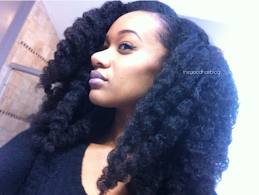
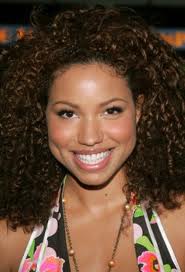
Somehow, from my vague memories of childhood, I had the idea that when all was said and done, my hair would look like this:
By the one year mark, I realized that was definitely not where my hair was headed. Instead it looked more like this:
During my rampage of natural hair blogs, vlogs, pictures, etc., I fell in love with all the curls. So while I was disappointed that my hair was going in a different direction than I thought, I was still excited. It was only at this point that I could actually see that the relaxer had affected my hair. Because I was transitioning, I knew that I wasn't experiencing the full shrinkage yet and I was anxious to see what my hair was going to do.
Fast forward to the two year mark and I cut off the relaxed ends. I've seen alot of blogs where people talk about how they were disappointed in the their hair--I can't say that was case with me; I still love my hair. However, I discovered that instead of the pictures above, I ended up with patches that looked like this--

this,
and this...
O_O ????????????????? O_O
My first question was, "what do I now?" After I wash my hair, the front has these nicely defined wavy curls about the circumference of a pen. The crown has these tight corkscrews that look like the spring inside the pen. And then the back, is practically straight. Which means that the crown of my head shrinks drastically and the hair directly under it doesn't shrink at all. The crown is drastically curly and the hair beneath it is drastically straight.
It drives me crazy!
Last December began the anxiety of "when will it all blend together?" I thought the tight curls would calm down as they got longer. I keep saying when it gets long enough that I can easily ponytail it, I'll cut it like a bob. Theoretically that would solve the problem... Of course, so far everything concerning my hair has turned out contrary to what I thought.
The important thing is that I love all three parts of my hair. As I'm working through the sections I don't find myself favoring a particular section. I can't lie and say I don't want it all to be the same (that would be so much easier!), but I can honestly say that I don't have a preference between the three sections. If at the end of all of this it turns out that there's no way to blend the sections, at least I know that I have respect for the hair itself...I'm just a perfectionist.
For all my other naturals, hang in there. We're prone to curl envy, curl anxiety, curl fear... it's curl insanity! And no matter how frustrating those curls, waves, kinks, coils, etc. get, they are awesome and beautiful. :)
About Me
Circus of Words
Culture
Natural Hair
The Hair Journey
As I take a break from installing mini-twists (and question my sanity for ever beginning), I thought it would only be natural to end Black History Month with some hair talk. Black women make up the overwhelming majority of spenders when it comes to hair care—its not often you'll find one of us out in public without our hair done. So you would think we'd know all about our hair, right?
Well, that was my one bad experience, but it didn't make me stop getting relaxers. I never went back to her, but I went back to my kiddie relaxers 3 times a year (before school photos, before Christmas, and before Easter). My new stylist gave me hot oil treatments twice a month for a while to "restore" my hair. By the time I started college my hair appeared healthy and was approximately APL (armpit length). It was around this time that I fell in love with Jennifer Freeman's hair. I wanted my hair styled like that so bad that I went through several stylists trying to find one who could actually do my hair like hers. None of these stylist could figure out what to do, especially since my hair wouldn't hold a curl for more than 30 minutes...
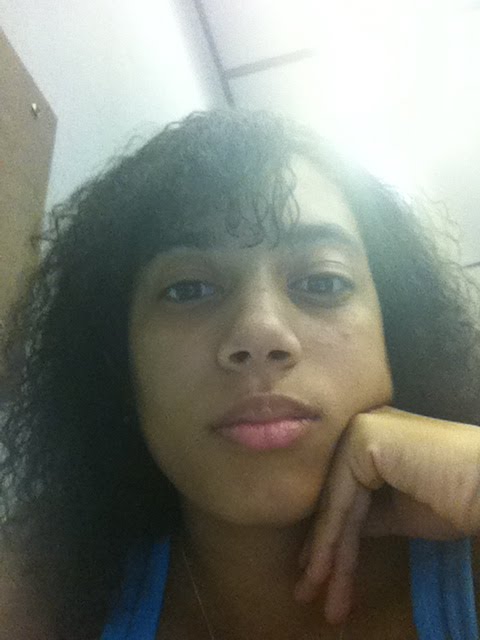
When I was little, I got 90% of my spankings over my hair. It would take hours to wash my hair then even more hours to dry it. My mom would then detangle my hair—yes, she detangled my hair dry!—which would take another hour and usually around the time I'd get popped with the brush. Finally she'd give me some pigtails and set me free. Of course by this time the day was done and my head would hurt. Below is a picture of me as little girl; it's a little hard to see my hair but it's the best I could find...
 |
| Me at 3 years old or so |
Eventually, my dad got sick of me and my mom fighting over my hair so I got sent to the hair stylist. Prior to visiting the salon, my grandma would straighten my hair with a hot comb (I'm talking straight off the stove style) after my mom had finished her day-long washing technique. Once I hit the salon, the beautician slathered my hair with the Just For Me kiddie relaxer. Looking back, no one ever asked me if I wanted straight hair and I never asked for straight hair. I just didn't want to sit in the house all day with my mom tugging and yanking my head every which way. At that point in my life I'd only seen my hair blown out or straightened with a hot comb—essentially frizzy straight versus smooth straight. Even after it was agreed that I'd get a relaxer—mind you, this was under the premise it would make my hair more manageable for my mom and less painful for me—my hair was still always in either 2 or 3 ponytails.
 |
| 9th grade, after the breakage |
When I turned 13, my beautician decided I was "too old" for a kiddie relaxer and put a "real" relaxer in my hair. After that relaxer I was introduced to the infamous scabs that develop on the scalp as a result of burning. I'm not sure exactly what she did, but one side of my hair has never been the same since! The short term result was breakage on that side, which led to my hair being shoulder length on one side and BSL (bra-strap length) on the other side. Needless to say I had to cut it. Which led to the next short term result, that side of my hair stopped growing as fast. Up until recently, no matter how often I cut my hair, one side was always longer (see the picture to the right). Eventually I noticed that the short side was also thinner—not extremely thinner, but enough that I can tell.
Well, that was my one bad experience, but it didn't make me stop getting relaxers. I never went back to her, but I went back to my kiddie relaxers 3 times a year (before school photos, before Christmas, and before Easter). My new stylist gave me hot oil treatments twice a month for a while to "restore" my hair. By the time I started college my hair appeared healthy and was approximately APL (armpit length). It was around this time that I fell in love with Jennifer Freeman's hair. I wanted my hair styled like that so bad that I went through several stylists trying to find one who could actually do my hair like hers. None of these stylist could figure out what to do, especially since my hair wouldn't hold a curl for more than 30 minutes...
 |
| Freshman Year of College. Yikes at those split ends |
 |
| Jennifer Freeman and the hairstyle I wanted |
In college, I had gotten to the point that I didn't trust many people to do my hair so I started washing my hair myself. While wet, my hair was actually very curly. In fact, it almost looked like the style I wanted. I realized I just needed to know how to keep it like that. I still couldn't find anyone who could tell me what to do, but I was also starting to contemplate the most basic question I ever asked myself: if my hair is curly, why can't I get it to curl?
My senior year in college is when the natural hair movement sparked around Clemson's campus (or at least when I realized it was happening). I remember there being the biggest commotion when the first girl I knew started her journey. She did her big chop (BC) herself, and I'm still in awe of her bravery to go through with it. I remember there being a lot of negative comments about it. She and I had became friends just before her BC (I think), but eventually she opened up about what she was trying to accomplish. Up until she told me, I thought she'd just lost her mind and cut all her hair off one day. I had no idea what she meant when she said "natural" hair. Soon after, two of my sorors, one of which was also my cousin, also decided to "go natural." I barely did anything to my hair as it was, so while I watched them, I didn't really put any thought into following.
After graduation I moved to Florida where it is hot and humid and my hair did not do anything I wanted it to. I don't know what possessed me to think I could then get bangs and keep them successfully, but that's what I did. Unfortunately my stylist didn't understand what I wanted and gave me Nicki Minaj bangs. -_- This is why I don't trust hair stylists. Obviously this style didn't work for me. It eventually grew on me, but keeping the bangs straight was a pain. As I said earlier, Florida is just hot and humid, and the University of Florida's campus is large, which meant sweat was inevitable. I hate the feeling of sweaty hair, don't you? Well, thank goodness for sweaty hair because one day during February 2011, I sweated so much I couldn't take it. I decided that instead of sitting on campus waiting for my exam, I was going to go home and wash my hair. It took a bit longer than I anticipated, so I didn't have time to straighten it or dry it, let alone detangle it. I knew that if I didn't detangle it, I would regret it later... So I got the crazy idea to simply brush it wet and just go to my exam that way.
 |
| February 2011-Wet hair |
My exam was from 8pm to 10pm, so when I got home it was probably around 10:45 and my brain was fried. I didn't feel like trying to straighten my hair (thankfully the Florida heat had already dried it). So I just went to sleep. The next morning when I woke up, I was shocked to find this is what I looked like:
So I didn't touch it, and guess what? Two days later I still had curly hair! Who knew, right? The whole time all I had to do was not do anything at all! This was when I turned to the internet and YouTube for help. I haven't had a relaxer since the one before I discovered this (December 2010), though I have flat-ironed it a few times. I never BC'd; I just gradually cut off the ends. Technically, I still have about 1 inch of relaxed ends in some places on my head. Below are a few pictures since I stopped relaxing my hair.
 |
| First "chop"—Summer 2011 |
 |
| March 2012 |
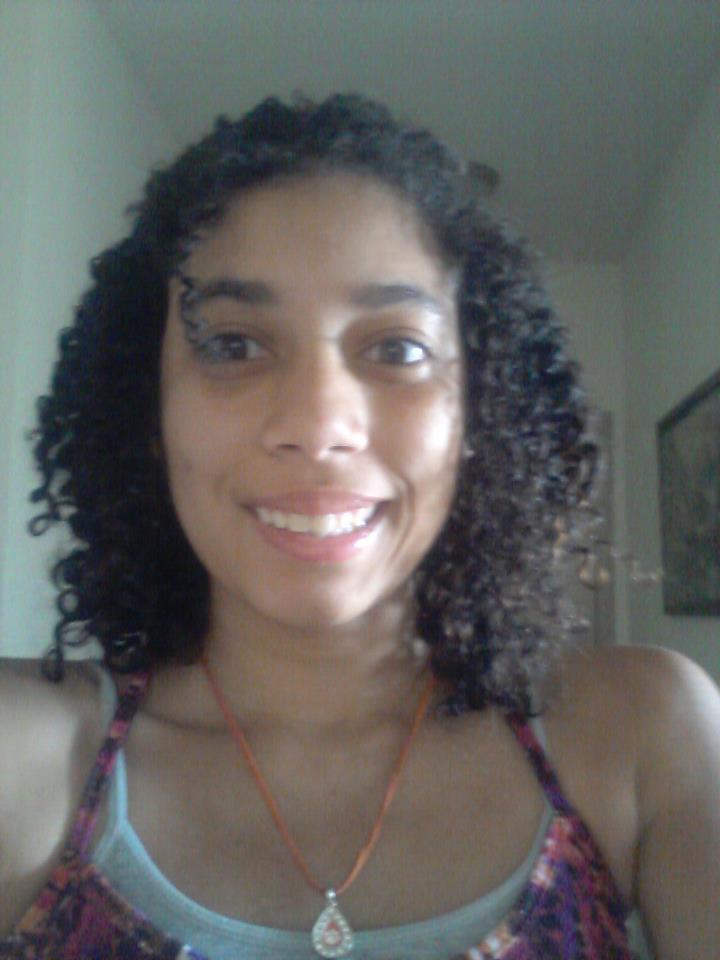 |
| October 2012—Loved this hairstyle! |
 |
| 2013—Twist-out (not my actual curl pattern here) |
 |
| November 2012: The accidental chop and discovery that I never need a relaxer to straighten my hair |
Since beginning the natural part of my hair journey I have seen wonderful, awesome, powerful, and beautiful things, but I've also seen the negative, the ignorant, and the infamous "Natural vs. Relaxer"/"Good hair vs. Bad hair." Good hair had always been a term that made me want to claw my eyes out but the fact that many have reduced the ideals behind natural hair vs relaxed hair to the idea of good hair and White acceptance, annoys me just as much. I agree that Black women began straightening their hair to be accepted by the White community. I agree that there's a lot of insecurity that expresses itself with the term good hair. However, I think that a LARGE part of the problem is that we don't know anything about our own hair. The truth is, growing up, I saw more White women with curly hair than Black women. I didn't even know my hair was curly. I didn't straighten it because I wanted to look like a White girl or because I wanted acceptance. The first time I saw a Black girl wearing her natural hair (minus dreads or being almost bald) I was out of college! Up until that point every Black woman I knew had straight hair or a weave. I came to my moment of truth when I talked to my cousins. After I stopped straightening my hair, I went home to visit my family, and do you know what my little cousins asked me? "When are you going to go back to your real hair?" My real hair? They knew I didn't have weave in my hair; they thought my hair was straight. Just like me at their age, they've never seen their hair not blown out or in braids. Our generation isn't straightening our hair for acceptance in the White community, we're straightening our hair for acceptance in our own community and because we don't know how to manage our own hair. The beauty of the Natural Hair Movement is that we're producing not only the visual message of loving our own hair, but educating a generation on how to take care of our hair. If I have a daughter, I'll know something other than just straightening her hair, unlike my mom and grandmother. I think this is an important milestone for us and hopefully, in the future our children will see and appreciate themselves as the truly are.
Subscribe to:
Posts (Atom)


 PSALMS to God is a podcast, YouTube channel, and blog that aims to serve the LORD in every aspect of life. Whether it's a Bible Study, topics relating to Christianity and Life, the beauty of culture, or poetry, God is at the center of all things here.