


 |
Showing posts with label Book Review. Show all posts
Showing posts with label Book Review. Show all posts
Book Review
Communication
Culture
Growing in Christ
Keep it Shut: What to Say, How to Say it, and When to Say Nothing At All by Karen Ehman was recommended to me by a friend during a conversation about how hard it is to control what I say. More specifically, I have a tendancy to say things I think are just fine, only to find out people are offended. So I knew I had to read it.
Book Review: Keep it Shut
Book Review
Culture
Fear and Horror
Hispanic/Latinx Fiction

I was looking at a list of new books when I stumbled accross Mexican Gothic by Silvia Moreno-Garcia. This book definitely leans toward the interests I had a long time ago (re: horror) and I actually debated myself on whether I would actually read it. Below I'll add a section for believers with the perninent info on how I feel about the book spiritually.
The first question I had was, if Noemí's cousin alleged that her husband was trying to kill her, why wouldn't her father accompany her? Who sends their party-girl daughter to stay with a potential killer?
I was also disappointed about the way it ended. The author definitely left room for potential sequels, which is great from a buisness perspective, but not so much for the reader. I had questions, just enough to make it unsatisfying, but not enough to care for a sequel.
As far as horror novels go, this is probably the cleanest thing you'll find for Christians. There's a tad bit of sexuality, but nothing too explicit.
One of the major questions in the novel is whether Noemí's cousin is seeing ghosts or not, thus the novel dabbles with necromancy. This is probably the main thing I would gripe about from a spiritual perspective.
The final twist is pretty twisted—it involves incest and a ritual—and some might feel a bit squeamish about it. However, the main character is very aware of how wrong it is; it is immediately condemned by the main character and isn't praised or promoted as something good, which is why it didn't bother me from a spiritual perspective (though it is unsettling).
Book Review: Mexican Gothic

 |
Overview of the Book
Mexican Gothic follows the adventures of a young socialite, Noemí, from Mexico City in the 1950s as she works to unravel the mysteries surrounding the family her cousin married into.What I Didn't Like
The book is weird, and that might be an understatement.The first question I had was, if Noemí's cousin alleged that her husband was trying to kill her, why wouldn't her father accompany her? Who sends their party-girl daughter to stay with a potential killer?
I was also disappointed about the way it ended. The author definitely left room for potential sequels, which is great from a buisness perspective, but not so much for the reader. I had questions, just enough to make it unsatisfying, but not enough to care for a sequel.
What I Liked
Although the pacing of the story starts out slow, I found myself sucked in pretty quickly. The way the novel is written, I felt like I was watching the events play out and it was the perfect level of eerie without the gore (well, until the end at least). I didn't see the big reveal coming, which is always a pleasant surprise.How I Feel About the Book Spiritually
This section will contain mild spoilers.As far as horror novels go, this is probably the cleanest thing you'll find for Christians. There's a tad bit of sexuality, but nothing too explicit.
One of the major questions in the novel is whether Noemí's cousin is seeing ghosts or not, thus the novel dabbles with necromancy. This is probably the main thing I would gripe about from a spiritual perspective.
The final twist is pretty twisted—it involves incest and a ritual—and some might feel a bit squeamish about it. However, the main character is very aware of how wrong it is; it is immediately condemned by the main character and isn't praised or promoted as something good, which is why it didn't bother me from a spiritual perspective (though it is unsettling).
Would I Recommend?
If you don't like horror, this book is definitely not for you. If you're looking for something that jumps off the pages or keeps you up at night, it's also not for you. However, if you just want something eerie and a little mysterious, this may interest you.
Book Review
Culture
Favorites
Race
Racism
I can't remember whether I saw the movie or read the book first, but The Feast of All Saints by Ann Rice is a book I hold very dear to my heart. The book covers the life of a young man who is a member of the gens de couleur libres (free people of color) in New Orleans during the 1800s. Despite being penned by a white woman who specializes in gothic horror and erotic ficion, the story moved me in a way no other historical fiction novel has.
I read this novel in high school, and given the subject matter, wouldn't recommend it for anyone younger. The story is wonderfully written with a few tastefully done references to sex. (I didn't know the author had a history of writing erotic fiction until well after I read the novel, so fear not, it isn't anythin too racy). The characters are wonderfully fleshed out; there will be times when you despise characters, but every character makes perfect sense and because of that, you will yearn to see where they end up.
This book should be required reading. The author did a wonderful job of researching the history of the gens de color libre and bringing that history to life. I learned so much about complexities of racism and American histrory from this novel, and I wish everyone understood these complexities.
In the novel, Marcel's family lives lavishly because their white father is footing the bill. Though relationships between slaves and masters can only be considered rape, sometimes these white slave owners took a "liking" to their bi-racial children. In real life, the only slaves Thomas Jefferson set free were his own children. In the novel, Marcel's father renegs on his promise to set his slave child free, but does spare both the child and the mother from having to work in the field. Marcel was granted a "gentleman's education" and in real life, many children of white men were able to learn how to read because they were raised in the house with the white man's white children (who wouldn't have understood at young ages that black children were not allowed to read).
Remember how I talked about the fact that Marcel and Richard couldn't do anything to avenge the crime committed against Marie? Marcel's father's brother-in-law (a white man) takes it upon himself to avenge her honor. You see, being lighter was simply the evidence of a white benefactor. The man who avenge's Marie's honor states that the white men who harmed her "should have seen the family resemblance." A white man encountering a light skinned black person didn't know if their white father was "attached" to them or not. A black person with black family had no recourse, but one with a white family could be avenged.
Seeing how proximity to whiteness wasn't just about color explained a mystery of my own life to me. When a new girl came to my school, she was welcomed with open arms into the rich white circle of my classmates and my teachers. I had never experienced that. We were both black, we were about the same color, and we both came from middle class families. The difference is that she was raised by her white mother. Her mannerisms and influences were very white, while mine were still black. When parent teacher conferences happened, teachers interacted with her white mother, whereas both of my parents are black. She had a different proximity to whiteness because there was a white benefactor directly involved in her life, not simply because she was light skinned. This realization added another layer of complexity to the topic of colorism for me.
Book Review: The Feast of All Saints
 |
I read this novel in high school, and given the subject matter, wouldn't recommend it for anyone younger. The story is wonderfully written with a few tastefully done references to sex. (I didn't know the author had a history of writing erotic fiction until well after I read the novel, so fear not, it isn't anythin too racy). The characters are wonderfully fleshed out; there will be times when you despise characters, but every character makes perfect sense and because of that, you will yearn to see where they end up.
This book should be required reading. The author did a wonderful job of researching the history of the gens de color libre and bringing that history to life. I learned so much about complexities of racism and American histrory from this novel, and I wish everyone understood these complexities.
Lessons I Learned
The following section is for those who have already read the book or seen the movie (or don't mind spoilers). Since the bulk of why I love this novel stems from what I learned from it, I feel it is impotant to share that, but I'm not sure I can do that with out spoilers. As such, anything you read from this point on may contain spoilers.The Love of A Mother
By far, the worst character in the book is Cecile Ste. Marie, the mother of Marcel. The first time I read the book, I despised her character. I thought she was just a horrible person with no redeeming qualities. Truthfully, I still think she's a horrible character with no redeeming qualities; however, as over time, I actually came to undestand her character. Cecile was born and raised in a world where white people were the only ones with rights. By participating in plaçage,[1] Cecile sets her children up to have the best chance she can give them in the world they live. Her "relationship" with a wealthy white man grants her son a promised college education in France (even though this fell through) and her daughter the ability to pass for white. Although this is recognizably problematic in today's society, the truth is, she set both of her kids up for a privileged life. There's a lot about her character that I think was selfish and not particularly motivated by the desire to better the life of her children, but it did remind me that there were women during this time who made similar decisions for their children.Black Masculinity
Marcel and his best friend Richard are young boys growing into manhood. Marcel is privileged and looking forward to a trip to Paris; Richard is in love and ready to marry. However, when tragedy stikes Marie (Marcel's sister and Richard's fiancee), neither of them have the right to do anything because the perpetrators are white men. Throughout history black men and the black family structure have targeted. Today you will often hear black men say things like "black women won't let men be men," and while we could probably do a whole post on that sentiment, the origin of emasculating black men started in slavery. White men could defend their wives and children, even their property. However, black men were powerless to stop white men from raping their wives, selling their children, beating their family members, etc. The trauma of this dynamic has been passed down and learned throughout our generations.Colorism
Colorism is another topic that is too large to fit into a single paragraph, but The Feast of All Saints surprisingly taught me a lot about colorism. Colorism actually has many layers. Black people were taught to hate ourselves and developed an unhealthy desire to fit European standards. We bought into the lie that they were the standard of beauty. Within the black community there has been a history of favoring light skined women over dark skinned women. It has only been in recent years that dark skinned women such as Lupita Nyong'o have been showcased as the beautiful women they are. Yet, colorism is a lot deeper that. One of the things I learned from this novel was that proximity to whiteness wasn't just about colorIn the novel, Marcel's family lives lavishly because their white father is footing the bill. Though relationships between slaves and masters can only be considered rape, sometimes these white slave owners took a "liking" to their bi-racial children. In real life, the only slaves Thomas Jefferson set free were his own children. In the novel, Marcel's father renegs on his promise to set his slave child free, but does spare both the child and the mother from having to work in the field. Marcel was granted a "gentleman's education" and in real life, many children of white men were able to learn how to read because they were raised in the house with the white man's white children (who wouldn't have understood at young ages that black children were not allowed to read).
Remember how I talked about the fact that Marcel and Richard couldn't do anything to avenge the crime committed against Marie? Marcel's father's brother-in-law (a white man) takes it upon himself to avenge her honor. You see, being lighter was simply the evidence of a white benefactor. The man who avenge's Marie's honor states that the white men who harmed her "should have seen the family resemblance." A white man encountering a light skinned black person didn't know if their white father was "attached" to them or not. A black person with black family had no recourse, but one with a white family could be avenged.
Seeing how proximity to whiteness wasn't just about color explained a mystery of my own life to me. When a new girl came to my school, she was welcomed with open arms into the rich white circle of my classmates and my teachers. I had never experienced that. We were both black, we were about the same color, and we both came from middle class families. The difference is that she was raised by her white mother. Her mannerisms and influences were very white, while mine were still black. When parent teacher conferences happened, teachers interacted with her white mother, whereas both of my parents are black. She had a different proximity to whiteness because there was a white benefactor directly involved in her life, not simply because she was light skinned. This realization added another layer of complexity to the topic of colorism for me.
Generational Wealth
Speaking of privilege, the book also subtly speaks on generational wealth. The fact that these white men could afford to keep two families is one thing, but the ability to pass something on to your children is a huge deal. Despite America not having an offical caste system, being born into wealth increases your likelihood of continuing in wealth. Marcel's father inherits a whole plantation simply because he is related to a man who's son is too young to take over the reigns. The gens de couleur libres have the money to give their children opportunities and education as opposed to sending them into the field. For example, Marcel ultimately becomes a photographer, but the only reason he is able to jump start this career is because he inherits the house a white man built for his mother and uses it for collateral.The Fate of Women
The main character of the book may be a boy growing into a man, but the book gives a heartfelt commentary on sexism and the hardships women of that time felt. Every single woman in the novel experiences some form of trauma and heartache. Marcel's grandmother kidnaps his mother in desperation because she is barren and lonely. Marcel's mother resigns herself to sharing a man who doesn't really respect her just to live a comfortable life. Marcel's best female friend, Annabella, is forced into plaçage when Marcel can't (or won't) speak up for her. Dolly Rose runs a brothel of sorts to avoid the lies of plaçage but maintain an income. Marie is drugged and gang-raped in her attempt to escape the cycle of plaçage. Each woman in the novel experiences loss and heartache because they are not allowed to be independent. This was my first experience with the concept of intersectionality, though I wouldn't learn the word until much later.I Highly Recommend
Despite the adult themes, the harsh realities of this book still effect the world we live in today. You could read scholarly articles on the topics I meantioned above, and you probably should, but this story will make the topics come alive. It humanizes the theories and philosphies.References
- Plaçage". Wikipedia; visited September 11, 2020
Book Review
Culture
Historical Fiction
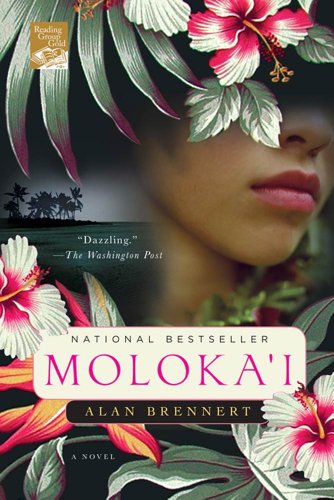
 A review of Moloka'i, a novel about Hawaii, leprosy, tragedy and hope by Alan Brennert.
 I picked up Moloka'i by Alan Brennert because I love historical fiction, especially when it is about a culture I'm unfamiliar with. I had a few reservations, since Alan Brennert is not a native Hawaiian, but reviews suggested he had done his due diligence so I decided to give it a try. The story follows the life of Rachel Kalama in Hawaii during the late 1800s and early 1900s. The main focal point of Rachel's life is her battle with leprosy and quarantining in a lepers' colony in her childhood years.
Book Review: Moloka’i
 A review of Moloka'i, a novel about Hawaii, leprosy, tragedy and hope by Alan Brennert.
What I Disliked
The book itself is very slow, and Rachel isn't a compelling character. In the early chapters I had some attachment to the character—despite knowing that she would end up at the leper colony, the reaction of her family and their subsquent attempts to hide the disease was solidly done. After that, it went downhill. The novel is character driven, but unfortunately I didn't particularly care what happened to Rachel.Warnings
There are a couple topics touched that could be triggers, such as suicide and domestic violence. Also, since it is a coming of age novel, there are also a few sexual passages. None of these are particularly explicit, but I did want to make it known that it does appear. There is also a transgender character in the story; their struggle with gender is mentioned briefly, but that isn't the primary focus of the character. None of these soured the book for me (but I was also fairly detatched from the story by the time these themes and topics entered the story).What I Liked
I like to end on a positive note, so let's discuss what I did like about the novel. For starters, I actually listened on audio book and the woman reading the novel did a phenomenal job. The novel contained a lot of historical information which would have made for a great documentary. As I mentioned, I love reading about different cultures. The smattering of Hawaiian words keep you rooted in Hawaii, which I enjoyed.Would I Recommend?
A lot of people seem to love this book, so I clearly have an unpopular opinion in not enjoying it. I would not suggest it to someone, but if you were already thinking about it and love character driven stories, you may enjoy it.
Book Review
Culture
Favorites
War

A Long Way Gone: Memoirs of a Boy Soldier by Ishmael Beah is the true story of a man who's childhood was decimated by a brutal war. Forced to become a child soldier, the author recounts his troublesome childhood and invites us to see his rehabilitation. For that reason alone it feels odd to review the book—how can I rate someone's lived experience? The three-star rating I gave the book on goodreads is not about the content, it is about structure.
If you can read this story without your heart breaking, you have a very hard heart. I actually had to take a break from the story at the midway point (which coincidentally coincided with the deaths of Ahmaud Arbery, Breonna Taylor, and George Floyd). What really hit me hard was seeing the dates the events were happening. Mr. Beah is only 8 years older than me. I can't imagine surviving the things he witnessed, let alone being able to tell the world about it. Knowing that there are many children who have suffered this way and continue to suffer this way makes me angry that people can be so evil and that the rest of the world can sit by idly. This is most definitely an emotional read and there is quite a bit of violence described.
One of the hardest things about reading a memior such as this is that you already know the major plot points. From the moment I started reading I knew that the idyllic childhood would be shattered by war, that he would become a child soldier, and that he would be rehabilitated. This makes it difficult to be a "page-turner" based on the plot. When you combine the fact that you know what's going to happen and the fact that its emotionally difficult, it makes for a very slow read.
The point in which Mr. Beah decided to end the story also did not feel like the end. Despite the fact that we know he's going to reach his final destination it would have been nicer to at least see him board the plane. Though, I will say that ending story the story with the scenario from his childhood was a great move. If you don't think about it deeply, it seems a little odd, but after a while you realize is sums up his view of the whole situation.
Overall, I gave the book a three star rating because I did feel like I had to push myself to finish and it didn't feel quite complete when I did finish.
Book Review: A Long Way Gone

 |
If you can read this story without your heart breaking, you have a very hard heart. I actually had to take a break from the story at the midway point (which coincidentally coincided with the deaths of Ahmaud Arbery, Breonna Taylor, and George Floyd). What really hit me hard was seeing the dates the events were happening. Mr. Beah is only 8 years older than me. I can't imagine surviving the things he witnessed, let alone being able to tell the world about it. Knowing that there are many children who have suffered this way and continue to suffer this way makes me angry that people can be so evil and that the rest of the world can sit by idly. This is most definitely an emotional read and there is quite a bit of violence described.
Structure
As I said, I can't review the content of the story because it's a man's lived experience and its such a powerful experience! I can only speak on the structuring of the book—the pace, the writing quality, etc.One of the hardest things about reading a memior such as this is that you already know the major plot points. From the moment I started reading I knew that the idyllic childhood would be shattered by war, that he would become a child soldier, and that he would be rehabilitated. This makes it difficult to be a "page-turner" based on the plot. When you combine the fact that you know what's going to happen and the fact that its emotionally difficult, it makes for a very slow read.
The point in which Mr. Beah decided to end the story also did not feel like the end. Despite the fact that we know he's going to reach his final destination it would have been nicer to at least see him board the plane. Though, I will say that ending story the story with the scenario from his childhood was a great move. If you don't think about it deeply, it seems a little odd, but after a while you realize is sums up his view of the whole situation.
Overall, I gave the book a three star rating because I did feel like I had to push myself to finish and it didn't feel quite complete when I did finish.
Would I Recommend?
I think it is important to see the world through other people's eyes. Not only did this make me very thankful for my childhood, it made me ask what are we doing to help these children? I also ended up researching the conflict to learn more about how something like this happens. There are definitely parts of the book that are hard to read and you may have to self-motivate yourself to get through, but I recommend 100%.
Book Review
Culture
False Doctrine
Growing in Christ
Race
Is Christianity the White Man's Religion?: How the Bible is Good News for People of Color by Antipas L. Harris caught my eye while scrolling through Instagram. I've had my share of conversations on this topic, and though I've already been able to navigate this questionfor myself, I thought the book might introduce more information that would make such conversations easier. Based on the title, I expected the book to provide historical and theological answers to some of the age old questions people have by delving into the true history of the Bible, the Church, and white Christianity. Unfortunately, if I didn't have answers to the titular question, this book would not have helped me on that journey.
There are definitely larger issues of structural racism or concepts of racial identity that warrant deeper discussion in an individual chapter, but there should also be answers within these chapters. For instance, in the above example about racial identity informing the relationship one has with God, we should have also had discussions about how we can identify with God. If the audience is already asking the titular question, they aren't reading the book to hear more questions.
If instead the book is meant for those who are confused as to why one would ask the question, the title and synopsis should have been written to indicate that the book is meant to guide people through the minds of those asking the question. It should not purport to answer the questions if it's not going to deliver.
Book Review: Is Christianity the White Man's Religion?
 |
A Surface Level Mess
At 70 pages in, Dr. Harris has mentioned police brutality, racism, the Hebrew Israelites, Nation of Islam, African Spiritualism, and Megyn Kelly, but he hasn't answered a single question. Not only has he not answered questions, he has lead the casual reader to have new questions. For instance, he introduces the Hebrew Israelite theory that black people are the true Israelites and even provides the scriptural reference they use to support their idea (one of the few scripture references we see written out thus far), but as he complains about this group pulling young blacks from the Church, he doesn't give any push back as to why they are wrong. If I was unfamiliar with the group and the theory, I would have been more interested in researching their theory than continuing his book. This is just one example, but there are three main issues I have with the book: it lacks a clear focus, doesn't know who its audience is, and has questionable language when it comes to the theology.A Lack of Focus
In one section, Dr. Harris has a heading "Does Jesus Care About Black People?" In this section he starts to discuss how racial identity informs how we relate to people, thus provoking black Christians to desire a black Jesus whom they can relate to. He follows this up with an example of Megyn Kelly asserting Jesus to be white, and then states that she needs Jesus to be white. Dr. Harris then leaves this conversation to discuss his time pastoring in prisons. He begins talking about racial bias in incarceration rates and how the Nation of Islam empowered black prisoners (also members of Nation of Islam are allowed to wear the Nation of Islam bow tie in jail). At the end of the chapter, I have potentially useful tidbits strung into an incoherent mess.- Dr. Harris never answers the question "Does Jesus Care About Black People?" in the section. Why did he make that the heading if he wasn't going to answer the question?
- The discussion of how racial identity drives our interaction with God could have been flushed out much deeper. There are historical and pyschological aspects to this topic. What's more is that Dr. Harris asks if Christ can relate to the ghettos and barrios, but he neglects to talk about Christ's position at the bottom of society. Not only was Christ considered lowly in Jewish society, but the Jews were conquered by Rome and considered low among the larger society.
- When Dr. Harris brings up Megyn Kelly, he names the woman she was responding to as though it is of importance, but it doesn't actually have any relevance. In fact, he spends time bemoaning her need to view Jesus as a white man, just a paragraph after explaining why minorities want to see him as a man of color. He doesn't give any reason why one is justifiable and the other is not. Nor does he offer any suggestions...
- Instead of addressing the questions he has already brought up, Dr. Harris goes off on a tangent about people in prison. Why do we need to know about bow ties in prisons? Why are talking about the Nation of Islam instead of answering the question? If we're going to tie prison in to identity, why aren't you discussing the fact that most of the disciples were wrongfully accused and thrown in prison?
Who is Your Audience?
Another big issue in the book is that there's a disconnect between the title/synopsis and who the intended audience is. Based on the title, I assumed the audience was someone who was either asking the question "is Chrisitianity the white man's religion?" or someone who deals with people asking this question (pastor, youth leader, parent, etc.). Instead, the book reads as though it is written for someone who doesn't know this question exists and has no idea why anyone would ask the question. The first chapter should introduce the problem, but subsequent chapters should move you closer to an answer.There are definitely larger issues of structural racism or concepts of racial identity that warrant deeper discussion in an individual chapter, but there should also be answers within these chapters. For instance, in the above example about racial identity informing the relationship one has with God, we should have also had discussions about how we can identify with God. If the audience is already asking the titular question, they aren't reading the book to hear more questions.
If instead the book is meant for those who are confused as to why one would ask the question, the title and synopsis should have been written to indicate that the book is meant to guide people through the minds of those asking the question. It should not purport to answer the questions if it's not going to deliver.
The Language of What You Believe
Several sentences in this book made me pause and ask about the authors beliefs. We're going to discuss 3 of them.The incarnation is about a God who came among us in Jesus Christ and set up residence in our neighborhoods (John 1:14)On page 72, Dr. Harris refers to "a" god coming amongst us and not "The God" who came into our life. If this was the only questionable sentence in the book, I would write it of as poor wording. However, just a few pages later (page 75), he seems to question the Biblical narrative of history.
From this child, the Hebrew people—the nation of Israel—are said to have eventually emerged.Dr. Harris doesn't seem convinced that the nation of Israel descends from Abraham and Sarah's child Isaac. He leaves room for other possibilities, making me question his loyalty to the scriptures. This is excerbated by his sudden confidence in the worldly narrative.
Finally, when Constantine's own mother converted to the faith, the emperor saw the light. Constantine became the first Roman emperor to convert to Christianity.On page 86, Dr. Harris seems fully convinced that Constantine actually converted to Christianity. Most scholarly sources admit that Constantine had a very superficial understanding of Christianity. In fact, Constantine's "conversion" is a crucial part of the problem the book is supposed to be addressing. The Romans had a habit of taking the religions of the regions they conquered and meldng them with their own beliefs for the benefit of the kingdom—a weird form of assimilation if you will. This is how may of the pagan practices crept into the religion, but more importantly for Dr. Harris' book, this is how the religion went from be the religion of brown people, to the religion of Europeans. The pattern of him questioning the Biblical narrative of Israel's formation (the words of Moses, a man of color) but boldly asserting the narrative of Constantine, is the exact issue he's supposed to be addressing in the book!
What Dr. Harris Got Right
I like to end on a positive note, so lets talk about what Dr. Harris did acheive. Eventually he does get to issues such as "the curse of Ham" (there is no curse of Ham, the curse was on Canaan), and discussing the African presence in the Bible. Really, the meat of the book doesn't start until about half way through. By the time I had reached this part of the book, I was exhausted and had no interest in finishing. If you must read this book, I suggest starting in chapter 6, then you might actually finish.
Book Review
Church
Church History
Culture
False Doctrine
History
 Pagan Christianity? by Frank Viola and George Barna dives into the traditions of most modern churches. The authors research the history of each tradition and contrast it with the early Church described in the New Testament.
Pagan Christianity?: Exploring the Roots of Our Church Practices by Frank Viola and George Barna was recommended to me by a friend from church. Many of the young adults I know have been on a quest to sort out what's real and what fake, what's mandated by God versus man, and what God truly intended His Church to look like. So when my friend mentioned the book, many of us were excited to read it. It didn't live up to my expectations, but I think it's still worth the read for many.
Book Review: Pagan Christianity?
 Pagan Christianity? by Frank Viola and George Barna dives into the traditions of most modern churches. The authors research the history of each tradition and contrast it with the early Church described in the New Testament.
 |
Summary
Frank Viola and George Barna cover many traditions, such as the order of service, dressing up, the building itself, and the division of the body into clergy versus laity. In each chapter of the book (perhaps purposefully numbered at 12), the authors walk us through the history of a given tradition, starting with the original New Testament Church, following the twists and turns to the modern tradition. Essentially, the book is a history of how certain pagan traditions became intermingled—often to the point of being sacrosanct—with our current church.Bias
The authors are clearly biased toward a particular narrative, only presenting the traditions they disagree with. It is also evident that the authors write from a Protestant point of view, as many Catholic traditions such as praying to Mary, bowing to statues, creating saints, etc. are not given much attention. There is no mention of the pagan origins of Easter or Christmas, and only two to three sentences about Sunday not being the Sabbath. This is one of the reason I only give the book 3 stars. Clearly the authors did a lot of research, in fact there are countless footnotes and citations within each chapter. So why did they only present certain pagan traditions?The History Aspect
For me, there wasn't anything particularly shocking in the book. Many of the traditions that aren't Biblical are pretty easy to spot if you read the word often or do even a little research on your own. However, I did like the historical context provided for each topic. Having that background makes it easier to discus with those who are deeply immersed in a particular tradition.Redundancy
The book is written in an academic format in which each chapter contains a summary of the chapter and the final chapter is actually a summary of the whole book. If the concepts were more complex, or perhaps if I had picked this book up before I'd done any researching on my own, I might have appreciated this. However, since the topics were fairly simple, it just came off as redundant to me. These summaries did not provide new information or clarify anything in the chapter, so after about the fourth or fifth chapter I started skimming the summaries.The Follow Up
Many reviews I read criticized the authors for not providing solutions, but I will give them credit that they have a follow-up book that is supposed to do just that. I, however, was not impressed with this book enough to read the second one.Overall Thoughts
Overall I think this is a good book for people who have solid faith but have never questioned what they've been taught in church. Many intertwine faith in God and faith in the Church, so if your relationship with God is not strong and you lose confidence in the church, your faith crumbles. For this reason, I say proceed with caution. For some, this could be the eye opener that strengthens their faith, because they've been questioning the church anyway. However, for those who are unable to separate the traditions of the church from the Word of God, this may be more confusing than helpful. If you are new in your walk with Christ, or have not spent much time in the Word, but are curious, I would recommend reading the book with someone who is more seasoned and has a deeper understanding of the Word.References and Footnotes
- Frank Viola and George Barna. Pagan Christianity?: Exploring the Roots of Our Church Practices. December 31, 2007
Book Review
Culture
Current Events
Favorites
Perseverance
 The Girl With Seven Names: Escape from North Korea by Hyenseo Lee is an eye-opening recounting of one woman's journey from mental enslavement to freedom, as well as a coming of age story in the midst of a harsh reality.
I had no idea what I was getting into when I picked up The Girl With Seven Names: Escape from North Korea by Hyenseo Lee. I've been experimenting with non-fiction and biographies lately, and in my last "trip"[1] to the bookstore I decided to pick up books from cultures I didn't know anything about. I think it's pretty safe to say none of us know much about North Korea (other than the fact that the US does not want them to have nuclear weapons). When I saw this, I thought it would be an interesting read and a chance to learn about the world's most secretive nation.
Ms. Lee's family was actually one of the well off families in the country, reaping benefits such as special housing and extra food rationing. At the onslaught of a famine, known as The Arduous March in North Korea,[2] her family barely feels the impact. It is only chance experiences with those outside her family that lead her to realize something is happening. Ms. Lee's revelation that her home country isn't the greatest country in the world and that she has been lied to her whole life unfolds slowly. It is a reminder that the most efficient way to enslave someone is through the mind.
This book doesn't just teach you about North Korea, though. Ms. Lee spends roughly 10 years in China. Also a communist country, China has friendly relationship with North Korea. Refugees are not seen as people who need help, but as illegals who need to be sent back. If she had been caught in China, Ms. Lee would have been sent back to North Korea, possibly to her death. The journey to a country willing to help is perilously long. Many who escape have to travel from the North Korean-Chinese border into countries like Laos or Vietnam (of which it is still not guaranteed that they will be safely sent to South Korea). That is almost like driving from one coast to the other coast of the US. Imagine having absolutely nothing and needing to make your way from California to Atlanta without being detected.
Book Review: The Girl With Seven Names
 The Girl With Seven Names: Escape from North Korea by Hyenseo Lee is an eye-opening recounting of one woman's journey from mental enslavement to freedom, as well as a coming of age story in the midst of a harsh reality.
 |
Summary
As the title suggests, the story follows a young girl's escape from North Korea—including the seven names she must assume to keep her safe during the journey. Unlike most of the memoirs of North Korean defectors, Ms. Lee's story isn't that of a disgruntled citizen searching for a better life. It is the story of a middle class teenager pushing boundaries and unknowingly setting her life on a course she never dreamed about.What I Learned
North Korea actively uses propaganda to control their citizens' thinking, specially about western countries like the US. While the US doesn't particularly attempt to control our thoughts about particular countries, what we are taught (or not taught) has a profound impact on how we view each country. Before reading this book, when I heard "North Korea" I imagined a gray, police state where the people are miserable—essentially I imagined 1984. This book opened my eyes to the complexities of such a society. I've always known that perception changes your reality, but it never occurred to me that North Korea was so closed to the rest of the world that the people living there wouldn't even know there is a better life outside its borders.Ms. Lee's family was actually one of the well off families in the country, reaping benefits such as special housing and extra food rationing. At the onslaught of a famine, known as The Arduous March in North Korea,[2] her family barely feels the impact. It is only chance experiences with those outside her family that lead her to realize something is happening. Ms. Lee's revelation that her home country isn't the greatest country in the world and that she has been lied to her whole life unfolds slowly. It is a reminder that the most efficient way to enslave someone is through the mind.
This book doesn't just teach you about North Korea, though. Ms. Lee spends roughly 10 years in China. Also a communist country, China has friendly relationship with North Korea. Refugees are not seen as people who need help, but as illegals who need to be sent back. If she had been caught in China, Ms. Lee would have been sent back to North Korea, possibly to her death. The journey to a country willing to help is perilously long. Many who escape have to travel from the North Korean-Chinese border into countries like Laos or Vietnam (of which it is still not guaranteed that they will be safely sent to South Korea). That is almost like driving from one coast to the other coast of the US. Imagine having absolutely nothing and needing to make your way from California to Atlanta without being detected.
Sanctions and Trade Wars
I've never been one to study policy concerning embargo or sanctions. However, reading about the famine that occurred in North Korea, I started to become curious. When we purposefully hurt a country's economy, it is the every day people that suffer, not the leadership. Think about the US: our senators and presidents have all well off, most are millionaires. In a catastrophe, it would be us that suffered, not them. Of course, even when humanitarian groups provide food for a place in need, how do you insure those who need it can receive it? I became much more interested in this topic after reading this book.Book Quality
I found the book to be well written. I became invested in the characters and wanted to see what would happen. For those used to fiction, this book still reads as an interesting narrative.Overall Thoughts
Overall I found this book to be deeply inspiring, heartbreaking, and eye opening. I highly recommend to anyone who wants to learn what other have gone through. It will definitely make you grateful for your life.References and Footnotes
- Thanks to COVID-19 I didn't physically go to a bookstore. I bought it online and downloaded an e-copy despite my love for physical books.
- "North Korean Famine". Wikipedia; visited May 10, 2020
BHM 2020
Black History
Book Review
Culture
People
I picked up Barracoon: The Story of the Last "Black Cargo" by Zora Neale Hurston from a bookstore in an airport. I read majority of it on the flight, and came back to the appendix about a month later. I don't generally like non-fiction, but I was a fan of Hurston's Their Eyes Were Watching God and I thought the topic sounded interesting.
The personality of Kossola shines throughout the book, and despite all he endured, he remained positive. The positivity of Kossola keeps the book from being a sad and traumatic read. I think it's a great piece of history, and the implications of the story are quite profound. I think this would be a great book for structured reading, where discussion takes place and the reader is forced to think on a deeper level about the events described.
Book Review: Barracoon: The Story of the Last "Black Cargo"
 |
Summary
Barracoon: The Story of the Last "Black Cargo" follows the story of Oluale Kossola, also known as Cudjoe Lewis, who was stolen from West Africa in 1860 (53 years after the trans-Atlantic Slave Trade had been outlawed). It is one of the few historical narratives told from the point of view of the captured as most of the narratives come from the whites who did the capturing. In the novel, we learn of Kossola's childhood, the horrible attack on his village that led his people to be in captivity, his experience during the middle passage, the trauma he experienced in slavery, and finally his attempt at freedom after the Civil War.Introspection
As a descendant of slaves, the book touched me in a personal way. For instance, the fact that Kossola expresses an eagerness and happiness to be called by the name he was given in Africa as opposed to the name his slave owners gave him, speaks volumes about how slavery has affected our identity. Countless experiments have proven it to be more difficult to get a job with a name that is traditionally seen as a "black person's name" or "ghetto" than it is with a more European name. This concept of being a foreigner is further seen in Kossola's longing to go back to his home in Africa after being set free. While many of us today have no knowledge of our original tribes or homeland, we are still acutely aware that this is not home. Furthermore, we see how powerful the effects of slavery were on the mentality of the slaves as those who had been born in America and raised as slaves, wanted nothing to do with Kossola and his people. Today, we call this respectability politics. Many people choose to assimilate because they believe it will be easier than the alternative.Overall Thoughts
 |
- Sylviane A. Diouf. "Cudjo Lewis". Encyclopedia of Alabama. December 6, 2007
Book Review
SciFi/Fantasy
 I read Ted Dekker's original Circle Trilogy—Black, Red, and White—twice (once as an initial read, and once again after the final book in the series, Green was released). The first two times I read the series, I really loved it. I think all 4 books have a 5 star rating from me on Goodreads. When I found out there was a visual edition, I was excited to read it too, but I never saw it in stores. This year I finally just ordered it on Amazon and decided to revisit the series I had fallen in love with.
The addition of pictures shows Mr. Dekker's imagining of God (that's a whole 'nother problem we'll get to later) as a white boy, a white lion, and a white man. While Christ is portrayed as a lamb, God is described as being like bronze multiple times. Bronze is not white. Furthermore, God created man in His image and those people were not white. If Adam and Eve were both white (as Mr. Dekker portrays his version of the "first man"), the only way black people could exist would be for God to step in a create black people at random. Conversely, the genome of all races is contained within the African "race." Two black people can easily have albino children. Furthermore, every time God places a curse on people (translated as leprosy), their skin turns white, not black.
What's worse is that Mr. Dekker portrays the diseased (called Scabs) who are meant to represent nonbelievers as more ethnic. The leader of the Scabs and his general, randomly change their name to Qurong (looks Asian) and Martyn (Ukrainian origin) from Tanis (Greek origin) and Johan (Swedish/Dutch origin) respectively. Their hair is depicted as though it is in dreadlocks, which magically goes away when they are essentially baptized. I get the concept that if one doesn't bathe (which is what separates the Scabs from the members of the Circle), their hair may get oily and begin to clump together. However, once the members of the circle stopped bathing daily in the final third of the trilogy, why didn't their hair start to lock up? Regardless, the issue wouldn't be so glaring if the members of the "good" team had diversity. They even call the "good" people albinos...
First, why were people in our world connected to different people in the other world? Thomas is himself in both worlds. Rachelle being linked to Monique seems some what reasonable in the beginning because Thomas is supposed to pretend to rescue Rachelle in her world, and he really is supposed to rescue Monique in our world. However, after that, the connections seem rather contrived for convenience.
Second, considering these weird connections, why are some injuries/deaths also connected but not all of them? Rachelle dreams she is Monique, though we never see evidence that Monique dreams she is Rachelle. Yet, when Rachelle dies in one world, it seems that Monique also dies. Thomas, on the other hand, dies or receives fatal wounds multiple times in our world. Sometimes those wounds cross over and he is healed in both worlds. However, in two instances, he dies in our world but is still alive in the other world. Why didn't he die in the other world too? This link isn't really explained and seems random if everyone can be connected to person in each world.
Finally, the blank book is used to bring Thomas and Monique of our world back to life. Thomas could have undone the virus all together. He could have written a cure into the right hands. He could have stopped himself from blabbing about it. There are so many things he could have written that would have made the reality in our world resolve much quicker. Sure, we can blame it on the fact that he wrote it in a hurry while preparing for battle, but it seems like this could have been handled better.
The Circle Series: The Visual Edition of Black, Red, and White

Summary
Thomas almost dies in our world and wakes up in "other Earth" or a future Earth where good and evil are manifested in the physical and mankind hasn't eaten the forbidden fruit (so to speak) yet. After this moment he crosses between that reality and our reality taking knowledge from both worlds to try to save the other.What I (Still) Love
The concept is pretty intriguing. I gravitate toward Sci-Fi, Fantasy, Dystopian/Apocalyptic and Historical Fiction. The Circle combines elements from most of those genres: you have time travel and mutating viruses, a future earth that is closer to ancient times than modern times, physical embodiments of spiritual concepts (good, evil, and even God), etc. There's a lot to get excited about and a lot to keep you glued to the pages. That doesn't change in the visual novel. Seeing the visual edition is much thinner than the original, I thought I'd miss whatever was taken out, but I'm left to believe the only thing cut from this edition was description. I didn't feel like I missed anything or that the story suffered.What I Disliked
After reading the original, I don't think I had anything bad to say, but adding images changed that.Everybody is White
First, everyone in the book is white except one random person who maybe says 2 words the entire trilogy. From a general stance, it says a lot about how the author views the world and shows how deeply white supremacism is embedded in people who claim to be Christians. The largest ethnic group in the world is Asian. Brown people out number white people by a very large margin, so why does Mr. Dekker's "perfect" world only have white characters? Wouldn't most people construct a perfect world with perfect racial harmony? I imagine it be comparable to Rodgers and Hammerstein's Cinderella, where the king was white, the queen was black, and the prince was Asian, or to a slightly more sensible extreme, Still Star-Crossed which featured blacks and whites on both sides of the Romeo and Juliet story (though at least parents seemed to match the race of their children). At the very least, I would expect a cast like The Fast and the Furious. Yet, page after page, it's just white people.White Equals Good
I suspect Mr. Dekker only put white people in his story because he relied heavily on the use of black equals evil, white equals good in the story. The first glimpse of this is the contrast of the evil Shataiki, black bats who represent Satan and the fallen angels, compared to the Roush, white bats who represent angels. Again, he creates a black forest to house the black bats and this represents evil. The good forest fortunately isn't white, which may be why the clear dichotomy didn't bother me on the first read through.The addition of pictures shows Mr. Dekker's imagining of God (that's a whole 'nother problem we'll get to later) as a white boy, a white lion, and a white man. While Christ is portrayed as a lamb, God is described as being like bronze multiple times. Bronze is not white. Furthermore, God created man in His image and those people were not white. If Adam and Eve were both white (as Mr. Dekker portrays his version of the "first man"), the only way black people could exist would be for God to step in a create black people at random. Conversely, the genome of all races is contained within the African "race." Two black people can easily have albino children. Furthermore, every time God places a curse on people (translated as leprosy), their skin turns white, not black.
What's worse is that Mr. Dekker portrays the diseased (called Scabs) who are meant to represent nonbelievers as more ethnic. The leader of the Scabs and his general, randomly change their name to Qurong (looks Asian) and Martyn (Ukrainian origin) from Tanis (Greek origin) and Johan (Swedish/Dutch origin) respectively. Their hair is depicted as though it is in dreadlocks, which magically goes away when they are essentially baptized. I get the concept that if one doesn't bathe (which is what separates the Scabs from the members of the Circle), their hair may get oily and begin to clump together. However, once the members of the circle stopped bathing daily in the final third of the trilogy, why didn't their hair start to lock up? Regardless, the issue wouldn't be so glaring if the members of the "good" team had diversity. They even call the "good" people albinos...
Depictions of God
This time around, especially since there are literal images, I felt a way about the fact that Mr. Dekker created a being who is supposed to represent God. Reading that God is a lion (like Aslan of The Chronicles of Narnia) doesn't really throw you because God is the Lion (and the Lamb). It's an abstract representation, and while I'd still caution people not to get too carried away (like the Israelites with the golden calf), it doesn't feel so much as putting a face to God. Depicting Him as a boy and as a man, is very different and I didn't like it. That didn't sit well with my spirit. I would have liked the embodiment of God be left as an audible voice that isn't seen.The Depiction of Good and Evil
We already hashed out my issue with color associations to good and evil, but this book also plays on the idea that evil is ugly and good is beautiful. Yet the Bible tells us Satan was the most beautiful angel and that he can be transformed into an angel of light. I think this trope is overdone, but more importantly misleading. It teaches that evil is obvious because it is repulsive, when actually the true deception (the book refers to "the Great Deception") is that things that appear beautiful are actually poisonous (think about most colorful things in nature).Logical Problems
I'm not sure how I missed this the first time I read the books, or perhaps I saw it but it didn't bother me, but there are three major questions I had at the end of the series.First, why were people in our world connected to different people in the other world? Thomas is himself in both worlds. Rachelle being linked to Monique seems some what reasonable in the beginning because Thomas is supposed to pretend to rescue Rachelle in her world, and he really is supposed to rescue Monique in our world. However, after that, the connections seem rather contrived for convenience.
Second, considering these weird connections, why are some injuries/deaths also connected but not all of them? Rachelle dreams she is Monique, though we never see evidence that Monique dreams she is Rachelle. Yet, when Rachelle dies in one world, it seems that Monique also dies. Thomas, on the other hand, dies or receives fatal wounds multiple times in our world. Sometimes those wounds cross over and he is healed in both worlds. However, in two instances, he dies in our world but is still alive in the other world. Why didn't he die in the other world too? This link isn't really explained and seems random if everyone can be connected to person in each world.
Finally, the blank book is used to bring Thomas and Monique of our world back to life. Thomas could have undone the virus all together. He could have written a cure into the right hands. He could have stopped himself from blabbing about it. There are so many things he could have written that would have made the reality in our world resolve much quicker. Sure, we can blame it on the fact that he wrote it in a hurry while preparing for battle, but it seems like this could have been handled better.
Would I Recommend
I don't know how I feel about the recommendation. From a content standpoint, I think I would still recommend the original series (with caution), however I can't get over the fact that the author envisioned his whole "perfect" world with only white people in it. That makes me hesitant to suggest anyone should spend their money supporting him. I guess I recommend the original if you find it in a library or already own it. I don't recommend the illustrated version at all.References
Book Review
Culture
Hispanic/Latinx Fiction
Love
Youth

I can also say that Ms. Acevedo does a wonderful job of drawing you in to the characters. There were times that I was angry, sad, and happy for the main character as though she were a real person that I knew. The emotion delivered by the writing is spot on, which I think it possibly the most important factor in a coming of age story.
As a writer who definitely used poetry to clear my head and survive my teen years, I really connected with the character and loved the concept of using her poetry journal to tell the story.
I feel like using the priest to soften her anger is almost a dues ex machina. I can't flat out call it a dues ex machina because the groundwork is there; we see that her mother is a very devout Catholic (more on that later), so naturally she would be moved by the words of the priest. I just feel like it's unrealistic. This is the same issue I have with 99% of Disney movies. Overbearing, strict parents do not turn into jello overnight. My parents, though not nearly as overbearing or as strict as the archetype given in this book or most stories, still get mad and fuss at me for trivial things and I'm 31 years old living on my own. It took them 3 years to accept me being vegetarian, and my mom still says snide remarks once in a blue moon. There's no way I could have gone against my parents wishes and not only be allowed to continue in that path but supported. Realistically, I see Xiomara's mom letting her have a journal that she promises to keep private, but refusing to let her continue to participate in poetry club or perform at the poetry slam. Also, I doubt she'd let Xiomara continue to spend time with the boyfriend; I think that too would have taken time and came with a hefty set of rules.
That being said, I don't even know what the purpose of his storyline is. In the beginning, he acts as a foil to Xiomara—he's smart, doesn't get into trouble, involved in church, mild mannered, etc. Ignoring the fact that this is cliché and could have been accomplished just as easily through the best friend, it serves as source of internal struggle, as Xiomara compares herself to her twin brother often. The share a room, parents, and DNA, so this is easily a source of confusion and frustration that they could be so different. However, with the introduction of the twin as being gay, we don't get anymore depth to the story. There are a few poems where we see Xiomara somewhat accept things, we don't really see any relief in the sense that now she's not the only oddball. They don't have a heart to heart and open up to each other about what has been happening in their respective lives. The parents don't seem to know, so it's not a factor in why they magically become more lenient toward her. It's really just there to have 1 shocking thing in the story, because the rest of the plot is entirely predictable as most coming of age stories are.
However, I will say that because the book is written from the point of view of a teenager and she doesn't have any close relationships with any adults, there isn't any sense of morality attached to anything really. We get a lot of her questions and thoughts, but there aren't any answers or guidance to round out the discussion. This isn't just for the main character's exploration of sex and sexuality, but also for other characters in the book. We don't really see closure on these topics or even a healthy dialogue or counter point that would cause the reader to truly think about both sides of the argument. As an adult it's not really a big deal because I already experienced those questions and came to conclusions, but for the target audience who are going through the throes of life with the main character, all they really get is: "do what you think is right and your parents will come around eventually." I don't think that's a great message.
Once again, I have no problem with tackling a character that is doubting her faith. I think that's a common experience that many can relate to and maybe should be present in literature. However, just like the other issues broached there is no closure.
Without thinking about the spiritual perspective, I'd say it was "meh." It definitely wasn't an "I-can't-put-this-down" type of book, but I didn't give up on it midway (as has happened to some books). There were things I liked, and things I didn't like, so I probably would have rated it 2.5 or 3 stars. Taking into consideration that it lacks any spiritual grounding (from a Biblical point of view), I'd say my final rating is 2 or 2.5 stars.
Book Review: The Poet X

Summary
The Poet X by Elizabeth Acevedo is a coming of age story about a young Latina (Dominican to be specific) growing up in America. The main character, Xiomara, finds her voice through writing in a journal, which eventually leads her to spoken word. Like most teens, she navigates through puberty (change of appearance, body image, self esteem, etc.), sex/sexuality, first crushes, religion, expression, home life, and many other topics.What I Loved
I love to see books that shed light on the same mundane topics but through the lens of an underrepresented culture. Growing up, every book my teachers assigned to me were from the lens of white culture and had white main characters. It's important to see yourself in literature and it's important to have the nuances of your culture brought out in these seemingly overdone themes, particularly when it's done by someone of the same background. Since I'm not Latina, I can't speak to the accuracy of it's portrayal, but I am nonetheless happy to see novels emerging for this demographic.I can also say that Ms. Acevedo does a wonderful job of drawing you in to the characters. There were times that I was angry, sad, and happy for the main character as though she were a real person that I knew. The emotion delivered by the writing is spot on, which I think it possibly the most important factor in a coming of age story.
As a writer who definitely used poetry to clear my head and survive my teen years, I really connected with the character and loved the concept of using her poetry journal to tell the story.
What I Disliked
Much of what I disliked about the book has to do with plotholes and the ending of the book, so this section has spoilers. So for those who don't want spoilers, I'll say I found the end to be unrealistic and found at least one plot hole that really bothered me. If that is satisfactory for you, you can skip to the next section. Otherwise, continue to the spoilers below.Unrealistic Ending (spoilers)
The climax of the book comes when Xiomara's lies come to the attention of her mother, and her mother reacts exactly the way I would expect. As I mentioned earlier, I'm not Latina, but in my experience there are quite a few things black culture (particularly in the South) and Latinx culture share: no nonsense parents who put the fear of God in you seem to be one of them. Xiomara's mother is so angry that she destroys her daughter's notebook, not by ripping it up or throwing it away, but by setting it on fire and burning it to ashes. Yet, within a few pages and less than a month of time, she is at a poetry slam supporting her daughter.I feel like using the priest to soften her anger is almost a dues ex machina. I can't flat out call it a dues ex machina because the groundwork is there; we see that her mother is a very devout Catholic (more on that later), so naturally she would be moved by the words of the priest. I just feel like it's unrealistic. This is the same issue I have with 99% of Disney movies. Overbearing, strict parents do not turn into jello overnight. My parents, though not nearly as overbearing or as strict as the archetype given in this book or most stories, still get mad and fuss at me for trivial things and I'm 31 years old living on my own. It took them 3 years to accept me being vegetarian, and my mom still says snide remarks once in a blue moon. There's no way I could have gone against my parents wishes and not only be allowed to continue in that path but supported. Realistically, I see Xiomara's mom letting her have a journal that she promises to keep private, but refusing to let her continue to participate in poetry club or perform at the poetry slam. Also, I doubt she'd let Xiomara continue to spend time with the boyfriend; I think that too would have taken time and came with a hefty set of rules.
Plot Holes (spoilers)
That brings me to the plot hole. Xiomara has a twin bother who we discover is gay. We discover this because Xiomara writes about it in her notebook. When Xiomara's mother discovers the notebook, she specifically complains that Xiomara is writing horrible things about her family in the notebook. If she read the notebook, Xiomara would have accidentally outed her twin brother, but this never comes up. The story concludes with no resolution to his storyline and nothing explicitly stating that the parents know or don't know that he's gay.That being said, I don't even know what the purpose of his storyline is. In the beginning, he acts as a foil to Xiomara—he's smart, doesn't get into trouble, involved in church, mild mannered, etc. Ignoring the fact that this is cliché and could have been accomplished just as easily through the best friend, it serves as source of internal struggle, as Xiomara compares herself to her twin brother often. The share a room, parents, and DNA, so this is easily a source of confusion and frustration that they could be so different. However, with the introduction of the twin as being gay, we don't get anymore depth to the story. There are a few poems where we see Xiomara somewhat accept things, we don't really see any relief in the sense that now she's not the only oddball. They don't have a heart to heart and open up to each other about what has been happening in their respective lives. The parents don't seem to know, so it's not a factor in why they magically become more lenient toward her. It's really just there to have 1 shocking thing in the story, because the rest of the plot is entirely predictable as most coming of age stories are.
From a Spiritual Perspective
Over the course of this blog, as I've grown my relationship with Christ, I've also started being more aware of what I'm consuming from a spiritual point of view. So, I also want to disclose what I thought of the book from a spiritual perspective, keeping in mind that the target audience for this book is teens.Sex and Sexuality
I don't have a problem with the themes of sex and sexuality in general. These are important topics and very real concerns/experiences at that age. In fact I'd call the book unrealistic if she wasn't sorting through her new figure, having her first crush, questioning whether she wanted to go all the way or wait... That's normal. I know super conservative Christians would probably shy away from these topics, but sex when placed in the right context is a great thing, and by shying away from the topic we do more harm than good. Honestly, Song of Solomon is way more risqué than anything written in this book.However, I will say that because the book is written from the point of view of a teenager and she doesn't have any close relationships with any adults, there isn't any sense of morality attached to anything really. We get a lot of her questions and thoughts, but there aren't any answers or guidance to round out the discussion. This isn't just for the main character's exploration of sex and sexuality, but also for other characters in the book. We don't really see closure on these topics or even a healthy dialogue or counter point that would cause the reader to truly think about both sides of the argument. As an adult it's not really a big deal because I already experienced those questions and came to conclusions, but for the target audience who are going through the throes of life with the main character, all they really get is: "do what you think is right and your parents will come around eventually." I don't think that's a great message.
Portrayal of God
The family is Catholic, which makes sense given their background. Of course, the problem is that we live in a society where Catholicism is synonymous with Christianity despite the fact that most of what they do is anti-Biblical and many of their customs are taken from pagan sun worship religions. Nonetheless, the average person reading this will take the ideas of the mother and the priest and ascribe them to Christianity and to the God of Abraham. Given that, it's definitely not a positive portrayal of God.Once again, I have no problem with tackling a character that is doubting her faith. I think that's a common experience that many can relate to and maybe should be present in literature. However, just like the other issues broached there is no closure.
Would I Recommend
I really wanted to like this book, but end the end, I wouldn't recommend it. Even without getting into how I feel about it from a spiritual perspective, I felt like there was no real closure. Everything was tidied up in a neat package that didn't really make sense. I don't feel like the main character really came of age, so much as she did her own thing and her mother accepted it for the time being. I'm not sure how much she really learned about herself, many of the questions she seemed to have in the beginning were still unanswered at the end. Given that it is a coming of age novel, there really isn't much of a plot, so the impact has to come from the growth of the character. I sympathized with the character and I rooted for the character, but I didn't feel like she experienced such a dynamic growth that the book was satisfying in the end.Without thinking about the spiritual perspective, I'd say it was "meh." It definitely wasn't an "I-can't-put-this-down" type of book, but I didn't give up on it midway (as has happened to some books). There were things I liked, and things I didn't like, so I probably would have rated it 2.5 or 3 stars. Taking into consideration that it lacks any spiritual grounding (from a Biblical point of view), I'd say my final rating is 2 or 2.5 stars.
Book Review
Culture
Entertainment
Love
Movies & TV Shows
Crazy Rich Asians by Kevin Kwan came on my radar when the trailer for the movie dropped. The movie garnered a lot of attention because it features an all Asian cast and its not a martial arts movie, something Hollywood has been reluctant to do. As a fellow minority, I was really excited to see a minority group get their due screen time. When I first saw the trailer, I had no idea it was based on a book, but even when I discovered that, I wasn't really interested in reading the book. The book follows Rachel Chu discovering the vastly different life of her exceedingly rich boyfriend and trying to fit into the world he grew up in. I'm definitely more of a Sci-Fi/Fantasy or Historical Fiction type of girl, so rom-com in book form didn't really sound like a fun read. Still, when I saw the book on the shelf the last time I went to the bookstore, I had to buy it. This marks only the second time in my life that I've watched the movie before reading the book (Lord of the Rings being the other occasion).
When I looked at the possible social commentary on creating/maintaining your own culture while simultaneously assimilating to the majority (or dominate) culture to "get ahead," I felt a real kinship with the book. This has been the fate of so many groups of people, particular in lands that were colonized. It's like a strange sort of Stockholm syndrome, where the British have successfully convinced the people that their own culture is unacceptable, but the British culture is "the right culture." I'm not sure if this was the author's intent, however, because I couldn't really sort out the final statement.
In the book, Peik Lin knows all of this information, she just doesn't know who the Youngs are. Their family, and thus their family's wealth, is shrouded in mystery. Of course that opens another plot hole: if a well connected and informed local doesn't know who the Youngs are or how rich they are, why is the family convinced Rachel does and is out for his money? Why doesn't it ever occur to them that she had no idea what she was walking into?
Another difference is the number of characters. In the movie, some characters are dropped or blended together, which I think worked well. It was a bit much to keep up with so many different people in the book.
Spoiler alert #1. In the book, the plot twist is that Michael didn't actually cheat on Astrid. The whole plot twist kind of sucked, in my opinion. In the movie, I felt a tinge of sympathy for Michael because it was obvious that he felt insecure. It almost seemed like he just had the affair to get some attention. In the book however, he just wants out of the marriage. The undertones of him being insecure are there, but really it sounds like from the get-go he just married her for the sex. Book Michael is way more cowardly that movie Michael.
Spoiler alert #2. Rachel's dad isn't just alive and not with the family, he's actually in prison. The story of her mother's abuse and escape is much more intense, including a threat to Rachel herself. Also, Nick's mom learns this information before she ever meets Rachel and holds it as an ace-in-the-hole. I kind of liked this version better because it makes more sense that they would be averse to a girl who's mother kidnapped her and who's father is in prison.
Spoiler alert #3. Nick is much more of a playboy. In the movie, we know he had a thing with Amanda Ling, but how intense/serious this thing was is unknown. Given the overall atmosphere, you could easily believe she was more into him than he was into her. However in the book, Nick not only has a relationship with Amanda, but admits to a threesome with another girl. So, definitely not the most wholesome, Christian man (despite the constant references to Christianity in the book).
Spoiler alert #4. Nick's Mom doesn't consent to the marriage in this book (it's a series so presumably, that comes later). Rachel also never actually agrees to marry him in this book. It simply ends with them reconciled.
Book Review: Crazy Rich Asians
 |
What I Loved
What I love about the book is that the author isn't afraid to insert colloquial phrases and sayings into the dialogue. Sure, majority of the readers probably had to read the footnotes like I did to understand these phrases, but I feel like it's the only thing that made me feel immersed in the culture. The Historical Fiction lover in me found the additional information provided by the footnotes to be particularly interesting.What I Didn't Love
I usually don't mind reading young adult lit, in fact I often enjoy it. However, this felt teenager-y: the pettiness, the gossipy-ness, the predictability of the plot... It just didn't engross me the way I would hope. Also, as someone who isn't in to fashion or designers, much of the materialism was lost on me. It didn't create a sense of fantasy or intrigue, because I just didn't care about this designer or that designer and it didn't make me feel their wealth, if that makes any sense.Getting Deep
However, Crazy Rich Asians is actually satire (I think). As I read it, it seemed like shallow drama, but as I reflected on it, I kept wondering why these Chinese women in Singapore were so obsessed with Western culture. They didn't want an American-born Chinese girl for their daughter-in-law, but they kept with Western traditions. References to "accent-less" English, and the notion that their children had to be educated in European schools and be Christian. The main character even takes note of it when having tea, the British way, at the home of the family matriarch.When I looked at the possible social commentary on creating/maintaining your own culture while simultaneously assimilating to the majority (or dominate) culture to "get ahead," I felt a real kinship with the book. This has been the fate of so many groups of people, particular in lands that were colonized. It's like a strange sort of Stockholm syndrome, where the British have successfully convinced the people that their own culture is unacceptable, but the British culture is "the right culture." I'm not sure if this was the author's intent, however, because I couldn't really sort out the final statement.
Differences From the Movie (Spoilers!)
During the movie, I couldn't figure out how Peik Lin and Rachel were good friends but Peik Lin had no idea that Rachel's boyfriend of two years was Nick Young. This means there was no obsessing over him before they were official, she didn't ask what he looked like or look him up at the university, there were no pictures on social media... Even someone like me, who just joined Instagram at the beginning of the year, thinks this is a bit far-fetched. Especially since Nick is from the same place as Peik Lin, who seems to know everyone. Why wouldn't she ask what his last name is?In the book, Peik Lin knows all of this information, she just doesn't know who the Youngs are. Their family, and thus their family's wealth, is shrouded in mystery. Of course that opens another plot hole: if a well connected and informed local doesn't know who the Youngs are or how rich they are, why is the family convinced Rachel does and is out for his money? Why doesn't it ever occur to them that she had no idea what she was walking into?
Another difference is the number of characters. In the movie, some characters are dropped or blended together, which I think worked well. It was a bit much to keep up with so many different people in the book.
Spoiler alert #1. In the book, the plot twist is that Michael didn't actually cheat on Astrid. The whole plot twist kind of sucked, in my opinion. In the movie, I felt a tinge of sympathy for Michael because it was obvious that he felt insecure. It almost seemed like he just had the affair to get some attention. In the book however, he just wants out of the marriage. The undertones of him being insecure are there, but really it sounds like from the get-go he just married her for the sex. Book Michael is way more cowardly that movie Michael.
Spoiler alert #2. Rachel's dad isn't just alive and not with the family, he's actually in prison. The story of her mother's abuse and escape is much more intense, including a threat to Rachel herself. Also, Nick's mom learns this information before she ever meets Rachel and holds it as an ace-in-the-hole. I kind of liked this version better because it makes more sense that they would be averse to a girl who's mother kidnapped her and who's father is in prison.
Spoiler alert #3. Nick is much more of a playboy. In the movie, we know he had a thing with Amanda Ling, but how intense/serious this thing was is unknown. Given the overall atmosphere, you could easily believe she was more into him than he was into her. However in the book, Nick not only has a relationship with Amanda, but admits to a threesome with another girl. So, definitely not the most wholesome, Christian man (despite the constant references to Christianity in the book).
Spoiler alert #4. Nick's Mom doesn't consent to the marriage in this book (it's a series so presumably, that comes later). Rachel also never actually agrees to marry him in this book. It simply ends with them reconciled.
Would I Recommend?
I don't know if I would recommend the book or not. I guess it really depends on the person. The book had great potential, but I feel like it would have benefited from a stronger plot and/or less pages. There really isn't enough happening to fill 500+ pages, in my opinion. Overall, I liked the book enough to finish it. It took me about 4 days to read it, which is way longer than a book this length would normally take me. However I'm more likely to rewatch the movie than I am to re-read the book.
Book Review
Culture
Current Events
Justice
Mercy
Poor
Racism
Just Mercy: A Story of Justice and Redemption by Bryan Stevenson is a phenomenal book. I don't usually put much stock in books being "#1 New York Times Bestsellers," but this book truly deserves that title. I usually fly through books, and putting a book down or making slow progress usually indicates that I won't finish it because the plot or the writing just isn't drawing me in. But this book... It took me a little over a month to read. Part of the reason was because I was reading 2 other books at the same time, but really, the issue was that it's to real to read through in one sitting.
I learned my lesson when I binged watched the Kalief Browder story on Netflix,[1] and Mr. Stevenson's book is full of true stories highlighting the same faults in our criminal "justice" system. The overarching story is that of Walter McMillian who was wrongfully convicted of murder through shady practices and sentenced to death in Alabama. Mr. Stevenson, a young lawyer just beginning his career, started the Equal Justice Initiative (EJI) to assist people like Mr. McMillian, and quickly became engrossed in the case. As Mr. Stevenson recounts the long, hard journey to establish true justice for Mr. McMillian, he weaves in the stories of countless other clients he was able to claim justice for. From wrongly accused men on death row to adults who had been imprisoned with life sentences as mere children, we get a glimpse at how unfair the system is to minorities and to the poor.
I had to put the book down every few pages because the injustice was so unsettling. There were times I wanted to quit reading; after all, I know our justice system is rigged. I couldn't, though. It was unsettling to read, but think how unsettling it is to live. Can you imagine knowing you're innocent but being on death row? Watching people leave, smelling their flesh burning from the electric chair knowing you'll never see them again, and knowing that one day it could be you? That's what many of the people highlighted in this book lived through.
The book isn't just about justice, though. It's also about mercy. Sometimes people do commit crimes and sometimes they should be punished for what they did. However, mercy is must come with the judgment. Mercy must be the final outcome. After someone has paid their debt to society, mercy must be granted. Rehabilitation and reintegration into society is no small feat, but it must take priority to avoid reentry to prison or suicides like that of the young Kalief Browder.
While I'm 100% positive that the book will always be better, there is a movie in the works. Michael B. Jordan will star as Bryan Stevenson and Jamie Foxx will star as Walter McMillian. It is scheduled to be released on January 17, 2020.[2] Nonetheless, I highly recommend reading this book, and I also encourage you to check out the Equal Justice Initiative,[3] which is still working to provide justice to those society has condemned and forgotten.
Book Review: Just Mercy
 |
| Just Mercy: A Story of Justice and Redemption by Bryan Stevenson |
I learned my lesson when I binged watched the Kalief Browder story on Netflix,[1] and Mr. Stevenson's book is full of true stories highlighting the same faults in our criminal "justice" system. The overarching story is that of Walter McMillian who was wrongfully convicted of murder through shady practices and sentenced to death in Alabama. Mr. Stevenson, a young lawyer just beginning his career, started the Equal Justice Initiative (EJI) to assist people like Mr. McMillian, and quickly became engrossed in the case. As Mr. Stevenson recounts the long, hard journey to establish true justice for Mr. McMillian, he weaves in the stories of countless other clients he was able to claim justice for. From wrongly accused men on death row to adults who had been imprisoned with life sentences as mere children, we get a glimpse at how unfair the system is to minorities and to the poor.
I had to put the book down every few pages because the injustice was so unsettling. There were times I wanted to quit reading; after all, I know our justice system is rigged. I couldn't, though. It was unsettling to read, but think how unsettling it is to live. Can you imagine knowing you're innocent but being on death row? Watching people leave, smelling their flesh burning from the electric chair knowing you'll never see them again, and knowing that one day it could be you? That's what many of the people highlighted in this book lived through.
The book isn't just about justice, though. It's also about mercy. Sometimes people do commit crimes and sometimes they should be punished for what they did. However, mercy is must come with the judgment. Mercy must be the final outcome. After someone has paid their debt to society, mercy must be granted. Rehabilitation and reintegration into society is no small feat, but it must take priority to avoid reentry to prison or suicides like that of the young Kalief Browder.
...Walter had taught me that mercy is just when it is rooted in hopefulness and freely given. Mercy is most empowering, liberating, and transformative when it is directed at the undeserving. The people who haven't earned it, who haven't even sought it, are the most meaningful recipients of our compassion. Walter genuinely forgave the people who unfairly accused him, the people who convicted him, and thee people who had judged him unworthy of mercy. And in the end, it was just mercy toward others that allowed him to recover a life worth celebrating, a life that rediscovered the love and freedom that all humans desire, a life that overcame death and condemnation until it was time to die on God's schedule.
While I'm 100% positive that the book will always be better, there is a movie in the works. Michael B. Jordan will star as Bryan Stevenson and Jamie Foxx will star as Walter McMillian. It is scheduled to be released on January 17, 2020.[2] Nonetheless, I highly recommend reading this book, and I also encourage you to check out the Equal Justice Initiative,[3] which is still working to provide justice to those society has condemned and forgotten.
References
- Benjamin Weiser. "Kalief Browder’s Suicide Brought Changes to Rikers. Now It Has Led to a $3 Million Settlement.". NY Times. January 24, 2019
- "Just Mercy (2020)". IMDb; visited March 2019
- "Get Involved". Equal Justice Initiative; visited March 2019
Book Review
Culture
Historical Fiction
Wealth
Youth
Last Sunday, I sat down to read and determined that I would read for an hour or two. The book I chose to start was Before We Were Yours by Lisa Wingate. Taking inspiration by the very real events surrounding the Tennessee Children's Home Society from the 1930s to 1950, the novel weaves together the story of a modern day, privileged, daughter of a Senator and a group of orphaned siblings trying to stay together and find their way home. An hour or two quickly turned into all day as I became engrossed in the story.
I had never heard of the scandal surrounding Tennessee Children's Home Society. Reading the book definitely inspired me to look into the history of what happened. It sounds like something from a dystopian novel, but it happened, and it happened right on the cusp of my own parents' birth! Knowing that this could be someone's reality added gravity to the story that left me extremely thankful for my upbringing.
The story follows two characters: Audrey and Rill. Audrey is 30 years old, navigating her career as an attorney in the shadow of her powerful family of senators. Rill is a 12 year old child struggling to keep her siblings together after they end up in the Tennessee Children's Home Society. What I loved about the author's style is that she made both characters believable. They both have strengths and weaknesses, as well as realistic character flaws. Audrey, though well meaning, occasionally slips into a privileged Southern belle, which only brings us to sympathize with the much poorer and disenfranchised Rill. Rill isn't a super hero, she behaves exactly as a 12 year old would and her commentary on the black people she encounters is quite fitting of a white child living in pre-Civil Rights Tennessee. Aside from being from the South and female, I don't have much in common with either character, yet I found myself invested in what would happen to them, rooting for their success, and concerned about their well being. This is a testament to the weight of the story and why I would recommend it to anyone.
Disclaimer for those wondering if it is appropriate for their teen and/or people who have experience with sexual assault: Given the premise of the book, you can expect their to be some gruesome parts of the book. Nothing is ever explicitly detailed though sexual assault and murder are heavily implied.
Book Review: Before We Were Yours
 |
| Before We Were Yours by Lisa Wingate |
I had never heard of the scandal surrounding Tennessee Children's Home Society. Reading the book definitely inspired me to look into the history of what happened. It sounds like something from a dystopian novel, but it happened, and it happened right on the cusp of my own parents' birth! Knowing that this could be someone's reality added gravity to the story that left me extremely thankful for my upbringing.
The story follows two characters: Audrey and Rill. Audrey is 30 years old, navigating her career as an attorney in the shadow of her powerful family of senators. Rill is a 12 year old child struggling to keep her siblings together after they end up in the Tennessee Children's Home Society. What I loved about the author's style is that she made both characters believable. They both have strengths and weaknesses, as well as realistic character flaws. Audrey, though well meaning, occasionally slips into a privileged Southern belle, which only brings us to sympathize with the much poorer and disenfranchised Rill. Rill isn't a super hero, she behaves exactly as a 12 year old would and her commentary on the black people she encounters is quite fitting of a white child living in pre-Civil Rights Tennessee. Aside from being from the South and female, I don't have much in common with either character, yet I found myself invested in what would happen to them, rooting for their success, and concerned about their well being. This is a testament to the weight of the story and why I would recommend it to anyone.
Disclaimer for those wondering if it is appropriate for their teen and/or people who have experience with sexual assault: Given the premise of the book, you can expect their to be some gruesome parts of the book. Nothing is ever explicitly detailed though sexual assault and murder are heavily implied.
Book Review
Culture
Magic and Witchcraft
SciFi/Fantasy
 A Wrinkle In Time is a Science Fiction/Fantasy novel for young teens. One of the first of it's kind to feature a female protagonist, it is a classic and marks the beginning of a new era for Sci-Fi.
A Wrinkle In Time by Madeleine L'Engle tells the story of a teenage girl, her little brother, and their friend traveling the galaxy to save the world. It's a grand adventure that culminates in a battle between good and evil.
Back in grade school, I had a friend who loved the book, and despite the fact that we were both avid readers, I never took her love for the book as motivation to read it. When I saw the trailer for the movie, I knew it was now or never. I'm one of those people who prefers to read the book first (and typically I enjoy the book more). So, I rummaged through the bookstore until I found a copy and began to read...
After completing the novel, I found myself with mixed feelings—did I like it, did I not? I'm not sure I can fully answer whether I enjoyed the book or not. One thing that's important to remember is that it was written for young teens (~11-15 years old).[1] At 29, I'm not exactly the book's target audience. Although, I have read books from my youth as an adult and still been drawn in to the pages, I believe this one is better for it's intended age range.
Let's start with what I do like about the book. The overall concept is pretty cool—there's a touch of mystery, a touch of science, and a touch of fantasy. My imagination definitely ran wild as I drifted into the world Ms. L'Engle crafted. Further, the overall message of embracing different styles of learning is definitely one of importance. The novel reminds us if people behave differently or fail standardized tests, it doesn't mean they aren't smart or capable; it just makes them unique.
While the concept and the overall message were solid, the execution was questionable (at least, in the eyes of an adult). The novel was extremely predictable and the climax was pretty anti-climactic. Assuming the movie closely follows the book, I'm not surprised it has a low score from Rotten Tomatoes.[2] On top of a predictable storyline, the book adds an overly precocious child as one of the main characters. By making the child so articulate and intelligent at such a young age, the hope is that we understand how remarkable and special this child really is. Instead, it seemed gimmicky and much less realistic than traveling to far off planets. I feel as though the plot would have made much more sense if the age of the main character and her younger brother had been flipped.
For the Christian reader, the theology in the book may be off putting as well. Interestingly, it has appeared on the banned books list for both being anti-Christian and too Christian. Although Ms. L'Engle is Christian and weaves Bible verses into the story, there seems to be a bit of blurring between New Age philosophies and Christianity.[3] At one point, the book lowers Jesus to the level of Ghandi and Einstein. Unlike The Lion, The Witch, and The Wardrobe from the Chronicles of Narnia series, A Wrinkle In Time mixes science and religion to the point Christian specific theology is lost. In fact, since Jesus is placed on par with human inventors and activists, the god mentioned by the characters is clearly not representing the God of Abraham whose Son died on the cross for us and whose angels would never steal.
Overall, I have no regrets about failing to read this as a child and I'll probably catch the movie on Netflix.
Book Review: A Wrinkle In Time
 A Wrinkle In Time is a Science Fiction/Fantasy novel for young teens. One of the first of it's kind to feature a female protagonist, it is a classic and marks the beginning of a new era for Sci-Fi.
|
| A Wrinkle In Time by Madeleine L'Engle |
Back in grade school, I had a friend who loved the book, and despite the fact that we were both avid readers, I never took her love for the book as motivation to read it. When I saw the trailer for the movie, I knew it was now or never. I'm one of those people who prefers to read the book first (and typically I enjoy the book more). So, I rummaged through the bookstore until I found a copy and began to read...
After completing the novel, I found myself with mixed feelings—did I like it, did I not? I'm not sure I can fully answer whether I enjoyed the book or not. One thing that's important to remember is that it was written for young teens (~11-15 years old).[1] At 29, I'm not exactly the book's target audience. Although, I have read books from my youth as an adult and still been drawn in to the pages, I believe this one is better for it's intended age range.
Let's start with what I do like about the book. The overall concept is pretty cool—there's a touch of mystery, a touch of science, and a touch of fantasy. My imagination definitely ran wild as I drifted into the world Ms. L'Engle crafted. Further, the overall message of embracing different styles of learning is definitely one of importance. The novel reminds us if people behave differently or fail standardized tests, it doesn't mean they aren't smart or capable; it just makes them unique.
While the concept and the overall message were solid, the execution was questionable (at least, in the eyes of an adult). The novel was extremely predictable and the climax was pretty anti-climactic. Assuming the movie closely follows the book, I'm not surprised it has a low score from Rotten Tomatoes.[2] On top of a predictable storyline, the book adds an overly precocious child as one of the main characters. By making the child so articulate and intelligent at such a young age, the hope is that we understand how remarkable and special this child really is. Instead, it seemed gimmicky and much less realistic than traveling to far off planets. I feel as though the plot would have made much more sense if the age of the main character and her younger brother had been flipped.
For the Christian reader, the theology in the book may be off putting as well. Interestingly, it has appeared on the banned books list for both being anti-Christian and too Christian. Although Ms. L'Engle is Christian and weaves Bible verses into the story, there seems to be a bit of blurring between New Age philosophies and Christianity.[3] At one point, the book lowers Jesus to the level of Ghandi and Einstein. Unlike The Lion, The Witch, and The Wardrobe from the Chronicles of Narnia series, A Wrinkle In Time mixes science and religion to the point Christian specific theology is lost. In fact, since Jesus is placed on par with human inventors and activists, the god mentioned by the characters is clearly not representing the God of Abraham whose Son died on the cross for us and whose angels would never steal.
Overall, I have no regrets about failing to read this as a child and I'll probably catch the movie on Netflix.
References
- "A Wrinkle In Time: Product Details". Barnes & Noble; visited March 2018
- "A Wrinkle In Time". Rotten Tomatoes; visited March 2018
- Becky Little. "‘A Wrinkle in Time’s’ Long Religious Controversy". History. March 7, 2018
BHM 2018
Black History
Book Review
Culture
Movies & TV Shows
 Hidden Figures is a phenomenal story. Whether you learn about the black female computers who solidified the U.S.'s space program during the height of the civil rights area from the book or the movie, you really should learn about them. Katherine Johnson, Dorothy Vaughn, and Mary Jackson are true American Heroines.
There is absolutely no mystery about it, Hidden Figures is my favorite movie of all time. I saw it twice in theaters, bought it as soon as it was released on DVD, and watch it probably once a month. As a black female who holds degrees in Mathematical Sciences, Computer Engineering, and Computer Science, it's no wonder the movie was so powerful to me.
Last May, I had the privilege of attending a workshop for women in computing and Margot Lee Shetterly, the author of the book for which the movie is based (also called Hidden Figures), was one of the speakers. We were given the opportunity to meet her, relay our gratitude for such and impactful book, and of course, get autographs. My plan was to read the book on the plane ride back home. Instead, I fell asleep from exhaustion and didn't get a chance to revisit the book until recently. I'm glad I finally got around to reading the book, because it's just as awesome as the movie!
The book is way more informative than the movie. We don't just learn about the three main women, but about several black women and even a few white women. Each of the women in the book contributed to the success of the other women and are praised for tasks such as being the first first female to author a paper within NASA. In the book, we get to see these accomplishments laid out in more detail and understand just how much these ladies achieved. In addition, the book allows us to see the women as more than just scientists, showing Mary Jackson as a devoted Girl Scout troop leader and Katherine G. Johnson as a dedicated member of her sorority. The book also incorporates major events in US history, such as the Brown v. Board of Education ruling to the lives of the women working at NASA. After watching the movie, you feel inspired and you know about 3 trailblazers, but after reading the book you'll know about so much more.
A major difference between the book (which is based on fact, by the way) and the movie is the powerful scene in which Katherine confronts her boss about the unfairness of having to walk such a distance (I think it was a mile) to use the "colored" bathroom. In the movie, this is followed by the white supervisor dismantling the signs the segregated the bathrooms and delivering the line "here at NASA, we all pee the same color." It's a powerful scene and speaks volumes to the experiences and injustices these women were subjected to. Which is why I still love the scene even though it never happened...
In fact, Katherine never followed the rules and used the white-only bathroom from the time she arrived at NASA (then called NACA) until she retired. While I think a scene depicting this could have played out even better, with Katherine playing an active role in desegregation rather than the passive role of only speaking out when prompted, the real reason she was able to circumvent the segregated bathrooms, according to the book, was because she was fairer skinned and able to pass for white. I think brining that tidbit into the movie would have been less impactful. Don't get me wrong, there's absolutely nothing wrong with being a fair-skinned black person, but due to the history of colorism in the U.S., I don't think showing a woman who could be mistaken for white as the lead in a story about black triumph would have been nearly as inspiring to the thousands of little black girls who won't be mistaken for white. So, I'm overjoyed that Hollywood chose the "more obviously black" Taraji P. Henson to play the role of adult Katherine and Lidya Jewett to play young Katherine. Impact wise, it makes a difference. By participating in the West Computing Group, Katherine G. Johnson did not try to pass for white and was known to be black, and I think was important to keep that aspect in focus for the movie.
The other major change I found between the book and the movie was how closely the book hit home, giving it more of a bittersweet feel than the triumph I feel after watching the movie. The movie presents us with crowning achievements: Dorothy Vaughn gets her promotion, Mary Jackson becomes an engineer, and Katherine Johnson sends a man into space! The book, however, reminds me of how little things have changed for women and black women in the sciences. Full of expositions explaining their philosophies and how each woman thought, the book talks about the struggles of being a black female at NASA during the Jim Crow era, but it doesn't sound much different than the experiences I've had today. Black people, both men and women, make up less than 2% of the technical jobs in Silicon Valley.[1] It was quite depressing to read sentences about how alienated these women felt embarking on their career in the 50's, knowing I've thought the same things. How can so much have been accomplished and yet so little has changed?
Nonetheless, I feel that this should be required reading at high schools everywhere! It is deeply moving and deeply inspirational.
Book Review: Hidden Figures
 Hidden Figures is a phenomenal story. Whether you learn about the black female computers who solidified the U.S.'s space program during the height of the civil rights area from the book or the movie, you really should learn about them. Katherine Johnson, Dorothy Vaughn, and Mary Jackson are true American Heroines.
|
| Hidden Figures by Margot Lee Shetterly |
Last May, I had the privilege of attending a workshop for women in computing and Margot Lee Shetterly, the author of the book for which the movie is based (also called Hidden Figures), was one of the speakers. We were given the opportunity to meet her, relay our gratitude for such and impactful book, and of course, get autographs. My plan was to read the book on the plane ride back home. Instead, I fell asleep from exhaustion and didn't get a chance to revisit the book until recently. I'm glad I finally got around to reading the book, because it's just as awesome as the movie!
The book is way more informative than the movie. We don't just learn about the three main women, but about several black women and even a few white women. Each of the women in the book contributed to the success of the other women and are praised for tasks such as being the first first female to author a paper within NASA. In the book, we get to see these accomplishments laid out in more detail and understand just how much these ladies achieved. In addition, the book allows us to see the women as more than just scientists, showing Mary Jackson as a devoted Girl Scout troop leader and Katherine G. Johnson as a dedicated member of her sorority. The book also incorporates major events in US history, such as the Brown v. Board of Education ruling to the lives of the women working at NASA. After watching the movie, you feel inspired and you know about 3 trailblazers, but after reading the book you'll know about so much more.
A major difference between the book (which is based on fact, by the way) and the movie is the powerful scene in which Katherine confronts her boss about the unfairness of having to walk such a distance (I think it was a mile) to use the "colored" bathroom. In the movie, this is followed by the white supervisor dismantling the signs the segregated the bathrooms and delivering the line "here at NASA, we all pee the same color." It's a powerful scene and speaks volumes to the experiences and injustices these women were subjected to. Which is why I still love the scene even though it never happened...
In fact, Katherine never followed the rules and used the white-only bathroom from the time she arrived at NASA (then called NACA) until she retired. While I think a scene depicting this could have played out even better, with Katherine playing an active role in desegregation rather than the passive role of only speaking out when prompted, the real reason she was able to circumvent the segregated bathrooms, according to the book, was because she was fairer skinned and able to pass for white. I think brining that tidbit into the movie would have been less impactful. Don't get me wrong, there's absolutely nothing wrong with being a fair-skinned black person, but due to the history of colorism in the U.S., I don't think showing a woman who could be mistaken for white as the lead in a story about black triumph would have been nearly as inspiring to the thousands of little black girls who won't be mistaken for white. So, I'm overjoyed that Hollywood chose the "more obviously black" Taraji P. Henson to play the role of adult Katherine and Lidya Jewett to play young Katherine. Impact wise, it makes a difference. By participating in the West Computing Group, Katherine G. Johnson did not try to pass for white and was known to be black, and I think was important to keep that aspect in focus for the movie.
The other major change I found between the book and the movie was how closely the book hit home, giving it more of a bittersweet feel than the triumph I feel after watching the movie. The movie presents us with crowning achievements: Dorothy Vaughn gets her promotion, Mary Jackson becomes an engineer, and Katherine Johnson sends a man into space! The book, however, reminds me of how little things have changed for women and black women in the sciences. Full of expositions explaining their philosophies and how each woman thought, the book talks about the struggles of being a black female at NASA during the Jim Crow era, but it doesn't sound much different than the experiences I've had today. Black people, both men and women, make up less than 2% of the technical jobs in Silicon Valley.[1] It was quite depressing to read sentences about how alienated these women felt embarking on their career in the 50's, knowing I've thought the same things. How can so much have been accomplished and yet so little has changed?
Nonetheless, I feel that this should be required reading at high schools everywhere! It is deeply moving and deeply inspirational.
References
- Julia Carrie Wong. "Segregated Valley: the ugly truth about Google and diversity in tech". The Guardian. August 7, 2017
Subscribe to:
Posts (Atom)


 PSALMS to God is a podcast, YouTube channel, and blog that aims to serve the LORD in every aspect of life. Whether it's a Bible Study, topics relating to Christianity and Life, the beauty of culture, or poetry, God is at the center of all things here.